
ZYPLC Blog
1756-L61: When to Stop Buying Bridge Spares
Set a practical end point for 1756-L61 bridge stock as legacy lines retire. Compare remaining exposure and request a clearly scoped spare quote.
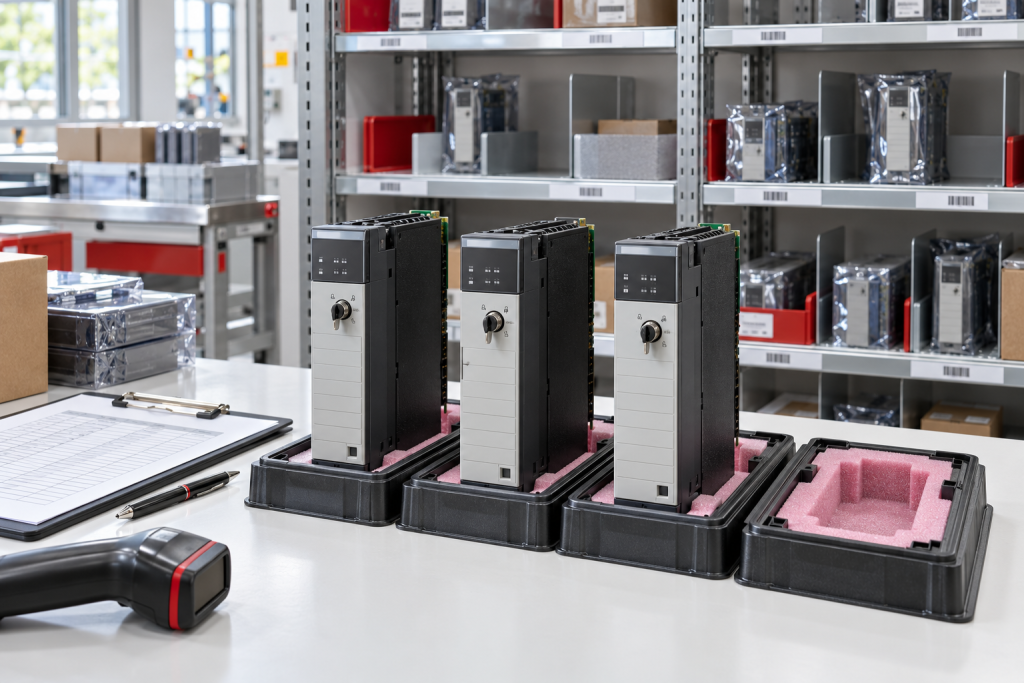
A spare controller can remain on the reorder list long after the machines it protects have started leaving service. The inventory system sees an issued part and proposes replenishment. It does not necessarily know that two production lines have been retired, a third has completed migration, and only one remaining machine still depends on that controller.
That is the practical inventory question behind the Allen-Bradley 1756-L61: not simply whether a discontinued processor can still be sourced, but when buying another bridge spare stops being a defensible use of maintenance capital. A good lifecycle plan protects the remaining plant without turning yesterday’s installed base into tomorrow’s excess stock.
Use the real lifecycle date, then ask a different question
Rockwell Automation’s 1756-L61 product page identifies the controller as discontinued, with a discontinuation date of June 1, 2017. This is not a new October 2026 announcement. It establishes a lifecycle boundary, but does not establish that every installed controller has failed, that all support services have ended, or that a particular supplier has stock.
A published 1756-L61 ControlLogix controller listing gives purchasing an exact reference for a supply inquiry. The decision to replenish still requires the plant’s remaining demand, incoming-unit acceptance requirements and the time needed to recover an affected machine. Catalog visibility and operational readiness are separate matters.
Count exposure, not historical consumption alone
Build a current dependency list. Identify each machine that still requires the model, its operating schedule, production consequence, planned retirement or migration date, and whether another verified spare can serve it. Record the owner who confirmed each entry. An asset database containing an old controller description is a starting point, not proof that the dependency still exists.
Historical issues from stores remain useful, but explain them before projecting demand. A module issued for bench development, a temporary loan or an unresolved fault investigation is not automatically a confirmed controller failure. Separate verified consumption from items awaiting return and from items that were removed but never examined.
For a hypothetical plant reducing its dependent machines from six to two, keeping the previous reorder quantity may be excessive. Conversely, those two machines might be the only route for a critical product, making one qualified spare more valuable than the machine count suggests. The decision needs production consequence and recovery alternatives, not a simple percentage reduction.
Give bridge stock a defined end point
A bridge is useful because it reaches somewhere. Write the event that ends the need for each stock holding: acceptance of the replacement control platform, retirement of the last dependent asset, or transfer of the duty to a supported production route. Include a review date and a named decision owner.
Do not use an unfunded modernization proposal as the end point. Until a project has an approved scope and credible delivery plan, the exposure remains. Equally, do not leave automatic replenishment untouched once migration is accepted. The maintenance and inventory records should change together when the installed base changes.
Set an explicit exception route for project delays. If a shutdown slips, reassess the remaining exposure and current sourcing evidence. A dated review prevents the original bridge quantity from becoming either a permanent stock commitment or an accidental shortage caused by an obsolete retirement assumption.
Distinguish available stock from recoverable capacity
A unit physically present in a cabinet is not necessarily a ready spare. Identify whether it is quarantined, awaiting testing, configured for a particular application, held for a project or approved for issue. Keep these states visible in the inventory system so a single module is not promised to multiple machines at once.
Acceptance should be appropriate to the destination application and performed under approved procedures. Record the exact identity and revision, the test scope, condition evidence and any unresolved limitations. A removed module from a decommissioned line can become a candidate spare, but only after its condition and suitability have been assessed. Removal from a working machine is useful history, not an unconditional release certificate.
For shared spares across sites, add transfer time and customs or transport constraints to the recovery estimate. A corporate inventory total can look reassuring while the only accepted unit is several days away. Treat this as a logistics assumption to verify, not a reason to invent a universal stock multiplier.
Compare three decisions at each review
The first option is to replenish a defined legacy quantity. The second is to retain the existing accepted stock without routine replenishment, escalating any issue for a specific decision. The third is to accelerate a planned migration or remove the remaining dependency. None is automatically correct for every plant.
Compare the options using evidence: remaining duty, outage consequence, verified spare readiness, current written sourcing terms, migration cost and engineering availability. Avoid fabricated failure rates and generic claims that old controllers are about to become unobtainable. An uncertain input should be marked uncertain and tested against alternative scenarios.
Document why the chosen option is reasonable and what would change it. A supplier withdrawal, a failed acceptance test, a production extension or an approved migration date can trigger a fresh decision. The outcome should be a living purchasing rule, not a one-time presentation that stores personnel never receive.
Frequently asked questions
Does discontinued mean we must stop using the installed controller?
No. Discontinuation is a lifecycle fact, not a site-specific order to stop production. Continued use requires the plant to manage maintenance, recovery and other applicable risks using its own engineering assessment and current vendor information.
How many 1756-L61 spares should we hold?
There is no responsible universal number. Start with the remaining dependent assets, outage consequences, accepted spare condition and credible recovery alternatives. Review the quantity when the installed base or migration schedule changes.
Can a controller from a retired machine go straight into available stock?
It should first pass the site’s identity, condition and application-suitability release process. Keep its removal history and test limitations attached to the record. Do not count an unassessed return as a ready spare.
When should automatic reordering stop?
When a documented review approves a different stocking rule, based on the remaining exposure and accepted migration or retirement milestones. Stopping a reorder setting without assigning an exception owner simply moves the risk elsewhere.
For the remaining operating period, request a scoped 1756-L61 quotation from ZYPLC with quantity, revision evidence, condition requirements and destination. State whether the purchase supports a defined bridge period so the supply discussion matches the actual lifecycle plan.
Image: AI-generated editorial illustration, not an exact product photograph or installation reference.
© 2026 ZYPLC. All rights reserved. Official Website: https://zyplc.com Inquiry: plc.sales@zyplc.com | WhatsApp/Tel: +86 19859288691