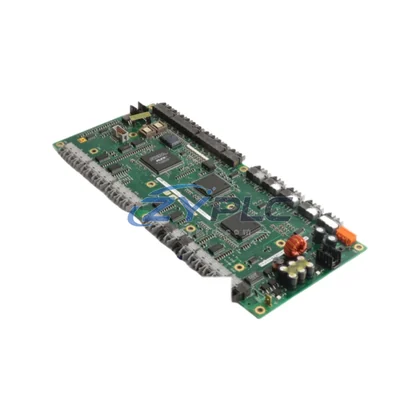
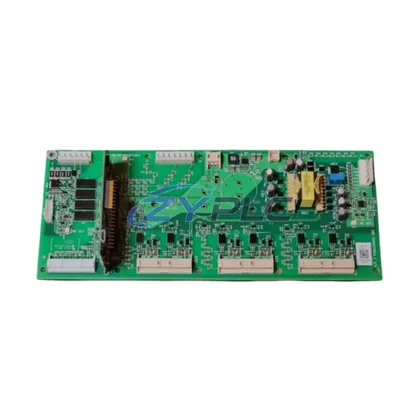
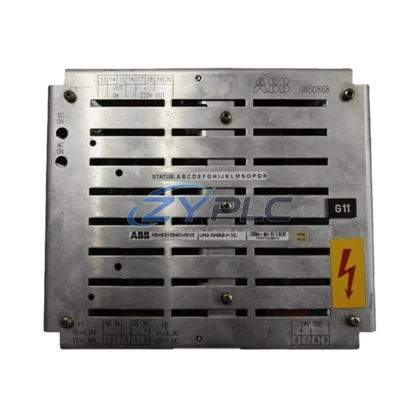
ABB 3BDH000320R02 Exciter Module for LD800HSE: Precision Field Excitation Across Every Control Layer
In modern industrial automation, the reliability of a drive system depends not only on the performance of individual components but on how seamlessly each module integrates within the broader control architecture. The ABB 3BDH000320R02 exciter module, engineered specifically for the LD800HSE excitation system series, is a precision-built field excitation control component that anchors the electrical machine control layer within layered automation environments. Whether deployed in power generation, heavy industry, or process-critical applications, this module delivers consistent field current regulation, system-level synchronization, and long-term operational stability that modern smart factories demand.
The 3BDH000320R02 occupies a critical position in the LD800HSE system architecture. It interfaces directly with the main excitation control board and works in coordination with the LD800HSE thyristor bridge assembly to regulate field current supplied to synchronous generators or DC motors. Its role is not isolated — it functions as a system integration point between the power conversion layer and the supervisory control layer, ensuring that field excitation commands issued by the control CPU are translated into precise, stable electrical outputs at the machine terminals.
Product Specification Table
| Specification |
Details |
| System Role |
Field Excitation Control Module — LD800HSE Architecture |
| Compatible Series |
ABB LD800HSE Excitation System |
| Key Function |
Field current regulation, excitation signal conditioning, system synchronization |
| Electrical Interface |
Backplane-integrated, direct connection to LD800HSE main control board |
| Communication Capability |
Internal bus communication with LD800HSE CPU and I/O modules |
| Installation Environment |
Panel-mount, DIN rail compatible; suitable for industrial control cabinets |
| Operating Temperature |
0°C to +55°C (standard industrial range) |
| Origin |
Sweden (ABB SE) |
| Warranty |
warranty terms confirmed during quotation — all units tested prior to shipment |
| Availability |
RFQ Available — global shipping supported |
System Compatibility Notes
The 3BDH000320R02 does not operate in isolation. Its value is fully realized when understood within the complete LD800HSE system architecture, where multiple modules work in concert to deliver stable, responsive excitation control across the full load range of the connected electrical machine.
At the control layer, the LD800HSE main CPU board — such as the SDCS-CON-4 or equivalent ABB excitation controller — issues field current setpoints based on real-time feedback from voltage transducers and power factor sensors. The 3BDH000320R02 receives these setpoints via the internal backplane bus and translates them into gate firing signals for the thyristor bridge. This tight coupling between the control CPU and the exciter module ensures that field current response times remain within the millisecond range, which is essential for voltage stability during load transients.
On the power conversion side, the module coordinates with the LD800HSE thyristor firing board and the associated AC/DC power supply module to maintain a regulated DC field current. Any deviation detected by the field current feedback circuit — typically sourced from a hall-effect current transducer mounted on the field winding circuit — is immediately corrected through the closed-loop regulation algorithm embedded in the 3BDH000320R02 firmware.
For redundancy-critical applications, the LD800HSE architecture supports hot-standby excitation configurations. In such designs, a secondary exciter module — often a parallel 3BDH000320R02 unit — remains synchronized with the active module and can assume control within one electrical cycle in the event of a primary module fault. This redundancy capability is coordinated through the LD800HSE system supervisor board, which continuously monitors module health via internal diagnostics.
The human-machine interface layer, typically an ABB Panel 800 HMI or a third-party SCADA terminal connected via Modbus TCP or PROFIBUS DP, provides operators with real-time visibility into field current levels, excitation voltage, module temperature, and fault status. The 3BDH000320R02 contributes structured diagnostic data to this interface through the LD800HSE communication gateway, enabling remote monitoring without requiring physical access to the control cabinet.
At the I/O layer, digital input modules within the LD800HSE rack capture external interlock signals — such as generator breaker status, field suppression commands, and AVR enable signals — and route them to the exciter module for system integration into the excitation control logic. This ensures that the 3BDH000320R02 responds appropriately to system-level events, not just isolated setpoint changes.
Power supply integrity is maintained by the LD800HSE dedicated 24VDC auxiliary power module, which provides isolated control power to the exciter module and other rack-mounted components. Voltage monitoring circuits within the power supply module generate pre-alarm signals if supply voltage drifts beyond ±10% of nominal, allowing maintenance teams to address power quality issues before they affect excitation performance.
Industrial Application Notes
The ABB 3BDH000320R02 finds its most demanding applications in industries where electrical machine control is directly tied to process output quality and safety. In power generation facilities — including thermal, hydro, and gas turbine plants — the exciter module governs the reactive power output of synchronous generators connected to the grid. Precise field current control is essential for maintaining power factor within utility-specified limits and for supporting grid voltage during disturbances.
In the metallurgical and mining sectors, large synchronous motors driving ball mills, crushers, and hoisting equipment rely on stable field excitation to maintain torque output during heavy load cycles. The 3BDH000320R02, integrated within the LD800HSE excitation system, provides the field current stability required to prevent motor instability during sudden load changes — a common occurrence in ore processing environments.
Petrochemical and refinery applications demand excitation systems that can operate continuously for extended periods without maintenance intervention. The 3BDH000320R02 is designed for high mean-time-between-failure (MTBF) operation, with conformal-coated PCBs that resist humidity, airborne contaminants, and temperature cycling. In these environments, the module’s built-in self-diagnostics continuously verify the integrity of gate firing circuits, field current feedback paths, and internal power rails, reporting any anomalies to the plant DCS via the LD800HSE communication interface.
Water treatment and pumping stations operating large synchronous pump motors benefit from the module’s smooth field current ramp-up capability during motor starting sequences. By coordinating with the LD800HSE system’s soft-start logic, the 3BDH000320R02 limits inrush current and mechanical stress during startup, extending motor and coupling service life. In packaging and material handling lines where multiple drive systems operate in coordinated motion profiles, the exciter module’s fast response time ensures that field current adjustments track speed and load changes without introducing phase lag into the overall motion control loop.
Product Compatibility FAQ
Q1: Is the ABB 3BDH000320R02 compatible with all LD800HSE system configurations, including redundant excitation setups?
Yes. The 3BDH000320R02 is designed as a standard module within the LD800HSE excitation system architecture and is compatible with both simplex and redundant (hot-standby) configurations. In redundant setups, two modules operate in parallel under the supervision of the LD800HSE system supervisor board, which manages automatic switchover without interrupting field current supply to the connected machine. Compatibility should always be verified against the specific LD800HSE system revision and firmware version in use at your site.
Q2: What commissioning steps are required when replacing the 3BDH000320R02 in an existing LD800HSE installation?
Replacement commissioning typically involves verifying module hardware revision compatibility, restoring parameter settings from the LD800HSE system configuration backup, performing a field current calibration run at reduced load, and confirming that all diagnostic indicators on the module and the system supervisor board show normal status. All units supplied by ZYPLC are pre-tested and shipped with a functional verification report. Our technical team can provide commissioning guidance to support your engineering team during the replacement process.
Q3: What does the warranty terms confirmed during quotation cover for the ABB 3BDH000320R02, and what support is available during the warranty period?
The warranty terms confirmed during quotation covers manufacturing defects, component failures under normal operating conditions, and functional non-conformance identified during installation and commissioning. Warranty support includes technical consultation, replacement unit provision in the event of confirmed module failure, and access to our engineering team for troubleshooting assistance. All units are tested prior to shipment to minimize the risk of field failures. For warranty claims or technical support, contact ZYPLC at plc.sales@zyplc.com or +86 19859288691.