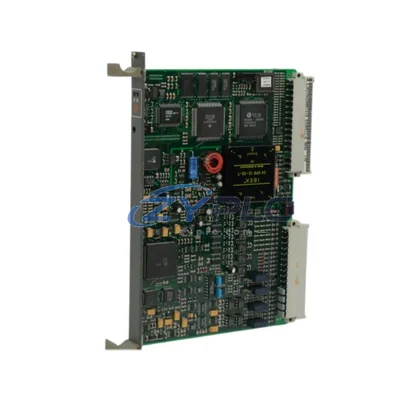
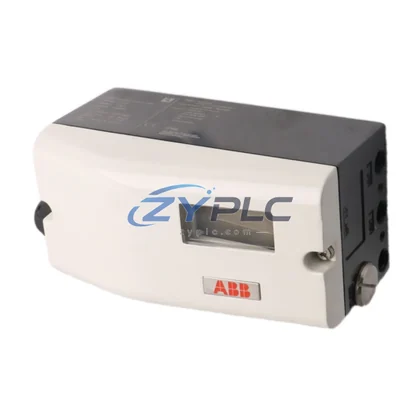
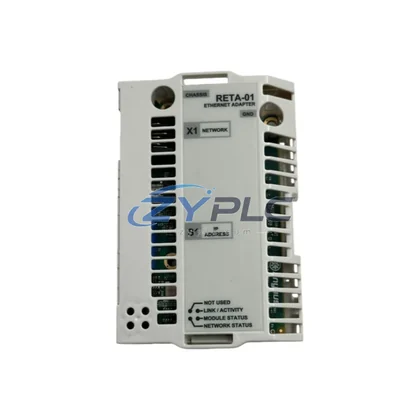
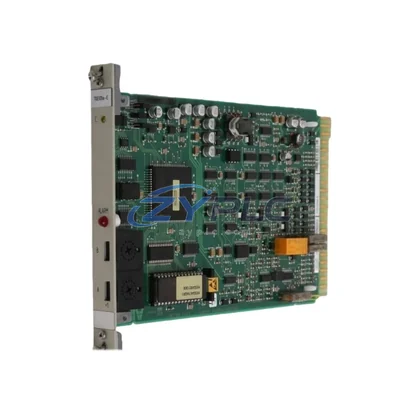
ABB IRC53HAC021914-001: Precision Industrial Data Link for IRB Series Smart Factory Systems
The ABB IRC53HAC021914-001 is a high-performance rotational AC servo motor engineered for seamless integration within ABB’s IRC5 robot controller ecosystem and the broader IRB Series automation platform. Designed to serve as a critical node in the industrial data chain, this servo motor bridges the gap between field-level mechanical actuation and upper-level supervisory control — enabling real-time signal acquisition, deterministic motion feedback, and continuous network communication across the full automation stack. Whether deployed in automotive body welding, precision assembly, material handling, or collaborative manufacturing cells, the IRC53HAC021914-001 delivers the torque accuracy, encoder resolution, and communication reliability that modern smart factories demand.
Compatibility & Integration Notes
| Parameter |
Specification |
| Compatible Controller |
ABB IRC5 Single / Dual Cabinet |
| Supported Protocols |
DeviceNet, PROFIBUS-DP, EtherNet/IP, Modbus TCP |
| Interface Type |
Rotary Encoder Feedback, Serial Measurement Circuit (SMB) |
| Transmission Capability |
Real-time torque, speed, and position data via SMB bus |
| Network Compatibility |
ABB RobotWare, IRC5 FlexPendant, RAPID programming environment |
| SCADA / HMI Integration |
Compatible with ABB Ability™, Zenon SCADA, WinCC, FactoryTalk |
| System Application |
IRB 1600, IRB 2600, IRB 4600, IRB 6640, IRB 6700 robot arms |
| Warranty |
Warranty and support terms confirmed before quote | Pre-shipment functional test included |
Connected Automation Data Flow
In a fully networked IRB Series production cell, the IRC53HAC021914-001 servo motor operates as the terminal actuator in a layered data flow that begins at the sensor level and terminates at the enterprise MES or cloud analytics platform. At the field layer, encoders embedded within the motor continuously stream position and velocity data back to the ABB IRC5 controller via the Serial Measurement Board (SMB) — a dedicated communication bus that ensures sub-millisecond feedback latency even under full load conditions.
The IRC5 controller aggregates this motion data alongside I/O signals from ABB DSQC651 I/O modules and DSQC652 digital I/O boards, which manage discrete sensor inputs from proximity switches, vision systems, and safety light curtains distributed across the robot cell. These signals are then forwarded upstream via PROFIBUS-DP or EtherNet/IP fieldbus to a Siemens S7-1500 PLC or Allen-Bradley ControlLogix acting as the cell controller, where motion sequences are coordinated with conveyor drives, ABB ACS880 variable frequency drives, and pneumatic actuators.
At the supervisory layer, an ABB CP600 HMI panel or a Weintek cMT Series HMI provides operators with live visualization of servo torque curves, cycle counts, and fault codes — all pulled in real time from the IRC5 controller over Modbus TCP. Simultaneously, a Kepware KEPServerEX OPC-UA gateway bridges the robot controller data into the plant’s Ignition SCADA or Wonderware System Platform, enabling historians to log every motion event for traceability and OEE analysis.
For remote diagnostics and predictive maintenance, the IRC53HAC021914-001’s operational parameters — including winding temperature, encoder error counts, and cumulative run hours — are accessible through ABB Ability™ Connected Services, which pushes anomaly alerts to maintenance teams via email or SMS before a fault escalates to unplanned downtime. This end-to-end data chain, from servo encoder to cloud dashboard, exemplifies the connectivity architecture that the IRC53HAC021914-001 is built to support.
Solving Data Isolation in Industrial Sites
One of the most persistent challenges in legacy robot installations is protocol fragmentation: older IRB cells may run proprietary ABB serial communication while newer PLC islands speak EtherNet/IP or PROFINET, creating data silos that prevent unified production visibility. The IRC53HAC021914-001, when paired with the ABB IRC5 controller’s optional PROFIBUS Master/Slave fieldbus adapter (DSQC 510) or the DeviceNet adapter (DSQC 350), resolves this fragmentation by acting as a protocol-transparent motion node — its feedback data can be encapsulated into any of the supported fieldbus frames without modification to the robot’s RAPID motion programs.
For sites transitioning to TSN (Time-Sensitive Networking) or IIoT-enabled architectures, the IRC5 controller’s EtherNet/IP interface allows the servo’s real-time data to be published directly to edge computing platforms such as Moxa UC-8100 industrial computers or Advantech WISE-5000 edge gateways, where local analytics can detect servo degradation patterns without routing traffic through the corporate WAN. This edge-first approach dramatically reduces alarm latency and enables autonomous fault isolation — the production line can self-diagnose a failing servo bearing and schedule a maintenance window during the next planned shutdown, rather than suffering an unscheduled stop.
Production line transparency is further enhanced by integrating the IRC53HAC021914-001’s cycle data into MES platforms via OPC-UA, where each robot motion cycle is timestamped and linked to the corresponding work order, batch number, and quality inspection result. This creates a fully traceable digital thread from raw material input to finished product output — a prerequisite for automotive Tier 1 suppliers operating under IATF 16949 quality management requirements.
Industrial Connectivity FAQ
Q1: What communication protocols does the ABB IRC53HAC021914-001 support for SCADA integration?
The IRC53HAC021914-001 operates within the ABB IRC5 controller ecosystem, which natively supports DeviceNet, PROFIBUS-DP, EtherNet/IP, and Modbus TCP via optional fieldbus adapter modules. For SCADA integration, OPC-UA connectivity is available through middleware such as Kepware KEPServerEX or ABB’s own OPC server, enabling seamless data exchange with Ignition, WinCC, and FactoryTalk platforms without custom protocol development.
Q2: How is network stability ensured during high-speed robot motion cycles?
The Serial Measurement Board (SMB) bus used by the IRC53HAC021914-001 is a dedicated, electrically isolated communication channel separate from the fieldbus network, ensuring that high-frequency encoder feedback (position, speed, torque) is never subject to Ethernet collision or PROFIBUS token-passing delays. This architecture guarantees deterministic motion control even when the plant network experiences congestion from SCADA polling or HMI refresh cycles.
Q3: Can the IRC53HAC021914-001 be integrated into an existing multi-vendor automation system?
Yes. The IRC5 controller’s open fieldbus architecture allows the IRC53HAC021914-001’s motion data to be shared with third-party PLCs (Siemens, Rockwell, Mitsubishi), HMI panels, and SCADA systems using standard industrial protocols. For systems requiring protocol conversion, an intermediate gateway such as the Moxa MGate MB3000 or HMS Anybus Communicator can bridge ABB’s native communication to PROFINET or BACnet without modifying the robot’s control program.
Q4: What does the warranty and support terms confirmed before quote cover, and is pre-shipment testing performed?
Every IRC53HAC021914-001 unit supplied by ZYPLC is Warranty terms are confirmed during quotation. Prior to shipment, each unit undergoes a pre-shipment functional test that verifies encoder signal integrity, winding resistance, insulation resistance, and mechanical rotation — ensuring that the motor arrives ready for installation. Warranty claims are supported by our technical team at plc.sales@zyplc.com, with replacement or repair turnaround coordinated to minimize production impact.
|