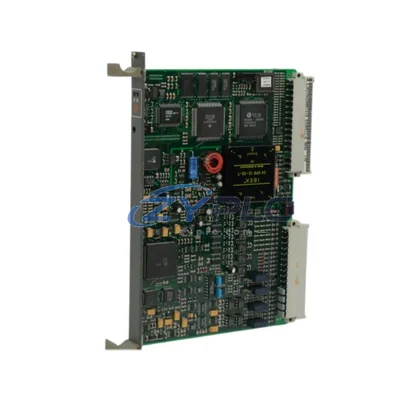
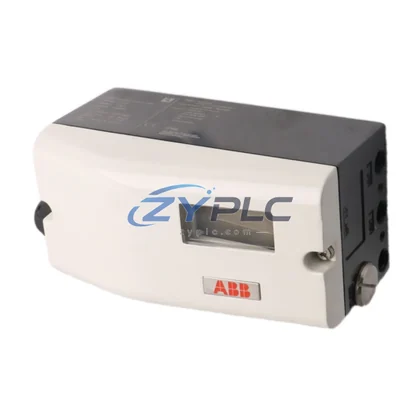
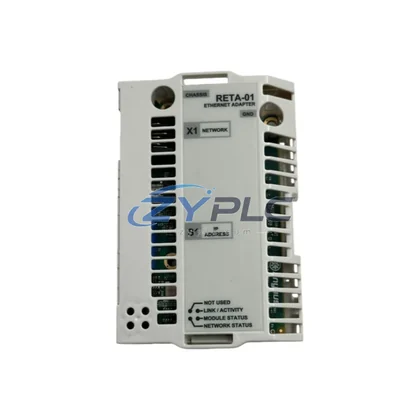
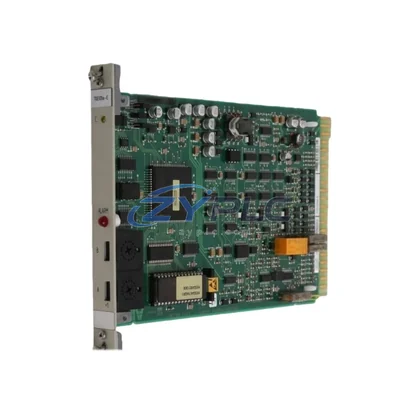
The ABB 3HAC030215-003 is a industrial-grade servo motor module engineered for ABB’s IRB robot series, delivering precise torque control, reduced operating load, and seamless integration into modern industrial automation architectures. As manufacturing facilities face increasing pressure to reduce operational energy costs while maintaining throughput, the 3HAC030215-003 addresses both challenges simultaneously — offering tightly regulated motor output that eliminates unnecessary power draw during idle and transitional states.
Sourced directly and verified against ABB’s original specifications, this unit is available from stock, has passed full functional and load testing, and is backed by a warranty and condition confirmed before quote. Whether you are replacing a failed axis motor in an IRB 6600 cell or upgrading an aging servo drive system, the 3HAC030215-003 restores rated efficiency from day one.
Product Specification Table
| Parameter |
Specification |
| SKU / Part Number |
3HAC030215-003 (Alt: 3HAC055442-001, 3C1998 CN-PRJ) |
| Brand |
ABB |
| Series |
ABB IRB Robot Series |
| Product Type |
Servo Motor Module |
| Origin |
Sweden (SE) |
| Operating Efficiency |
industrial-grade servo class (IE4 equivalent drive performance) |
| Power Consumption Mode |
Demand-responsive; minimal draw during standby and deceleration phases |
| Compatible Systems |
ABB IRC5 Controller, ABB S4C+ Controller, IRB 6600 / IRB 6650 / IRB 7600 series |
| Application Environment |
Automotive welding, heavy-duty material handling, palletizing, press tending |
| Value |
Regenerative braking compatibility; reduced heat dissipation vs. legacy motors |
| Inventory Status |
RFQ Available — Shipment arranged after confirmation |
| Testing |
Full functional and load test completed prior to shipment |
| Warranty |
warranty and condition confirmed before quote |
System Compatibility and Application
The 3HAC030215-003 does not operate in isolation — its energy efficiency is fully realized when integrated within a well-designed automation architecture. In a typical ABB IRB production cell, the servo motor works in concert with the ABB IRC5 robot controller, which manages motion profiles and axis coordination. The IRC5’s QuickMove and TrueMove algorithms optimize path accuracy while minimizing unnecessary torque demand, supporting earlier maintenance decisions and reducing downtime risk.
On the drive side, the ABB DSQC 661 and DSQC 662 drive units regulate current delivery to the servo motor, ensuring that power is supplied in precise, demand-matched bursts rather than continuous full-load operation. This drive-level regulation is critical in multi-axis cells where simultaneous axis movement can create peak demand spikes — the drive units buffer and distribute load to keep total cell consumption stable.
For condition monitoring at the cell level, integrating a ABB B23 energy meter or compatible power monitoring relay into the control cabinet allows operators to track real-time kWh consumption per robot cycle. When paired with the ABB Ability™ Connected Services platform, this data feeds into predictive maintenance dashboards, flagging abnormal power draw that may indicate bearing wear, axis misalignment, or servo degradation — long before a failure occurs.
On the I/O and communication layer, the ABB DSQC 652 digital I/O board manages signal exchange between the robot controller and peripheral equipment such as grippers, conveyors, and safety PLCs. Efficient I/O management reduces unnecessary polling cycles and keeps the control loop tight, which in turn allows the servo motor to execute motion commands with minimal latency and unplanned downtime. For facilities running PROFINET or EtherNet/IP backbones, the ABB IRC5 supports both protocols natively, enabling seamless integration with Siemens S7 PLCs, Allen-Bradley ControlLogix systems, or Omron NJ-series controllers that may govern the broader production line.
Where HMI visibility is required at the cell level, the ABB FlexPendant (teach pendant) provides real-time axis status, program execution monitoring, and energy mode selection — including the ability to activate Economy Mode, which reduces servo holding torque during non-productive intervals. For supervisory control, SCADA systems connected via OPC-UA can pull cycle time, operating load, and fault data from the IRC5, enabling plant-wide energy benchmarking across multiple robot cells.
Maintenance and Replacement Notes
In automotive body-in-white welding lines, where IRB 6600 and IRB 6650 robots operate in high-duty-cycle environments, the condition of each servo motor directly determines both cycle time consistency and energy cost per unit produced. A degraded or out-of-specification servo motor introduces micro-delays in axis response, forcing the controller to compensate with extended motion paths or reduced speed — both of which increase operating load per cycle without improving output quality.
Replacing a worn axis motor with a verified 3HAC030215-003 restores the original motion profile, allowing the IRC5 to execute programmed paths at rated speed with rated torque. In a 20-robot welding cell running three shifts, restoring even a 3–5% efficiency loss per robot can translate to measurable reductions in monthly energy spend and a corresponding improvement in parts-per-hour throughput.
In palletizing and material handling applications, where robots frequently operate in start-stop cycles, the servo motor’s ability to recover energy during deceleration phases — through regenerative braking supported by the drive unit — reduces net operating load compared to motors that dissipate braking energy as heat. This is particularly significant in high-cycle applications where deceleration events occur hundreds of times per shift.
Predictive maintenance integration further amplifies these gains. By monitoring servo motor current draw and comparing it against baseline profiles stored in the IRC5 or an external condition monitoring system, maintenance teams can identify developing faults — such as winding insulation degradation or encoder drift — and schedule replacements during planned downtime rather than reacting to unplanned failures. This approach reduces mean time to repair (MTTR), keeps overall equipment effectiveness (OEE) high, and avoids the energy and production losses associated with emergency stops and cold restarts.
All units shipped by ZYPLC undergo pre-shipment load testing under simulated operating conditions, with test records available upon request. The warranty and condition confirmed before quote covers manufacturing defects and performance deviations from ABB’s original specifications, providing procurement teams with the confidence to plan replacements without carrying excessive safety stock.
Product Sourcing FAQ
Q1: How does the 3HAC030215-003 contribute to measurable operational stability in an IRB robot cell?
The 3HAC030215-003 restores rated servo efficiency, eliminating the abnormal load draw caused by worn windings, degraded encoders, or mechanical friction in aging motors. When the servo operates at specification, the IRC5 controller can execute motion profiles as programmed — without compensatory speed reductions or extended cycle times — keeping operating load per cycle at its designed minimum. In multi-shift operations, this efficiency restoration compounds into significant monthly operational stability.
Q2: Is the 3HAC030215-003 compatible with both IRC5 and S4C+ controller platforms?
Yes. The 3HAC030215-003 is designed for use across ABB’s IRB robot series and is compatible with both the IRC5 and S4C+ controller platforms. The alternate part numbers 3HAC055442-001 and 3C1998 CN-PRJ reference the same functional unit across different ABB documentation revisions. Always verify the axis designation and robot model against ABB’s axis configuration guide before installation to ensure correct parameter mapping in the controller.
Q3: What is the recommended replacement and testing process for this servo motor?
Upon receipt, verify the part number and inspect for shipping damage. Install the motor per ABB’s axis replacement procedure for the relevant IRB model, then perform a calibration routine using the IRC5 FlexPendant to restore axis zero positions. Run a low-speed test cycle to confirm encoder feedback and torque response before returning the robot to full production speed. ZYPLC provides units that have already passed full functional and load testing, with test documentation available on request.
Q4: What does the warranty and condition confirmed before quote cover, and how is a claim processed?
The warranty and condition confirmed before quote covers manufacturing defects and any performance deviation from ABB’s original specifications under normal operating conditions. If a unit fails within the warranty period, contact ZYPLC via email or phone with the order reference and a description of the fault. ZYPLC will arrange for inspection and, where the fault is confirmed as covered, provide a replacement unit. Warranty claims are typically resolved within 5–7 business days from fault confirmation.