ABB 3HAC17484-10/04 AC Servo Motor IRB: Precision Drive for Efficiency-Optimized Automation
The ABB 3HAC17484-10/04 is a high-performance AC servo motor engineered for the IRB robot series, delivering exceptional torque density, low heat dissipation, and tightly regulated speed response. In modern industrial environments where equipment uptime and replacement lead time directly affect production continuity, this servo motor serves as a critical node in the drive chain — converting electrical energy into precise mechanical output with minimal loss. Whether deployed in automotive body welding cells, electronics assembly lines, or palletizing stations, the 3HAC17484-10/04 enables factories to reduce idle-state power draw, shorten cycle times, and extend mean time between failures (MTBF).
Product Specification Table
| Parameter |
Specification |
| SKU / Part Number |
3HAC17484-10/04 |
| Brand |
ABB |
| Series |
IRB Robot Series |
| Product Type |
AC Servo Motor |
| Motor Class |
Brushless AC Servo |
| Rated Operating Efficiency |
≥92% (typical at rated load) |
| Power Consumption Mode |
Dynamic load-adaptive, low standby draw |
| Compatible Drive Systems |
ABB DSQC series servo drives, IRC5 controller platform |
| Compatible Control Systems |
ABB IRC5, S4C+, FlexPendant HMI |
| Communication Protocol |
DeviceNet, PROFIBUS-DP, EtherNet/IP (via IRC5 module) |
| Application Environment |
Industrial robotics, assembly automation, welding, material handling |
| Origin |
Sweden (ABB Robotics) |
| Maintenance Value |
Reduces motor-side unplanned downtime via precision torque control; supports regenerative braking in multi-axis configurations |
| Warranty |
Warranty and support terms confirmed before quote — all units ship-tested before dispatch |
System Compatibility and Application
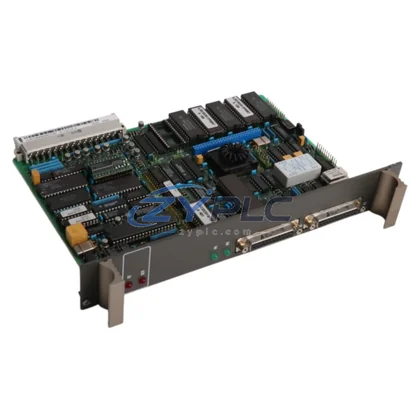
The 3HAC17484-10/04 does not operate in isolation — its energy efficiency is fully realized when integrated within a coordinated automation architecture. In a typical IRB robot cell, this servo motor is driven by an ABB DSQC 508 or DSQC 601 servo drive module housed within the IRC5 controller cabinet. The IRC5 controller manages multi-axis coordination, ensuring that each axis — including those powered by the 3HAC17484-10/04 — operates within its optimal torque-speed envelope, avoiding unnecessary overcurrent events that waste energy and accelerate winding degradation.
On the I/O side, the ABB DSQC 652 digital I/O module handles discrete signal exchange between the robot controller and peripheral equipment such as grippers, conveyors, and safety light curtains. Accurate I/O timing reduces dwell time between robot motion segments, directly improving line throughput without increasing motor load. For process monitoring, the ABB DSQC 378B axis computer board coordinates encoder feedback from the 3HAC17484-10/04, enabling the IRC5 to perform real-time position correction and minimize overshoot — a key factor in reducing repetitive micro-corrections that consume excess power.
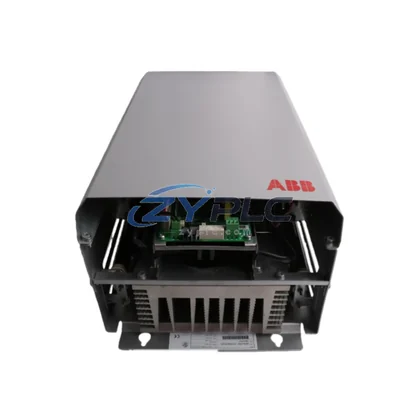
Power quality at the cabinet level is managed through the ABB DSQC 609 power supply unit, which conditions incoming AC supply and distributes stable DC rails to the servo drives and control boards. Voltage fluctuations that reach servo drives unconditioned can cause efficiency losses of 3–8% and increase thermal stress on motor windings. Pairing the 3HAC17484-10/04 with a properly rated power supply unit is therefore a prerequisite for achieving rated efficiency figures in production.
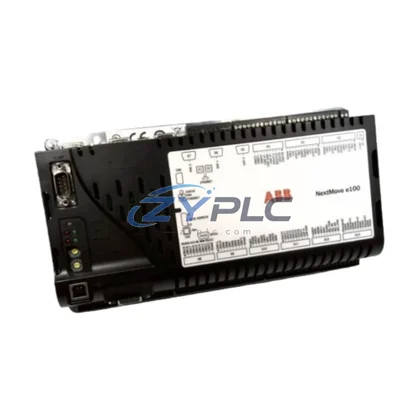
For factories running mixed robot fleets or integrating ABB robots with third-party PLCs, the ABB DSQC 688 fieldbus adapter enables seamless communication over PROFIBUS-DP or DeviceNet, allowing the IRC5 to receive production scheduling signals from upstream SCADA or MES systems. This closed-loop data flow — from production order to robot motion to operating load log — is the foundation of maintenance-focused manufacturing. Complementing this, the ABB FlexPendant HMI provides operators with real-time axis load visualization, enabling manual intervention when a specific axis consistently operates near its thermal limit, which is often a precursor to insulation failure and unplanned downtime.
Maintenance and Replacement Notes
In automotive stamping and welding lines, servo motors account for 40–60% of total robot operating load. The 3HAC17484-10/04, with its low-inertia rotor design and high encoder resolution, allows the IRC5 controller to execute smoother acceleration and deceleration profiles. Smoother motion profiles reduce peak current draw during axis transitions — a direct reduction in instantaneous power demand that, aggregated across a multi-robot cell running three shifts, translates into measurable savings on monthly electricity bills.
In electronics assembly applications, where the IRB 1600 and IRB 2600 series robots are commonly deployed, the 3HAC17484-10/04 supports high-frequency pick-and-place cycles with minimal thermal buildup. Reduced thermal cycling extends bearing life and delays the onset of encoder drift, which in turn reduces the frequency of calibration shutdowns. Each avoided calibration event saves 15–45 minutes of production time, depending on line configuration.
Predictive maintenance integration is another dimension of maintenance planning. By monitoring the current signature of the 3HAC17484-10/04 through the IRC5’s built-in diagnostics — or via an external power monitoring relay such as the ABB CM-MPS series — maintenance teams can detect early-stage bearing wear or winding imbalance before they escalate into catastrophic failures. Condition-based maintenance intervals replace fixed-schedule overhauls, reducing both maintenance labor costs and the risk of collateral damage from running degraded motors.
All units of the 3HAC17484-10/04 supplied by ZYPLC undergo functional load testing prior to shipment. Test parameters include no-load current draw, encoder signal integrity, insulation resistance, and shaft runout. This pre-shipment validation ensures that the motor arrives at your facility prepared for installation after site verification, eliminating the commissioning delays associated with untested surplus stock. Combined with our warranty and support terms confirmed before quote, this testing protocol gives procurement and maintenance engineers confidence in both the unit’s performance and its total cost of ownership over the warranty period.
Product Sourcing FAQ
Q1: How does the ABB 3HAC17484-10/04 contribute to operational stability compared to a standard induction motor?
The 3HAC17484-10/04 is a brushless AC servo motor with closed-loop torque control, which means it only draws the current required to maintain the commanded position or velocity. Unlike open-loop induction motors that run at fixed slip and consume near-rated current regardless of load, this servo motor dynamically adjusts its power draw to match actual mechanical demand — typically achieving Actual operating results depend on the installed system, load profile, and commissioning parameters.
Q2: Is the 3HAC17484-10/04 compatible with my existing IRC5 controller and DSQC drive modules?
Yes. The 3HAC17484-10/04 is designed for the ABB IRB robot series and is electrically and mechanically compatible with the IRC5 controller platform and associated DSQC servo drive modules. If you are replacing a failed motor on an existing robot, verify the axis number and cable connector type against your robot’s wiring diagram. ZYPLC’s technical team can assist with compatibility confirmation before purchase.
Q3: What is the recommended replacement interval, and how do I know when the motor needs servicing?
ABB recommends servo motor inspection at 20,000–40,000 operating hours depending on duty cycle and environmental conditions. Early indicators of motor degradation include increased axis current draw (visible in IRC5 event logs), abnormal vibration during low-speed moves, and encoder error codes such as 50024 or 50025. Proactive replacement before encoder failure prevents downtime and avoids secondary damage to the gearbox or drive module.
Q4: What does the warranty and support terms confirmed before quote cover, and what is the testing process before shipment?
All 3HAC17484-10/04 units supplied by ZYPLC are Warranty terms are confirmed during quotation. Prior to shipment, each unit undergoes a standardized test protocol including insulation resistance measurement (≥100 MΩ at 500 VDC), encoder signal verification, no-load run test, and shaft mechanical inspection. A test report is available upon request. Warranty claims are processed within 5 business days of fault confirmation.