ABB ACS355-03E-06A7-2 Energy-Saving AC Drive for Optimized ACS355 Automation
The ABB ACS355-03E-06A7-2 is a 2.2 kW three-phase AC variable frequency drive engineered for precision motor control and measurable energy reduction in demanding industrial environments. As part of ABB’s proven ACS355 series, this drive delivers high-efficiency speed regulation, adaptive torque management, and seamless integration into modern automation architectures — making it a cornerstone component for factories seeking to reduce energy waste, extend equipment service life, and optimize production line throughput.
Designed for continuous duty in applications ranging from conveyor systems and pump control to compressor regulation and HVAC fan drives, the ACS355-03E-06A7-2 incorporates a built-in EMC filter that minimizes electromagnetic interference without requiring additional external components. Its compact footprint and DIN-rail-compatible mounting simplify panel integration, while the drive’s wide input voltage tolerance (200–240 V ±10%) ensures stable operation across fluctuating industrial power supplies.
Efficiency Performance Table
| Parameter |
Specification |
| SKU / Part Number |
ACS355-03E-06A7-2 |
| Rated Power Output |
2.2 kW (3 HP) |
| Input Voltage |
3-Phase, 200–240 V AC ±10% |
| Output Current |
6.7 A |
| Drive Efficiency |
≥ 97% at full load |
| Frequency Range |
0–500 Hz |
| EMC Filter |
Built-in (Class C2) |
| Protection Class |
IP20 |
| Compatible Systems |
ABB ACS355 Series, Modbus RTU, CANopen, PROFIBUS DP (via adapter) |
| Application Environment |
Pumps, Fans, Conveyors, Compressors, HVAC, General Machinery |
| Energy Saving Value |
Up to 30–50% motor energy reduction vs. fixed-speed operation |
| Ambient Temperature |
-10°C to +50°C (derating above 40°C) |
| Country of Origin |
Finland |
| Warranty |
12-Month Warranty |
Energy-Aware Automation Architecture
In a fully optimized production environment, the ACS355-03E-06A7-2 operates as the drive-layer executor within a layered automation stack. At the control level, an ABB AC500 PLC or compatible Siemens S7-1200 series controller issues speed reference signals via Modbus RTU or analog 0–10 V input, enabling the ACS355 to dynamically adjust motor output in real time based on process demand rather than running at fixed speed continuously.
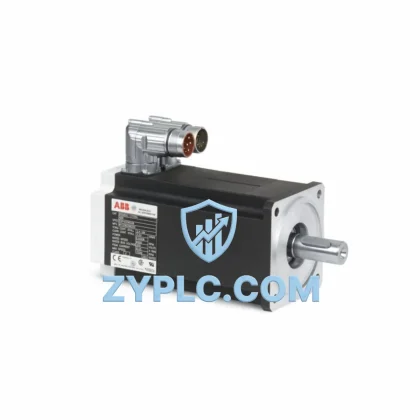
For multi-axis or servo-coordinated lines, the ACS355-03E-06A7-2 can work alongside ABB MicroFlex e150 servo drives to handle auxiliary conveyor axes while servo drives manage precision positioning tasks — distributing the energy load intelligently across the drivetrain. On the monitoring side, integrating an ABB B23 energy meter or equivalent power quality analyzer upstream of the drive panel allows operators to capture real-time kWh consumption data, compare it against baseline fixed-speed benchmarks, and quantify energy savings per shift.
I/O expansion is handled through the drive’s built-in digital and analog I/O terminals, but for complex multi-zone control, pairing the ACS355 with an ABB CI504 PROFIBUS DP adapter module or FCAN-01 CANopen adapter enables full fieldbus integration into existing plant networks. This allows the drive to receive process feedback from upstream sensors — such as pressure transmitters on pump systems or flow meters on HVAC loops — and automatically modulate speed to maintain setpoints without operator intervention.
At the HMI layer, an ABB CP600 operator panel or third-party Weintek/Siemens HMI connected via Modbus TCP provides real-time visualization of drive status, output frequency, motor current, and fault history. Operators can monitor energy consumption trends, set speed ramps, and configure protection thresholds directly from the panel — reducing the need for specialist commissioning visits. For distributed I/O architectures, the ABB ACSM1 I/O extension module or compatible Wago 750-series remote I/O nodes can relay digital feedback signals from limit switches, proximity sensors, and temperature probes back to the control layer, closing the feedback loop for predictive maintenance routines.
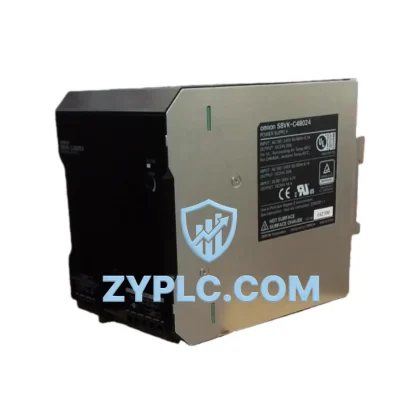
Power supply stability for the control circuit is typically ensured by a dedicated ABB CP-E 24VDC SMPS or equivalent 24 V switched-mode power supply, isolating the drive’s logic circuitry from line voltage transients. In regenerative braking applications — such as downhill conveyors or centrifuge deceleration — a brake chopper resistor unit compatible with the ACS355 frame size dissipates excess kinetic energy safely, preventing DC bus overvoltage trips and extending drive service intervals.
Power Optimization in Real Production Lines
The most immediate energy benefit of deploying the ACS355-03E-06A7-2 is the elimination of throttling losses inherent in fixed-speed motor systems. In pump and fan applications governed by the affinity laws, reducing motor speed by just 20% cuts power consumption by approximately 49%. A factory running three 2.2 kW pump motors at full speed continuously — when process demand only requires 70–80% flow — wastes significant energy every operating hour. Replacing fixed-speed starters with ACS355 drives and configuring PID speed control based on pressure or flow feedback can reduce pump energy consumption by 30–50% annually, with payback periods typically under 18 months.
On conveyor and material handling lines, the ACS355-03E-06A7-2 enables smooth acceleration and deceleration ramp profiles, eliminating the mechanical shock loads that cause premature gearbox and coupling wear. By programming S-curve ramp profiles through the drive’s parameter set, line operators can reduce peak inrush current during motor start — lowering demand charges on the facility’s electricity tariff — while simultaneously extending the service interval of mechanical drivetrain components. This directly reduces unplanned downtime and lowers maintenance labor costs over the equipment lifecycle.
For predictive maintenance integration, the drive’s built-in load curve monitoring and fault log functions provide early warning of motor overload conditions, bearing wear signatures (via current spectrum analysis), and insulation degradation trends. When connected to a SCADA or MES system via Modbus RTU, these diagnostic signals can trigger maintenance work orders automatically — shifting the maintenance model from reactive to condition-based, and reducing mean time between failures (MTBF) across the motor fleet.
All units supplied by ZYPLC are sourced from verified distribution channels, subjected to pre-shipment functional testing under load conditions, and covered by a 12-month warranty from the date of delivery. Stock availability is maintained for rapid dispatch, supporting both planned procurement schedules and urgent replacement requirements.
Energy Optimization FAQ
Q1: How much energy can the ACS355-03E-06A7-2 save compared to a direct-on-line motor starter?
In variable-torque applications such as pumps and fans, energy savings of 30–50% are typical when the drive replaces a direct-on-line (DOL) starter and enables speed modulation based on actual process demand. Savings vary by application duty cycle and load profile, but the ACS355’s ≥97% drive efficiency ensures minimal conversion losses.
Q2: Is the ACS355-03E-06A7-2 compatible with existing ABB and third-party control systems?
Yes. The drive supports Modbus RTU natively and is compatible with ABB AC500 PLCs, Siemens S7 series, and most third-party controllers via analog (0–10 V / 4–20 mA) or digital I/O interfaces. Optional fieldbus adapter modules (PROFIBUS DP, CANopen, PROFINET) extend compatibility to virtually all major industrial network protocols.
Q3: Can this drive replace an older ACS355 unit without rewiring the control panel?
In most cases, yes. The ACS355-03E-06A7-2 is a direct form-fit-function replacement for same-frame ACS355 variants with equivalent power ratings. Parameter sets can be cloned from the original drive using the ABB ACS355 control panel or Drive Composer PC tool, minimizing commissioning time and reducing the risk of configuration errors during replacement.
Q4: What does the 12-month warranty cover, and what is the testing process before shipment?
The 12-month warranty covers manufacturing defects and functional failures under normal operating conditions from the date of delivery. Prior to shipment, each unit undergoes functional verification testing including power-on self-test, output voltage balance check, and parameter integrity verification. Units that fail any test criterion are quarantined and not dispatched. Warranty claims are processed directly through ZYPLC’s technical support team.
© 2026 ZYPLC. All rights reserved.
Original Source: https://zyplc.com
Contact: +86 19859288691 | [email protected]