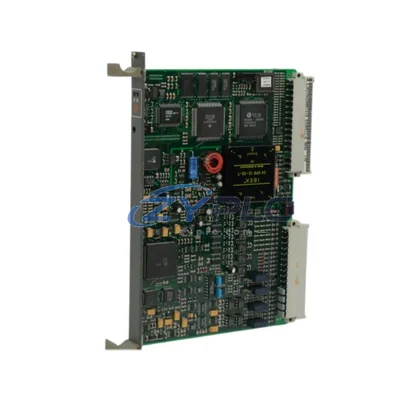
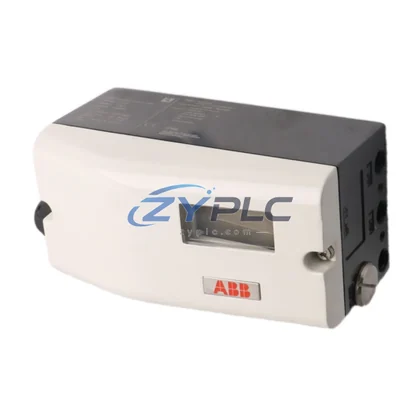
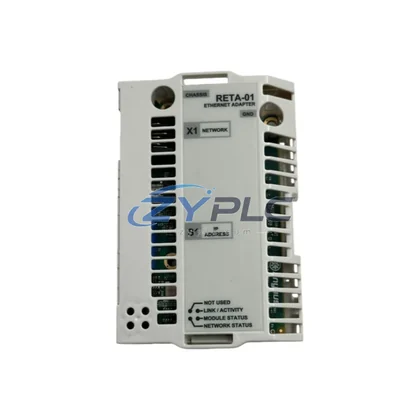
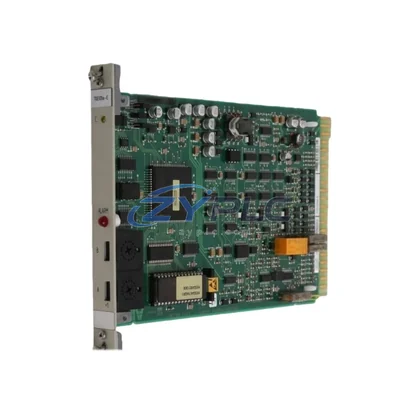
ABB ACS580-01-096A-4 Industrial Network Interface for ACS580 Systems: Bridging the Industrial Data Link in Smart Factory Environments
The ABB ACS580-01-096A-4 is a 45kW three-phase variable frequency drive engineered for demanding industrial automation environments where reliable motor control, seamless protocol communication, and real-time data transparency are non-negotiable. Built on ABB’s proven ACS580 general purpose drive platform, this unit integrates native Modbus RTU and Modbus TCP/IP communication capability, positioning it as a critical node in the industrial data chain — connecting field-level motor assets directly to PLC controllers, SCADA systems, HMI panels, and upper-level MES platforms without the need for additional protocol converters in standard deployments.
In modern smart factory architectures, the drive is no longer just a motor speed controller. It is an active data source. The ACS580-01-096A-4 continuously generates process variables — output frequency, motor current, DC bus voltage, drive temperature, fault codes, and energy consumption data — all of which are made available over the Modbus network in real time. This transforms the drive into a transparent, addressable device within the plant’s automation backbone.
Compatibility & Integration Notes
| Parameter |
Specification |
| Communication Protocol |
Modbus RTU (RS-485) / Modbus TCP/IP (Ethernet) |
| Interface Type |
RS-485 (2-wire), RJ-45 Ethernet port (via optional FENA-21 adapter) |
| Transmission Speed (RTU) |
Up to 115,200 bps |
| Transmission Speed (TCP) |
10/100 Mbps Ethernet |
| Network Compatibility |
Modbus master/slave topology; compatible with Siemens S7, Allen-Bradley, Mitsubishi Q/FX, Omron NJ/NX, Schneider Modicon M340/M580 |
| System Application |
SCADA, DCS, HMI, MES, Edge Gateway, Remote I/O integration |
| Drive Power Rating |
45kW / 60HP, 380–480V AC, 3-phase |
| Output Current |
96A (ACS580-01-096A-4) |
| Protection Class |
IP21 (standard) / IP55 (optional) |
| Warranty |
12 Months — covers hardware defects, communication module faults, and drive control board failures |
Connected Automation Data Flow
Understanding how the ACS580-01-096A-4 fits into a complete automation data flow is essential for system integrators and procurement engineers. In a typical smart factory deployment, the data journey begins at the sensor and field device layer. Vibration sensors, temperature transmitters, and flow meters feed analog or digital signals into a remote I/O module — such as the ABB CI854 or a compatible Profibus/Modbus remote I/O station — which aggregates these signals and forwards them upstream.
The ACS580-01-096A-4 sits at the drive layer, receiving speed reference commands from a PLC controller — commonly an ABB AC500 series PLC or a Siemens S7-1200/S7-1500 — via Modbus RTU over RS-485. The drive executes the speed command, controls the connected motor, and simultaneously reports back actual output frequency, load current, fault status, and energy data to the PLC’s data register map. This bidirectional data exchange happens in scan cycles as fast as 10ms, ensuring the control loop remains tight and responsive.
For plants running Ethernet-based architectures, the optional ABB FENA-21 Ethernet adapter extends the ACS580-01-096A-4’s connectivity to Modbus TCP/IP, EtherNet/IP, and PROFINET simultaneously, allowing the drive to be addressed by multiple systems — a Wonderware SCADA or Ignition SCADA platform for real-time trending, an HMI panel (such as ABB CP600 or Siemens KTP series) for operator visualization, and an edge computing gateway for local data buffering and cloud forwarding — all without signal duplication or additional hardware.
In conveyor, pump, fan, and compressor applications, the ACS580-01-096A-4 is frequently deployed alongside ABB ACS580-01-061A-4 (30kW) and ABB ACS580-01-145A-4 (75kW) units in multi-drive panels, where a single Modbus RS-485 daisy-chain connects all drives to one PLC communication port. The drives share the same register map structure, simplifying PLC programming and reducing commissioning time significantly. Drive parameters, fault history, and energy logs from each unit are polled sequentially by the master PLC and forwarded to the plant’s SCADA historian for long-term analysis and OEE reporting.
At the network infrastructure layer, an industrial managed Ethernet switch — such as the ABB AF series or a Hirschmann SPIDER switch — provides the backbone for Modbus TCP traffic, with VLAN segmentation isolating drive network traffic from office IT systems. This architecture ensures deterministic communication latency and protects the drive network from broadcast storms or unauthorized access originating from the corporate LAN.
Solving Data Isolation in Industrial Sites
One of the most persistent challenges in brownfield industrial sites is protocol fragmentation. Legacy equipment communicates over proprietary serial protocols, while newer PLCs and SCADA systems expect Ethernet-based, standardized communication. The ACS580-01-096A-4 addresses this directly: its built-in Modbus RTU port allows it to integrate into existing RS-485 networks without replacing the PLC or rewiring the control cabinet, while the optional Ethernet adapter future-proofs the installation for Modbus TCP or EtherNet/IP migration.
Data island elimination is another key value proposition. In plants where drive data was historically inaccessible — operators had to walk to the drive cabinet to read fault codes from the local keypad — the ACS580-01-096A-4’s network connectivity makes all drive parameters remotely readable and writable from the SCADA workstation or engineering laptop. Fault codes, run hours, energy consumption, and motor temperature estimates are all exposed over Modbus registers, enabling remote diagnostics without physical site visits.
For production line transparency, the drive’s real-time data feeds directly into OEE dashboards. Downtime events triggered by drive faults are automatically timestamped and logged in the SCADA historian, giving maintenance teams precise fault duration data for root cause analysis. Speed reference vs. actual speed deviation data helps identify mechanical wear in pumps and fans before catastrophic failure occurs.
System scalability is built into the ACS580 platform architecture. Adding additional drives to an existing Modbus RS-485 network requires only assigning a unique Modbus node address via the drive’s keypad — no additional hardware, no network reconfiguration. Up to 247 Modbus slave devices can share a single RS-485 segment, making the ACS580-01-096A-4 an ideal choice for large-scale multi-drive installations in water treatment plants, HVAC systems, and material handling lines.
Every unit supplied by ZYPLC undergoes pre-shipment functional testing, including communication port verification, parameter upload/download via Modbus, and drive run test under no-load conditions. Units are shipped with original ABB packaging, factory parameter sheets, and a warranty and support terms confirmed before quote certificate covering hardware defects, communication module failures, and control board faults.
Industrial Connectivity FAQ
Q1: What is the typical Modbus communication cycle time for the ACS580-01-096A-4 in a PLC polling loop?
A: At 19,200 bps RS-485 with a standard Modbus RTU frame reading 10 registers, the round-trip response time is typically under 20ms. At 115,200 bps, this drops to under 5ms. For Modbus TCP/IP via the FENA-21 adapter on a 100Mbps Ethernet network, response times are typically 1–5ms, well within the requirements of most SCADA polling intervals (100ms–1s).
Q2: Is the ACS580-01-096A-4 compatible with Siemens S7 PLCs and Schneider Modicon controllers?
A: Yes. The ACS580 Modbus RTU implementation follows the standard Modbus protocol specification (function codes 03, 06, 16), making it compatible with any Modbus master — including Siemens S7-1200/S7-1500 with CM 1241 RS-485 modules, Schneider Modicon M340/M580 with BMX NOM 0200 serial modules, Allen-Bradley Micro850 with 2080-SERIALISOL adapters, and Mitsubishi FX5U with FX5-485ADP-MB modules. No custom function blocks are required — standard Modbus read/write instructions are sufficient.
Q3: How does the ACS580-01-096A-4 maintain network stability in electrically noisy industrial environments?
A: The RS-485 interface uses differential signaling, which provides inherent common-mode noise rejection — critical in environments with large motor drives, welding equipment, and variable-speed compressors generating significant EMI. ABB recommends using shielded twisted-pair (STP) cable with the shield grounded at one end only, maintaining a minimum 20cm separation from power cables, and installing ferrite cores on the RS-485 cable at the drive entry point. For Modbus TCP deployments, industrial-grade shielded Cat6 cable and managed switches with storm control features further enhance network stability.
Q4: What does the warranty and support terms confirmed before quote cover, and what is the RFQ and delivery process?
A: The warranty and support terms confirmed before quote covers all hardware defects including the drive control board, power module, communication ports, and keypad interface. It does not cover damage caused by incorrect installation, overvoltage events beyond drive specifications, or physical impact. To request a quotation, contact ZYPLC at +86 19859288691 or plc.sales@zyplc.com. Standard delivery is via DHL or FedEx Express with typical lead times of 3–7 business days for RFQ-confirmed units. Pre-shipment test reports are available upon request.
|