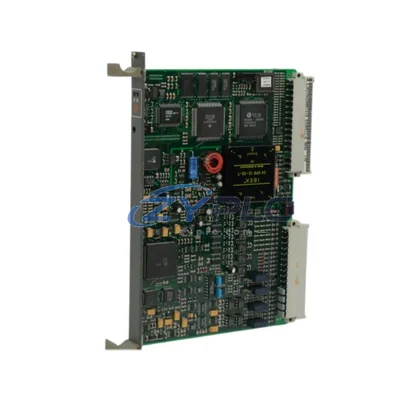
ABB AO523 1SAP250200R0001: Industrial Analog Output Gateway for AC500 Smart Factory Data Links
The ABB AO523 1SAP250200R0001 is a high-precision 8-channel analog output module engineered for the ABB AC500 PLC platform, delivering reliable 0–20 mA and 4–20 mA signal conversion at the heart of modern industrial automation networks. Designed to bridge the gap between digital control logic and field-level actuators, the AO523 serves as a critical node in the data flow chain — translating PLC commands into calibrated analog signals that drive control valves, variable frequency drives, positioners, and process transmitters across demanding manufacturing and process environments.
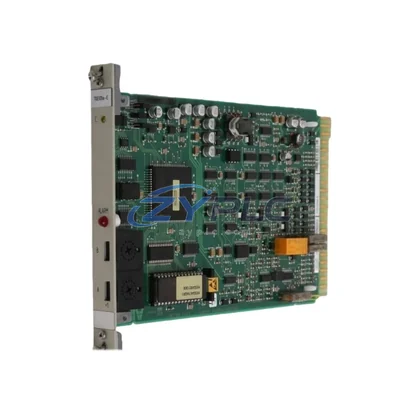
In smart factory deployments, the AO523 integrates seamlessly into the AC500 backplane bus architecture, communicating with the AC500 CPU modules — such as the PM573 and PM591 — through the internal S500 I/O bus. This tight integration ensures deterministic signal latency, making the module suitable for closed-loop process control where millisecond-level response is required. Engineers deploying distributed control architectures can pair the AO523 with remote I/O couplers like the TU515 or TU516 terminal units, extending analog output capability to remote field panels without additional signal conditioning hardware.
The module’s 12-bit resolution across all 8 channels supports fine-grained process control, whether regulating flow rates via 4–20 mA to a Siemens SINAMICS G120 variable frequency drive, commanding a proportional valve through a Bürkert positioner, or feeding setpoints to a Yokogawa field transmitter. Each channel is individually configurable, allowing mixed-mode operation within a single module — a significant advantage in multi-loop process skids where different actuator types share a common control cabinet.
Compatibility & Integration Notes
| Parameter |
Specification |
| SKU |
AO523 / 1SAP250200R0001 |
| Brand / Series |
ABB / AC500 |
| Module Type |
Analog Output Module |
| Output Channels |
8 Channels |
| Signal Range |
0–20 mA / 4–20 mA (configurable per channel) |
| Resolution |
12-bit |
| Communication Bus |
ABB S500 Internal I/O Bus (AC500 Backplane) |
| Protocol Compatibility |
PROFIBUS DP, Modbus RTU/TCP (via AC500 CPU gateway), EtherNet/IP |
| Network Compatibility |
AC500 PLC Platform, S500 I/O System, Remote I/O via TU515/TU516 |
| System Application |
SCADA Integration, HMI Setpoint Control, DCS Analog Output, VFD Speed Reference |
| Power Supply |
24 VDC (via AC500 backplane) |
| Operating Temperature |
-25°C to +70°C |
| Origin |
Germany |
| Warranty |
Warranty and support terms confirmed before quote |
| Availability |
Confirmed via RFQ before quotation |
Connected Automation Data Flow
In a typical smart factory data flow, the AO523 sits at the output end of a multi-layer communication chain. At the top level, a SCADA system — such as Wonderware InTouch or Ignition by Inductive Automation — sends process setpoints down through an OPC-UA or Modbus TCP link to the ABB AC500 CPU (e.g., PM573-ETH), which processes the control logic and writes analog output values to the AO523 register map via the S500 backplane bus. The AO523 then converts these digital values into precise 4–20 mA signals that command downstream field devices.
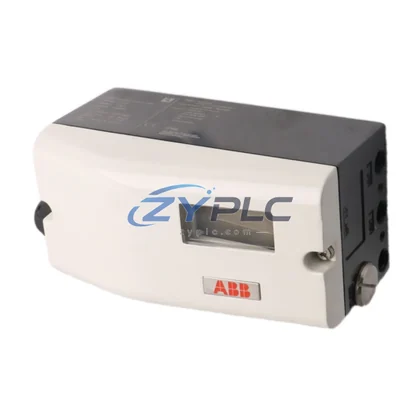
On the field device side, the AO523’s outputs connect directly to actuators such as ABB TZIDC digital positioners for control valve automation, or to the analog input terminals of ABB ACS580 variable frequency drives for motor speed regulation. In parallel, an ABB AI523 analog input module — the companion module in the AC500 S500 family — collects process feedback signals from pressure transmitters, flow meters, and temperature sensors, closing the control loop back through the CPU.
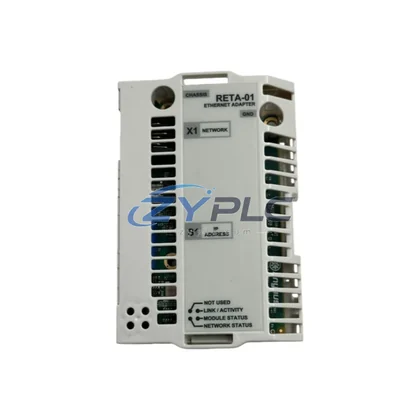
For installations requiring remote I/O expansion, the AO523 can be deployed on a remote S500 I/O station connected via PROFIBUS DP to the AC500 master CPU. In this topology, a PROFIBUS DP coupler (e.g., ABB CI502-PNIO or third-party Anybus X-gateway) bridges the remote station to the plant-wide PROFIBUS network, enabling the SCADA system to monitor and command the AO523 outputs from a central control room. This architecture is particularly effective in large process plants where field panels are distributed across multiple buildings or process units.
HMI integration is equally straightforward: an ABB CP600 HMI panel or a Weintek cMT series touchscreen connected to the AC500 CPU via Ethernet can display real-time analog output values, allow operators to manually override setpoints, and trigger alarm conditions when output signals fall outside configured ranges. The AO523’s diagnostic data — including wire-break detection and over-range flags — is surfaced through the AC500 CPU’s diagnostic buffer, making it accessible to both the HMI and the SCADA historian for trend analysis and predictive maintenance workflows.
Edge computing integration is also supported: an ABB Edge Controller or a third-party edge gateway (e.g., Moxa UC-8112) can subscribe to AC500 data tags via OPC-UA, forwarding analog output telemetry to cloud platforms such as ABB Ability or Microsoft Azure IoT Hub for long-term analytics, energy monitoring, and remote diagnostics — completing the data chain from field actuator to enterprise dashboard.
Solving Data Isolation in Industrial Sites
One of the most persistent challenges in legacy industrial sites is protocol fragmentation: older field devices speak 4–20 mA analog, while newer PLCs and SCADA systems demand digital protocols like PROFIBUS, Modbus TCP, or EtherNet/IP. The ABB AO523 1SAP250200R0001 directly addresses this by acting as the analog-to-digital bridge within the AC500 ecosystem — converting digital PLC register values into standardized analog signals that any field device can consume, regardless of its age or manufacturer.
Data isolation is further eliminated through the AC500’s gateway capabilities: by pairing the AO523 with an AC500 CPU equipped with dual Ethernet ports, engineers can simultaneously connect to a plant PROFIBUS network and a corporate Ethernet LAN, allowing SCADA systems and ERP platforms to access real-time analog output data without dedicated protocol converters. This reduces hardware costs, simplifies cabinet layouts, and shortens commissioning time.
For production line transparency, the AO523’s per-channel diagnostics enable continuous health monitoring of every analog output loop. Wire-break detection alerts maintenance teams before a failed signal causes a process upset, while the AC500’s integrated data logging captures output trends for post-incident analysis. Remote diagnostics via the AC500’s web server or OPC-UA interface allow engineers to interrogate module status from any networked device — eliminating the need for on-site visits during routine checks.
System expansion is handled gracefully: the S500 I/O architecture supports hot-swappable modules in select configurations, and the AO523’s standard form factor ensures drop-in replacement compatibility with other AC500 S500 analog modules. As production requirements grow, additional AO523 modules can be added to the same backplane or remote I/O station without modifying the existing network topology — protecting the initial infrastructure investment while scaling output capacity to meet new process demands.
Industrial Connectivity FAQ
Q1: What communication protocols does the ABB AO523 1SAP250200R0001 support for SCADA integration?
The AO523 communicates via the ABB S500 internal I/O bus to the AC500 CPU, which then supports PROFIBUS DP, Modbus RTU/TCP, EtherNet/IP, and OPC-UA depending on the CPU variant and communication modules installed. This allows seamless integration with major SCADA platforms including Wonderware, Ignition, and WinCC.
Q2: Is the AO523 compatible with third-party PLCs or only ABB AC500 systems?
The AO523 is designed exclusively for the ABB AC500 / S500 I/O platform. For third-party PLC integration, the 4–20 mA analog outputs can be wired directly to any PLC analog input module, making the AO523 functionally interoperable with Siemens S7, Rockwell ControlLogix, Mitsubishi MELSEC, and other platforms at the signal level.
Q3: How does the AO523 ensure network stability and minimize communication latency?
The AO523 uses the deterministic S500 backplane bus, which provides fixed-cycle scan times synchronized with the AC500 CPU’s task scheduler. This eliminates Ethernet collision delays and ensures analog output updates are applied within the CPU’s configured task cycle — typically 1–10 ms — making it suitable for fast closed-loop control applications.
Q4: What does the warranty and support terms confirmed before quote cover, and how is pre-shipment testing performed?
Every ABB AO523 1SAP250200R0001 unit supplied by ZYPLC undergoes functional pre-shipment testing, including channel-by-channel output verification across the full 0–20 mA range, power-on diagnostics, and communication bus integrity checks. The warranty and support terms confirmed before quote covers manufacturing defects and functional failures under normal operating conditions, with replacement or repair support coordinated through our global logistics network.