ABB CMRB-11C: Industrial Data Link and Smart Factory Connectivity for ACS800 Systems
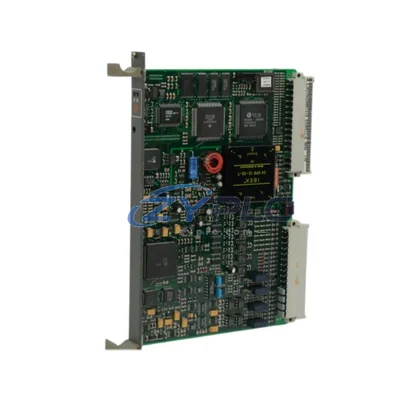
The ABB CMRB-11C is a relay output board engineered for seamless integration within the ABB ACS800 variable frequency drive platform. Designed to bridge the gap between field-level devices and upper-level control systems, the CMRB-11C delivers reliable, real-time signal switching and status feedback across complex industrial automation architectures. Whether deployed in a standalone drive cabinet or embedded within a distributed control network, this relay output board serves as a critical node in the industrial data chain — connecting motor drives, PLCs, remote I/O modules, HMI panels, and SCADA systems into a unified, transparent production environment.
In modern smart factory deployments, data isolation between field devices and supervisory systems remains one of the most persistent challenges. The CMRB-11C addresses this directly by providing hardwired relay output channels that interface with the ACS800 drive’s internal logic, enabling deterministic signal transmission to downstream control equipment. Its compatibility with ABB’s DriveAP application programming environment and the RDCO-02 communication module allows engineers to map relay states directly to fieldbus variables — supporting protocols such as PROFIBUS-DP, Modbus RTU, DeviceNet, and CANopen — without additional signal conditioning hardware.
Compatibility & Integration Notes
| Parameter |
Specification |
| Compatible Drive Series |
ABB ACS800 (all variants) |
| Module Type |
Relay Output Expansion Board |
| Relay Output Channels |
3 × SPDT relay outputs |
| Supported Protocols (via drive) |
PROFIBUS-DP, Modbus RTU, DeviceNet, CANopen, DDCS |
| Interface Type |
Drive slot-mounted (R-series option slot) |
| Signal Transmission |
Hardwired relay, deterministic switching |
| Network Compatibility |
ABB DriveAP, RDCO-02, RPBA-01, RCAN-01 |
| System Application |
PLC I/O expansion, SCADA feedback, HMI status, remote diagnostics |
| Operating Voltage |
24 VDC (from drive internal supply) |
| Origin |
Germany (ABB Drives) |
| Warranty |
Warranty and support terms confirmed before quote |
Connected Automation Data Flow
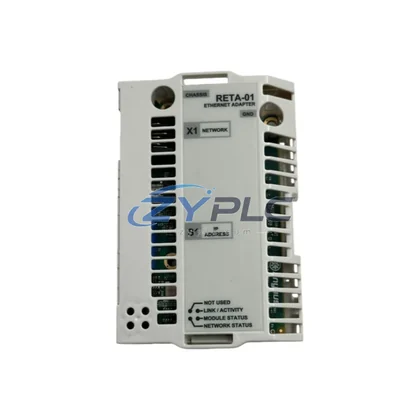
In a typical ACS800-based automation cell, the CMRB-11C sits at the intersection of drive-level logic and plant-wide communication. Consider a production line where an ABB ACS800-01 drive controls a conveyor motor. The CMRB-11C’s relay outputs feed discrete status signals — run, fault, ready — directly into a Siemens S7-1500 PLC digital input card, eliminating the need for intermediate relay panels. The PLC aggregates these signals alongside data from ABB RETA-01 Ethernet adapter modules on adjacent drives, forwarding consolidated drive status over PROFINET to a Wonderware System Platform SCADA server for real-time monitoring.
Upstream, an ABB RPBA-01 PROFIBUS adapter installed in the same ACS800 option slot communicates cyclic process data — speed reference, actual speed, current, torque — to the PLC at 12 Mbps, while the CMRB-11C simultaneously provides hardwired interlock signals to a Pilz PNOZ safety relay for emergency stop logic. This dual-path architecture — fieldbus for process data, hardwired relay for safety-critical signals — is a hallmark of robust industrial network design.
For remote I/O applications, the CMRB-11C relay outputs can be wired to an ABB AC500 remote I/O coupler, extending the drive’s status visibility to distributed control panels across the plant floor. HMI panels running ABB CP600 series displays can then visualize relay states alongside drive parameters, giving operators a unified view of motor health, fault history, and production throughput without leaving the control room. In multi-drive systems, the CMRB-11C boards across multiple ACS800 units feed a common Moxa EDS-510A industrial Ethernet switch, aggregating all relay status data onto a single managed network segment for SCADA polling.
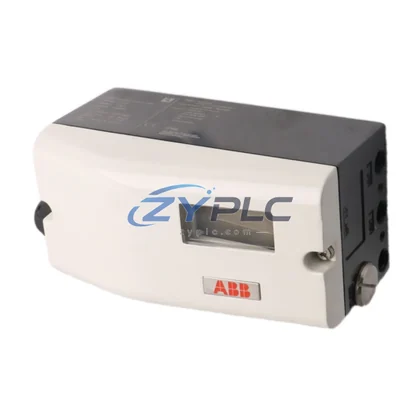
Edge computing gateways such as the ABB Edge Controller AC500-eCo can subscribe to relay state changes via OPC-UA, enabling predictive maintenance algorithms to correlate relay switching frequency with motor load cycles — a key capability in Industry 4.0 deployments. Sensor data from ABB TZIDC digital positioners and ABB FSO-12 safety functions modules on the same drive network further enriches the data context, allowing SCADA systems to build a complete picture of process health from field device to enterprise dashboard.
Solving Data Isolation in Industrial Sites
Many industrial facilities operate with a patchwork of legacy drives, proprietary protocols, and isolated control islands that prevent plant-wide visibility. The ABB CMRB-11C directly addresses several of these structural challenges:
Protocol Fragmentation: By providing hardwired relay outputs that operate independently of the fieldbus layer, the CMRB-11C ensures that critical drive status signals reach the control system even when protocol mismatches or network congestion affect cyclic communication. This hardware-level redundancy is essential in mixed-protocol environments where PROFIBUS, Modbus, and Ethernet coexist.
Data Silos Between Drive and PLC: Without a relay output board, many ACS800 installations rely solely on fieldbus process data for status monitoring — a single point of failure. The CMRB-11C adds a parallel hardwired data path, ensuring that fault, run, and ready states are always available to the PLC regardless of communication layer health.
Remote Monitoring Gaps: In facilities where drives are installed in remote or hazardous locations, the CMRB-11C’s relay outputs can trigger local alarm beacons, remote annunciator panels, or DCS input cards, extending monitoring reach without requiring additional communication hardware at the drive level.
Production Line Transparency: By feeding relay status into SCADA historian databases, maintenance teams gain access to long-term drive event logs — enabling root cause analysis of recurring faults, optimization of preventive maintenance schedules, and reduction of downtime across the production line.
System Scalability: The CMRB-11C’s slot-based installation in the ACS800 option board architecture means that relay output capability can be added to any drive in the fleet without hardware redesign, supporting phased automation upgrades and greenfield expansions alike.
All CMRB-11C units supplied by ZYPLC undergo pre-shipment functional testing, including relay coil continuity verification, contact resistance measurement, and compatibility confirmation with the target ACS800 drive firmware version. Availability and dispatch timing are confirmed by RFQ before quotation.
Industrial Connectivity FAQ
Q1: Does the CMRB-11C introduce any communication latency in the ACS800 control loop?
No. The CMRB-11C operates as a hardwired relay output board and does not participate in the drive’s fieldbus communication cycle. Relay switching response is determined by the drive’s internal logic scan time (typically <1 ms), making it suitable for time-critical interlock and status applications without adding network latency.
Q2: Which fieldbus protocols are compatible with the ACS800 when using the CMRB-11C alongside a communication adapter?
The CMRB-11C is compatible with all ACS800 option slot configurations. When used alongside adapters such as the RPBA-01 (PROFIBUS-DP), RCAN-01 (CANopen), RDCO-02 (DDCS fiber), or RETA-01 (Ethernet/IP, Modbus TCP), the relay outputs operate independently, providing hardwired status signals while the adapter handles cyclic process data communication.
Q3: How does the CMRB-11C support network stability in multi-drive SCADA systems?
By providing hardwired relay outputs as a secondary status channel, the CMRB-11C ensures that drive fault and run signals remain available to the PLC and SCADA system even during fieldbus network interruptions. This dual-path approach — fieldbus for process data, relay for status — significantly improves overall system resilience and reduces false alarm rates during network maintenance windows.
Q4: What does the warranty and support terms confirmed before quote cover, and how is pre-shipment testing conducted?
The warranty and support terms confirmed before quote covers all manufacturing defects, relay contact failures, and PCB-level faults from the date of shipment. Pre-shipment testing includes relay coil energization, contact switching verification under rated load, and ACS800 slot compatibility confirmation. A test report is available upon request. For warranty claims or technical support, contact ZYPLC directly.