ABB DFC02 Fieldcontroller for DFC Series: Compatibility and Replacement Notes
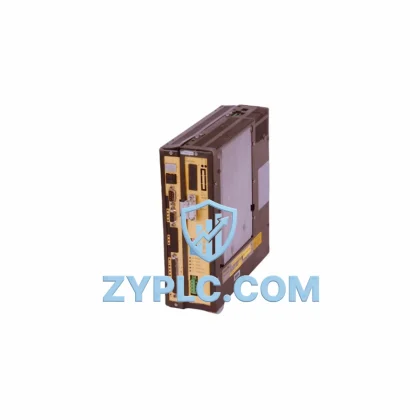
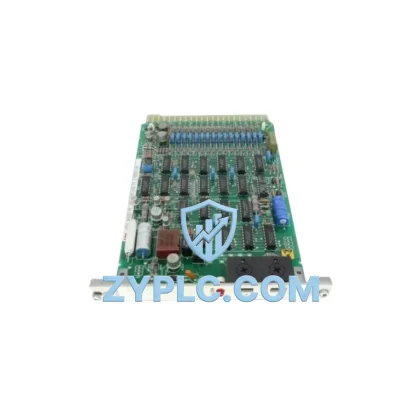
The ABB DFC02 Fieldcontroller Main Board is a critical control-layer component within the ABB DFC Series Distributed Control System (DCS) architecture. Designed for high-reliability industrial environments, the DFC02 serves as the central processing and field communication hub that bridges the control layer with the I/O layer, network layer, and execution layer in a fully coordinated automation hierarchy. Whether deployed in continuous process industries or discrete manufacturing environments, the DFC02 delivers the system consistency, scalability, and long-term maintainability that modern industrial control architectures demand.
In a layered automation system, the DFC02 occupies the controller tier — the nerve center that receives process data from field instruments, executes control logic, and dispatches commands to actuators and drives. Its role is not isolated; it operates in tight coordination with upstream engineering workstations, peer controllers in redundant configurations, downstream I/O modules, and communication gateways that relay data to SCADA and MES platforms. Understanding the DFC02 in this systemic context is essential for engineers designing or maintaining ABB DFC Series installations.
Product Specification Table
| Parameter |
Specification |
| System Role |
Fieldcontroller Main Board — Control Layer (DCS) |
| Compatible Series |
ABB DFC Series Distributed Control System |
| Module Type |
DCS Controller Module |
| Country of Origin |
Germany (DE) |
| Electrical Interface |
Backplane bus interface; compatible with DFC Series rack and power supply modules |
| Communication Capability |
Fieldbus and inter-controller communication via DFC Series network infrastructure |
| Redundancy Support |
Supports hot-standby redundant controller configurations within DFC architecture |
| Installation Environment |
Industrial control cabinet; DIN rail or rack-mount per DFC Series mechanical specification |
| system integration |
Full system integration with DFC Series I/O, power, and communication modules |
| Warranty |
12-Month Warranty — tested, verified, and ready for system deployment |
System Compatibility Notes
The DFC02 does not operate in isolation — its value is realized through its integration with the full DFC Series control platform. In a typical DFC Series cabinet assembly, the DFC02 main board is installed into a DFC Series rack backplane, which provides both mechanical support and the high-speed internal bus for inter-module communication. The rack backplane connects the DFC02 to adjacent I/O modules, enabling direct, low-latency signal exchange without external wiring overhead.
On the power layer, the DFC02 relies on DFC Series power supply modules to deliver stable, regulated DC power. In redundant power configurations — common in critical process industries — dual power supply modules feed the backplane simultaneously, ensuring that a single power failure does not interrupt controller operation. The DFC02’s power consumption profile is matched to the DFC Series power budget, allowing system engineers to calculate cabinet power loads with precision.
At the I/O layer, the DFC02 coordinates with DFC Series analog input modules, digital input/output modules, and thermocouple or RTD input modules to acquire process variables and issue control outputs. Signal conditioning, scaling, and filtering are handled at the I/O module level, delivering clean, engineering-unit data to the DFC02 for control algorithm execution. This modular I/O architecture allows engineers to expand the system’s field connectivity without replacing the controller — a key advantage for phased project rollouts and future capacity planning.
For network connectivity, the DFC02 interfaces with DFC Series communication gateway modules that translate between the internal DFC bus and plant-level protocols such as PROFIBUS, Modbus, or Ethernet-based industrial protocols. These gateways enable the DFC02 to exchange data with SCADA systems, historian servers, and MES platforms, supporting real-time monitoring, alarm management, and production reporting. In multi-controller architectures, peer-to-peer communication between DFC02 units allows coordinated control across multiple process sections without routing all data through a central server.
At the human-machine interface layer, operator workstations and panel-mounted HMI terminals connect to the DFC Series network to display process graphics, trend data, and alarm lists sourced from the DFC02’s real-time database. Engineers can also connect programming terminals directly to the DFC02 for online monitoring, logic modification, and diagnostic access — capabilities that are essential during commissioning and ongoing maintenance cycles.
In the execution layer, the DFC02 drives variable frequency drives (VFDs), control valves, motor starters, and relay output modules based on the results of its PID, sequence, and logic control algorithms. The deterministic scan cycle of the DFC02 ensures that control outputs are updated at consistent intervals, maintaining process stability even under dynamic load conditions.
Industrial Application Notes
The ABB DFC02 Fieldcontroller Main Board is suited to a broad range of industrial automation applications where system reliability, architectural consistency, and long-term maintainability are paramount.
In power generation and electrical utilities, the DFC02 is deployed in boiler control, turbine auxiliary systems, and substation automation, where its deterministic control execution and redundancy support meet the stringent availability requirements of grid-connected assets. Its compatibility with the DFC Series communication infrastructure allows seamless integration with maintenance planning systems and remote monitoring platforms.
In petrochemical and refinery applications, the DFC02 manages continuous process loops — flow, pressure, temperature, and level — across distillation columns, heat exchangers, and reactor systems. The module’s robust design for industrial cabinet environments ensures reliable operation in the elevated ambient temperatures and vibration conditions typical of process plant control rooms.
In water and wastewater treatment, the DFC02 coordinates pump sequencing, chemical dosing, and filtration control across distributed treatment stages. Its modular I/O expansion capability allows a single DFC02 controller to manage a large number of field instruments without requiring additional controller hardware, reducing system complexity and lifecycle cost.
In mining and metallurgical processing, the DFC02 supports conveyor control, crusher sequencing, and flotation cell management, where the ability to maintain control continuity during partial system faults — enabled by the DFC Series redundancy architecture — is critical to production throughput and equipment protection.
In packaging and discrete manufacturing, the DFC02 integrates with servo drives, vision systems, and robotic cells through the DFC Series communication gateways, enabling coordinated multi-axis motion and quality inspection within a unified control architecture. Its fast scan cycle supports the high-speed sequencing demands of modern packaging lines.
Product Compatibility FAQ
Q1: Is the ABB DFC02 compatible with existing DFC Series racks and I/O modules already installed in my system?
Yes. The DFC02 is designed for full system integration within the DFC Series platform. It is mechanically and electrically compatible with DFC Series rack backplanes, power supply modules, and I/O modules. Before installation, verify the firmware revision of your existing DFC Series components against ABB’s compatibility matrix to ensure inter-module communication protocols are aligned. Our technical team can assist with compatibility verification prior to shipment.
Q2: Can the DFC02 be configured in a redundant controller architecture, and what additional components are required?
The DFC02 supports hot-standby redundant controller configurations within the DFC Series architecture. A redundant setup typically requires a second DFC02 unit, a redundancy synchronization link, and compatible DFC Series rack slots for both primary and standby controllers. The redundancy switchover is managed automatically by the DFC Series system software, with bumpless transfer ensuring process continuity during controller failover. Contact our engineering team for a full bill of materials for your specific redundancy configuration.
Q3: What does the 12-Month Warranty cover, and what support is available for commissioning and long-term maintenance?
Every ABB DFC02 unit supplied by ZYPLC is covered by a 12-Month Warranty against manufacturing defects and functional failures under normal operating conditions. Prior to shipment, each unit undergoes functional testing to verify board-level operation. For commissioning support, our technical team provides pre-sales configuration guidance and post-sales troubleshooting assistance. For long-term maintenance, we maintain inventory of DFC02 units and related DFC Series components to support rapid replacement in the event of field failures, minimizing unplanned downtime in your control system.
© 2026 ZYPLC. All rights reserved.
Original Source: https://zyplc.com
Contact: +86 19859288691 | plc.sales@zyplc.com