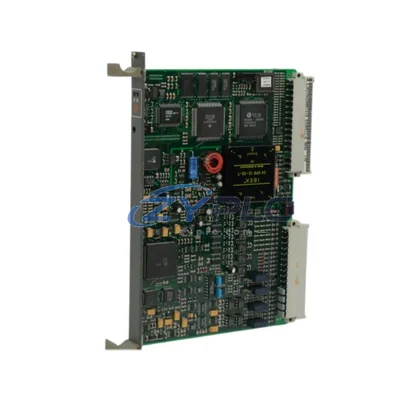
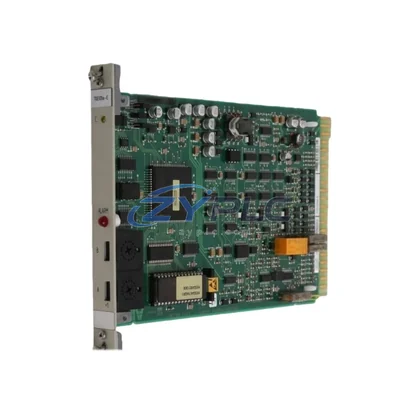
ABB DSQC626 3HAC026289-001 Power Supply for IRC5
The ABB DSQC626 (3HAC026289-001) is a dedicated power supply module engineered for the IRC5 robot controller platform, serving as the foundational energy distribution node within ABB’s modular control system architecture. In any layered automation environment, stable and regulated power delivery is not a peripheral concern — it is the backbone upon which every control decision, signal exchange, and motion command depends. The DSQC626 fulfills this role with precision, providing conditioned DC power to the controller’s internal subsystems while maintaining the electrical integrity required for high-cycle industrial operation.
Within the IRC5 cabinet architecture, the DSQC626 interfaces directly with the main computer unit — typically the DSQC639 or DSQC645 — supplying the regulated voltage rails that sustain CPU processing, memory retention, and real-time task execution. Without a properly functioning power supply at this layer, the entire control hierarchy becomes unstable: axis control boards lose synchronization, I/O modules fail to report field signals accurately, and the FlexPendant operator interface disconnects from the controller bus. The DSQC626 prevents these cascading failures by maintaining consistent power output across variable load conditions.
At the drive layer, the DSQC626 works in coordination with the drive system — including axis computer boards such as the DSQC668 and rectifier/inverter units within the drive module — to ensure that servo amplifier logic circuits receive clean power independent of the high-current motor drive bus. This separation of logic power from drive power is a deliberate architectural decision in IRC5 design, reducing electromagnetic interference and protecting sensitive digital components from voltage transients generated during motor acceleration and deceleration cycles.
From a network and communication standpoint, the DSQC626 sustains the power requirements of the DSQC688 DeviceNet gateway and DSQC679 Ethernet/IP communication boards installed within the controller. These modules handle fieldbus communication with external PLCs, SCADA systems, and peripheral I/O nodes on the production line. Any power instability at the supply level directly degrades communication timing and can introduce latency or packet loss in time-sensitive control loops. The DSQC626’s regulated output ensures that communication modules operate within their specified electrical envelope at all times.
In redundant system configurations — common in automotive body-in-white lines, foundry automation, and continuous process applications — the IRC5 controller may be paired with a secondary controller or UPS module to maintain operation during power grid fluctuations. The DSQC626 is compatible with these redundancy architectures, and its modular form factor allows replacement without disturbing adjacent modules such as the DSQC611 I/O board or the DSQC662 safety board, both of which occupy the same backplane assembly. This modularity significantly reduces mean time to repair (MTTR) during scheduled maintenance windows.
For system integrators and maintenance engineers, the DSQC626 is a critical spare component in any IRC5-based installation. Its availability in tested, verified condition — with full functional validation prior to shipment — ensures that replacement activities can be completed within a single maintenance shift rather than extended downtime periods. Each unit supplied by ZYPLC undergoes pre-shipment functional testing and is covered by a warranty and support terms confirmed before quote, providing engineering teams with the confidence to maintain production continuity without the risk associated with untested surplus components.
In packaging lines, palletizing cells, machine tending stations, and arc welding systems where IRC5 controllers manage multi-axis coordinated motion, the power supply module’s reliability directly correlates with overall equipment effectiveness (OEE). A degraded or failing DSQC626 manifests as intermittent controller resets, unexplained axis faults, or erratic I/O behavior — symptoms that are often misdiagnosed at the software or drive level before the root cause is traced back to the power supply. Maintaining a verified spare DSQC626 in inventory is therefore a standard recommendation for any facility operating more than two IRC5 controllers.
Product Specification Table
| Parameter |
Specification |
| System Role |
Internal DC Power Supply — IRC5 Controller Cabinet |
| Part Number |
DSQC626 / 3HAC026289-001 |
| Compatible Platform |
ABB IRC5 Single / Dual Cabinet Controller |
| Output Voltage |
24 VDC (logic supply rails) |
| Input Voltage Range |
100–240 VAC, 50/60 Hz |
| Communication Support |
Powers DeviceNet, Ethernet/IP, PROFIBUS gateway boards |
| Installation Environment |
IRC5 controller cabinet, DIN-rail / backplane mount |
| Origin |
Sweden (ABB Robotics) |
| Warranty |
Warranty and support terms confirmed before quote — Tested & Verified Before Shipment |
System Compatibility Notes
The DSQC626 does not operate in isolation — it is one node in a tightly integrated control architecture. At the top of the hierarchy, the DSQC639 main computer board executes RobotWare tasks and manages real-time motion planning. Immediately below, the DSQC668 axis computer coordinates servo trajectory data with the drive system. The DSQC626 supplies the logic power that keeps both of these boards operational through every program cycle.
On the I/O layer, the DSQC611 digital I/O board and DSQC652 analog I/O module rely on stable 24 VDC logic power to accurately sample field signals from sensors, proximity switches, and process instruments. Any ripple or dropout at the supply level introduces signal noise that can trigger false fault conditions or cause the controller to misread process states. The DSQC626’s regulated output eliminates this risk.
The DSQC662 safety board — responsible for emergency stop chains, safeguarding relay logic, and functional safety monitoring — also draws from the same power distribution network within the IRC5 cabinet. Given the safety-critical nature of this board, the DSQC626’s ability to maintain output stability under varying load conditions is directly relevant to the integrity of the machine’s safety architecture.
For facilities using the FlexPendant (DSQC679 teach pendant interface) for operator programming and jogging, the DSQC626 sustains the communication bus between the pendant and the main computer. Operators working in manual mode depend on this link for real-time position feedback and program editing — a power supply fault at this layer immediately disrupts the human-machine interface layer of the control system.
In multi-robot cells where IRC5 controllers are networked via DSQC688 DeviceNet master boards or Ethernet-based MultiMove configurations, the DSQC626 in each cabinet must maintain synchronized power delivery to ensure that inter-robot communication timing remains within specification. Timing drift caused by power instability in one cabinet can desynchronize coordinated motion sequences across the entire cell.
Industrial Application Notes
In automotive manufacturing — particularly body-in-white welding and assembly lines — IRC5 controllers manage dozens of robots operating in tightly choreographed sequences. The DSQC626 is a standard component in these installations, and its failure is treated as a critical event requiring immediate spare replacement. Facilities with high robot density typically maintain a minimum of two DSQC626 units in local inventory to avoid production line stoppages.
In the power generation and electrical utility sector, IRC5-based systems are used for cable handling, transformer assembly, and switchgear manufacturing. These environments demand high controller uptime and often operate on extended maintenance cycles. The DSQC626’s modular replacement capability — without requiring full controller disassembly — makes it well-suited for these low-intervention maintenance strategies.
In food and beverage packaging lines, where IRC5 controllers manage pick-and-place, case packing, and palletizing operations, the DSQC626 supports continuous multi-shift operation. Its compatibility with the IRC5’s internal diagnostics allows maintenance teams to monitor power supply health through the FlexPendant event log, enabling predictive replacement before failure occurs.
In mining and mineral processing facilities, where environmental conditions include elevated dust, vibration, and temperature variation, the IRC5 cabinet’s sealed enclosure protects the DSQC626 from direct exposure. However, the thermal load within the cabinet must be managed carefully, and the DSQC626’s thermal design is rated for the operating range specified by ABB for IRC5 installations in these environments.
Product Compatibility FAQ
Q1: Is the DSQC626 (3HAC026289-001) compatible with all IRC5 controller variants?
The DSQC626 is designed for the ABB IRC5 single and dual cabinet controller platforms. It is compatible with IRC5 M2004 and later revisions. For IRC5 Compact or IRC5 Panel Mounted Controller variants, compatibility should be verified against the specific cabinet configuration and RobotWare version in use. ZYPLC’s technical team can assist with compatibility confirmation prior to order.
Q2: What is the recommended installation and commissioning procedure for a DSQC626 replacement?
Replacement of the DSQC626 should be performed with the IRC5 controller fully de-energized and locked out per site safety procedures. The module is mounted within the controller cabinet on the power distribution assembly. After installation, the controller should be powered up in manual mode and the system event log reviewed via the FlexPendant to confirm normal power supply status before returning to automatic operation. No software configuration changes are typically required for a like-for-like replacement.
Q3: What warranty and testing assurance does ZYPLC provide for the DSQC626?
Every DSQC626 unit supplied by ZYPLC is functionally tested prior to shipment to verify output voltage regulation, load response, and electrical integrity. Each unit is covered by a warranty and support terms confirmed before quote from the date of delivery. In the event of a warranty claim, ZYPLC provides direct technical support and replacement coordination to minimize impact on production operations.