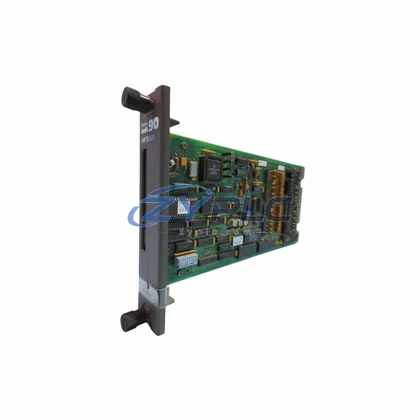
ABB IPECB11 Industrial Network Interface for Modular Systems: Bridging the Industrial Data Link
In modern smart factory environments, seamless data flow between field devices and upper-level control systems is no longer optional — it is the foundation of operational efficiency. The ABB IPECB11 Industrial Network Interface Module is engineered to serve as a critical communication bridge within ABB’s Modular Series architecture, enabling reliable protocol conversion, real-time data transmission, and robust network integration across complex industrial automation topologies.
From signal acquisition at the sensor level to data aggregation at the SCADA layer, the IPECB11 ensures that every node in your automation network communicates with precision and stability. Whether deployed in discrete manufacturing, process control, energy management, or infrastructure automation, this module delivers the connectivity backbone that modern industrial sites demand.
Compatibility & Integration Notes
| Parameter |
Specification |
| Product SKU |
IPECB11 |
| Brand / Manufacturer |
ABB |
| Series |
Modular Series |
| Product Type |
Industrial Network Communication Module |
| Supported Protocols |
PROFIBUS, PROFINET, Modbus RTU/TCP, EtherNet/IP, CANopen |
| Interface Types |
RJ45 Ethernet, RS-485, Sub-D (PROFIBUS) |
| Transmission Capability |
Real-time cyclic and acyclic data exchange; deterministic latency |
| Network Compatibility |
Industrial Ethernet, Fieldbus, SCADA/DCS integration |
| System Applications |
PLC control systems, Remote I/O, HMI/SCADA, Drive networks, Edge gateways |
| Origin |
Germany (DE) |
| Warranty |
warranty terms confirmed during quotation — Verified pre-shipment testing included |
Connected Automation Data Flow
The IPECB11 sits at the heart of a layered industrial communication architecture. At the field level, sensors and actuators — including ABB’s AI523 analog input modules and DO524 digital output modules — feed process data upward through the fieldbus backbone. The IPECB11 aggregates these signals and translates them into Ethernet-compatible data streams, enabling seamless handoff to higher-level systems.
Within the ABB AC500 PLC platform, the IPECB11 operates as a communication front-end, interfacing directly with CPU modules such as the PM573-ETH to ensure that real-time control logic has access to accurate, low-latency field data. Terminal base units like the TU516 provide the physical mounting and signal routing infrastructure that supports the IPECB11’s modular installation.
On the network side, the IPECB11 connects to industrial Ethernet switches and managed network infrastructure, routing data packets to SCADA servers, historian databases, and cloud-based analytics platforms. ABB’s CP600 HMI panels receive structured process data via the IPECB11’s Ethernet port, rendering live dashboards, alarm states, and trend graphs for operators on the plant floor.
For drive integration, the IPECB11 enables communication with ABB’s ACS880 industrial drives, allowing speed references, torque feedback, and fault diagnostics to flow bidirectionally between the drive network and the PLC control layer. This eliminates the need for proprietary point-to-point wiring and replaces it with a unified, protocol-consistent data highway.
Remote I/O expansion is handled through fieldbus-connected modules such as the CI501-PNIO and CI502-PNIO PROFINET communication interface modules, which extend the reach of the control network to distributed cabinet locations without additional CPU resources. The IPECB11 acts as the protocol gateway that unifies these distributed nodes into a single, coherent network segment visible to the SCADA layer.
Edge computing gateways positioned between the OT and IT layers rely on the IPECB11’s stable data output to feed machine learning models, OEE dashboards, and predictive maintenance algorithms. The module’s deterministic communication behavior ensures that edge analytics receive consistent, time-stamped data streams — a prerequisite for accurate anomaly detection and condition monitoring.
Solving Data Isolation in Industrial Sites
One of the most persistent challenges in industrial automation is the coexistence of legacy fieldbus systems alongside modern Industrial Ethernet infrastructure. Older PROFIBUS segments, Modbus RTU networks, and proprietary serial links create data silos that prevent unified visibility across the production floor. The ABB IPECB11 directly addresses this challenge by acting as a multi-protocol gateway, translating between legacy and contemporary communication standards without requiring wholesale system replacement.
In facilities where SCADA systems need to monitor equipment across multiple protocol domains, the IPECB11 provides a single integration point that normalizes data formats and delivers them to the supervisory layer in a consistent structure. This enables operators to view real-time KPIs, alarm histories, and energy consumption data from heterogeneous device populations through a unified HMI interface.
Remote diagnostics capabilities are significantly enhanced when the IPECB11 is deployed. Maintenance engineers can interrogate device health, communication statistics, and error logs from the SCADA workstation or a remote laptop without physical access to the cabinet. This reduces mean time to repair (MTTR) and supports predictive maintenance strategies that minimize unplanned downtime.
Production line transparency — a core requirement of Industry 4.0 — is achieved through the IPECB11’s ability to expose granular device-level data to MES and ERP systems. Cycle times, reject counts, energy draw per production unit, and equipment utilization rates become accessible in real time, enabling data-driven decisions at the management level.
System scalability is built into the IPECB11’s modular design philosophy. As production capacity expands, additional I/O modules, drives, and communication nodes can be integrated into the existing network without architectural redesign. The module supports hot-swap installation in compatible ABB Modular Series racks, minimizing commissioning downtime during system expansion.
Every IPECB11 unit supplied by ZYPLC undergoes pre-shipment functional verification, including communication link testing, protocol handshake validation, and power-on diagnostics. This ensures that the module arrives ready for immediate installation and commissioning, reducing on-site setup time and the risk of field failures during initial deployment.
Industrial Connectivity FAQ
Q1: What communication protocols does the ABB IPECB11 support, and is it compatible with mixed-protocol networks?
The IPECB11 supports multiple industrial protocols including PROFIBUS DP, PROFINET IO, Modbus RTU/TCP, EtherNet/IP, and CANopen. It is designed for mixed-protocol environments where legacy fieldbus devices must coexist with modern Ethernet-based systems, making it suitable for brownfield integration projects.
Q2: How does the IPECB11 ensure network stability and minimize communication latency in real-time control applications?
The module employs deterministic communication scheduling and hardware-level buffering to maintain consistent cycle times. In PROFINET configurations, it supports IRT (Isochronous Real-Time) mode for sub-millisecond synchronization, ensuring that time-critical control loops are not disrupted by network congestion or topology changes.
Q3: Can the IPECB11 be integrated with existing SCADA and HMI systems without replacing the current network infrastructure?
Yes. The IPECB11 is designed for non-disruptive integration. It connects to existing Ethernet switch infrastructure and exposes standard OPC-UA or Modbus TCP data interfaces that are natively supported by major SCADA platforms including Wonderware, Ignition, and WinCC. No proprietary middleware is required.
Q4: What does the warranty terms confirmed during quotation cover, and what pre-shipment testing is performed?
All IPECB11 units supplied by ZYPLC carry a warranty terms confirmed during quotation covering manufacturing defects and communication hardware failures under normal operating conditions. Prior to shipment, each unit undergoes power-on testing, protocol communication verification, and interface integrity checks. Detailed test records are available upon request for quality-critical applications.