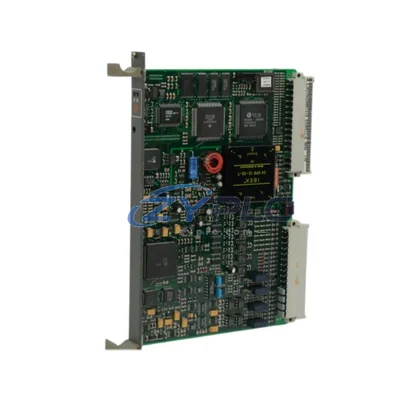
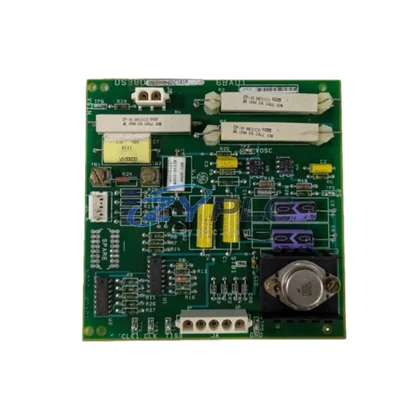
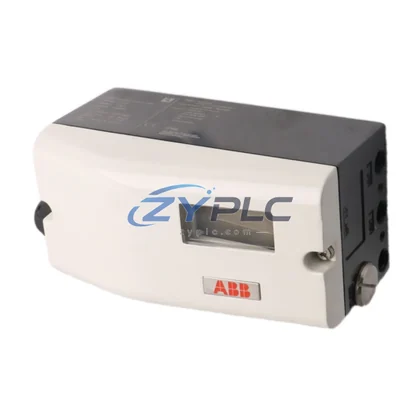
ABB PCD231 B101 3BHE025541R0101: Industrial Data Link and Smart Factory Connectivity for AC800M Systems
In modern industrial automation, seamless data flow between field devices, controllers, and supervisory systems is the backbone of operational efficiency. The ABB PCD231 B101 (catalog reference 3BHE025541R0101) is a dedicated communication module engineered for the AC800M controller platform — ABB’s flagship process automation controller used across power generation, oil and gas, chemical processing, pulp and paper, and advanced manufacturing environments. This module serves as a critical network interface node, enabling the AC800M to participate in multi-protocol industrial networks, bridge legacy fieldbus architectures with modern Ethernet-based systems, and deliver real-time data transparency across every layer of the automation hierarchy.
The PCD231 B101 is not simply a plug-in card — it is a system-level connectivity enabler. When integrated into an AC800M controller rack alongside modules such as the PM861A or PM864A CPU modules, it extends the controller’s communication reach without burdening the main processor. This architectural separation ensures that communication tasks — polling field devices, responding to SCADA queries, forwarding alarm states — are handled independently, preserving deterministic scan cycle performance in the CPU and maintaining system stability under high network load conditions.
Compatibility & Integration Notes
| Attribute |
Specification |
| Part Number |
PCD231 B101 |
| Catalog Number |
3BHE025541R0101 |
| Brand |
ABB |
| Series |
AC800M |
| Product Type |
Communication Module |
| Protocol Support |
PROFIBUS DP, Modbus RTU/TCP, IEC 61850, OPC UA (platform dependent) |
| Interface Type |
Backplane-mounted, rack-integrated communication interface |
| Transmission Capability |
Real-time cyclic and acyclic data exchange with field devices and supervisory systems |
| Network Compatibility |
AC800M controller rack; compatible with S800 I/O, CI modules, and ABB fieldbus infrastructure |
| System Application |
DCS, SCADA integration, remote I/O bridging, HMI data gateway, process automation |
| Origin |
Germany |
| Warranty |
Warranty and support terms confirmed before quote |
Connected Automation Data Flow
Understanding the PCD231 B101 requires viewing it within the full data chain of an industrial site. At the field level, sensors, transmitters, and actuators — including ABB TZID-C positioners, pressure transmitters, and flow meters — generate continuous process signals. These signals are collected by S800 I/O modules such as the AI810 analog input module or DI810 digital input module, which are mounted on TB807 or TB820 I/O cluster bases connected to the AC800M via the CI830 or CI854A fieldbus communication interface modules.
The PCD231 B101 operates at the controller-to-network boundary. It enables the AC800M — running on PM864A or PM866A processor modules — to communicate upstream with SCADA platforms such as ABB System 800xA, Wonderware, or Ignition, and downstream with PROFIBUS DP slave devices including variable frequency drives, motor control centers, and remote terminal units. In sites where legacy Modbus RTU devices such as older ABB ACS550 or ACS800 drives are still in service, the PCD231 B101 facilitates protocol bridging, allowing these devices to report status and receive setpoints through the AC800M without requiring hardware replacement.
At the network layer, industrial Ethernet switches — such as those from the ABB Ethernet Switch ES series — provide the physical infrastructure connecting the AC800M rack to engineering workstations, operator HMI panels, and historian servers. The PCD231 B101 ensures that data originating from field instruments reaches these upper-layer systems with minimal latency, supporting real-time monitoring dashboards, alarm management systems, and production reporting tools. In redundant network architectures, the module supports ring topology configurations that eliminate single points of failure, maintaining communication continuity even during cable faults or switch failures.
For remote diagnostics and predictive maintenance applications, the PCD231 B101 enables the AC800M to expose device health data — including module temperature, communication error counters, and fieldbus diagnostics — to asset management systems. This capability is particularly valuable in unmanned substations, offshore platforms, and remote process facilities where on-site intervention is costly and time-consuming. Engineers can interrogate the system remotely, identify degraded communication links, and schedule maintenance proactively rather than reactively.
Solving Data Isolation in Industrial Sites
One of the most persistent challenges in industrial automation is data isolation — the condition where field devices, controllers, and supervisory systems operate in silos, unable to share information efficiently due to protocol incompatibilities, aging infrastructure, or fragmented network architectures. The ABB PCD231 B101 directly addresses this challenge within AC800M-based control systems.
In brownfield installations where multiple generations of control equipment coexist, the PCD231 B101 acts as a protocol normalizer. Older PROFIBUS DP devices that cannot natively communicate with modern OPC UA-based SCADA systems are bridged through the AC800M, with the PCD231 B101 managing the fieldbus communication layer. This eliminates the need for standalone protocol converters or gateway appliances, reducing hardware complexity and potential failure points in the communication chain.
Production line transparency — the ability to see real-time status, throughput, and quality metrics from every machine and process unit — is a core requirement of smart factory initiatives. The PCD231 B101 enables this transparency by ensuring that data from every connected field device is available to the AC800M’s application program, where it can be processed, aggregated, and forwarded to MES or ERP systems via the SCADA layer. Alarm states, production counts, energy consumption figures, and equipment health indicators all flow through this communication pathway.
System expansion is another area where the PCD231 B101 delivers long-term value. As production capacity grows or new process units are added, additional I/O clusters and fieldbus segments can be integrated into the existing AC800M architecture without replacing the core controller infrastructure. The modular design of the AC800M platform, supported by communication modules like the PCD231 B101, allows engineers to scale the control system incrementally, protecting the original capital investment while accommodating new automation requirements.
Every PCD231 B101 unit supplied by ZYPLC undergoes pre-shipment functional testing to verify communication interface integrity, backplane connectivity, and firmware version compatibility. Units are shipped with full traceability documentation and are covered by a Warranty and support terms confirmed before quote, providing procurement teams and maintenance engineers with confidence in long-term operational reliability.
Industrial Connectivity FAQ
Q1: What communication protocols does the ABB PCD231 B101 support, and is it compatible with third-party SCADA systems?
The PCD231 B101 is designed for the AC800M platform and supports PROFIBUS DP as its primary fieldbus protocol, with the AC800M’s broader communication architecture supporting Modbus TCP, IEC 61850, and OPC DA/UA depending on the CI module configuration. It is compatible with third-party SCADA systems including Wonderware InTouch, Ignition by Inductive Automation, and Siemens WinCC, provided the SCADA system supports OPC or Modbus TCP communication with the AC800M controller.
Q2: How does the PCD231 B101 affect network latency and real-time performance in the AC800M system?
Because the PCD231 B101 handles communication tasks independently from the main CPU modules (PM861A, PM864A, PM866A), it does not introduce latency into the controller’s scan cycle. PROFIBUS DP communication is managed asynchronously, with data exchanged between the fieldbus and the controller’s internal memory at configurable update rates. For time-critical applications, the module supports deterministic communication scheduling that ensures field device data is refreshed within defined cycle times, typically in the range of 1–10 ms depending on network configuration and device count.
Q3: Can the PCD231 B101 be used in redundant network architectures, and what happens if a communication fault occurs?
The AC800M platform supports redundant controller configurations, and the PCD231 B101 can be deployed in redundant communication setups where a standby module takes over automatically in the event of a primary module failure. In non-redundant configurations, the AC800M’s fault detection logic will generate an alarm and log the communication error, allowing operators to identify and address the fault promptly. ZYPLC recommends maintaining a spare PCD231 B101 unit in site inventory for critical applications, and our Warranty and support terms confirmed before quote covers manufacturing defects and premature failures during the warranty period.
Q4: What pre-shipment testing does ZYPLC perform on the PCD231 B101, and what documentation is provided?
Each PCD231 B101 unit undergoes functional verification testing prior to shipment, including backplane interface checks, communication port integrity tests, and firmware version confirmation. Units are supplied with test reports, original manufacturer labeling, and traceability documentation. The Warranty and support terms confirmed before quote is activated from the date of shipment and covers defects in materials and workmanship. For urgent requirements or large-volume procurement, ZYPLC maintains RFQ-confirmed availability with Export shipping options available after RFQ confirmation capability.