ABB PDD200A101 3BHE019633R0101: Industrial Data Link for Symphony Plus Smart Factory Connectivity
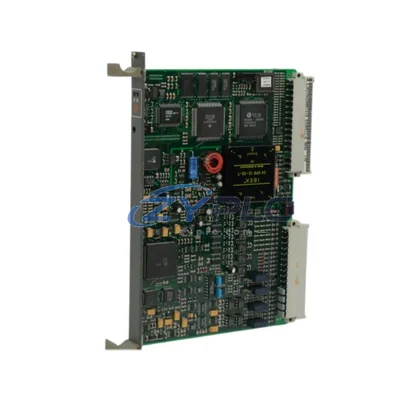
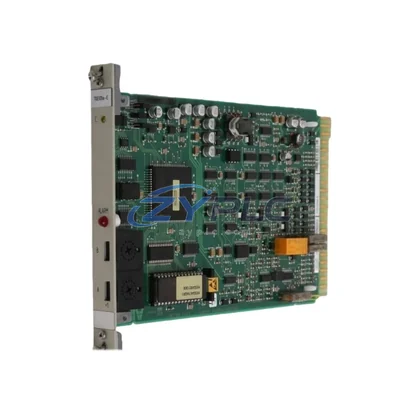
The ABB PDD200A101 (full part number 3BHE019633R0101) is a high-performance Exciter Controller Module engineered for ABB’s Symphony Plus Distributed Control System (DCS) platform. Designed to serve as a critical node in the industrial data chain, this module bridges field-level excitation hardware with upper-layer control, SCADA, and HMI systems — enabling real-time signal acquisition, protocol-transparent communication, and continuous remote diagnostics across complex power generation and process automation environments.
In modern smart factory and power plant architectures, the PDD200A101 functions as more than a standalone controller. It acts as a structured data relay point — collecting analog and digital excitation signals from field devices, converting them into standardized process values, and transmitting them upstream through the Symphony Plus backplane to supervisory systems such as ABB’s System 800xA SCADA platform. This seamless data flow eliminates the signal isolation that traditionally hampers multi-vendor industrial sites.
Compatibility & Integration Notes
| Parameter |
Specification |
| SKU / Part Number |
PDD200A101 / 3BHE019633R0101 |
| Brand |
ABB |
| Series |
Symphony Plus (Harmony / Melody DCS) |
| Module Type |
Exciter Controller Module |
| Communication Protocol |
PROFIBUS DP, Modbus RTU/TCP, IEC 61850, ABB proprietary backplane bus |
| Interface Type |
Backplane bus, serial RS-485, Ethernet (via gateway modules) |
| Transmission Capability |
Real-time cyclic data exchange, acyclic diagnostics, event-driven alarm reporting |
| Network Compatibility |
Symphony Plus DCS, System 800xA, ABB Freelance, third-party SCADA via OPC-UA gateway |
| System Application |
Power generation excitation control, turbine governor systems, process DCS loops |
| Origin |
Germany |
| Warranty |
Warranty and support terms confirmed before quote — Tested before shipment, full functional verification |
Connected Automation Data Flow
The ABB PDD200A101 (3BHE019633R0101) sits at the heart of a layered industrial communication architecture. At the field level, excitation signals from generators and rotating machinery are captured and conditioned by the module’s analog input circuits. These raw signals are processed and normalized before being passed to the Symphony Plus DCS backplane, where companion modules such as the ABB PDDX201 and PDDS200 series handle redundancy switching and power supply distribution respectively.
Moving up the data chain, the PDD200A101 interfaces with ABB AC800M controllers — the central processing units of the Symphony Plus architecture — via the high-speed backplane bus. The AC800M aggregates data from multiple field modules and forwards it to the ABB System 800xA SCADA and HMI layer, where operators gain a unified real-time view of excitation parameters, alarm states, and trend data. For sites requiring protocol bridging to third-party systems, ABB CI854A PROFIBUS DP communication interface modules can be deployed alongside the PDD200A101 to extend connectivity to Siemens SIMATIC S7 PLCs, Schneider Electric Modicon M340 remote I/O racks, or legacy Modbus RTU field devices.
In distributed architectures, the PDD200A101 data stream can be routed through ABB S900 remote I/O nodes installed in hazardous or geographically separated areas, with fiber-optic links ensuring signal integrity over long distances. At the edge, ABB Ability™ Edge gateways can aggregate PDD200A101 process data alongside inputs from variable frequency drives (VFDs), smart sensors, and energy meters, packaging it for transmission to cloud-based analytics platforms or on-premise MES systems. This end-to-end connectivity — from excitation field device through PLC, remote I/O, HMI, SCADA, and edge gateway — exemplifies the PDD200A101’s role as a foundational component in IIoT-ready power and process plants.
Solving Data Isolation in Industrial Sites
Many industrial facilities operating legacy DCS platforms face persistent challenges: protocol fragmentation between field devices and control layers, data silos that prevent cross-system visibility, and the inability to perform remote diagnostics without physical site access. The ABB PDD200A101 (3BHE019633R0101) directly addresses these pain points within the Symphony Plus ecosystem.
Protocol Unification: By supporting PROFIBUS DP and Modbus RTU natively — and enabling OPC-UA export via gateway modules — the PDD200A101 allows excitation data to be consumed by any standards-compliant SCADA or historian platform, breaking down the protocol barriers that isolate excitation systems from plant-wide data infrastructure.
Eliminating Data Islands: In multi-vendor environments where ABB DCS coexists with Siemens, Rockwell, or Honeywell control systems, the PDD200A101’s open communication architecture enables data sharing across previously isolated control domains. Operators can view excitation status alongside turbine speed, generator output, and grid frequency data in a single HMI screen.
Remote Monitoring and Diagnostics: The module’s built-in diagnostic registers expose fault codes, communication health metrics, and module status to the System 800xA SCADA layer in real time. Maintenance engineers can identify excitation anomalies, communication timeouts, or hardware degradation remotely — reducing downtime and eliminating unnecessary site visits.
Production Line Transparency: With the PDD200A101 feeding structured data into the plant historian, operations teams gain full traceability of excitation events, enabling root-cause analysis, predictive maintenance scheduling, and regulatory compliance reporting without manual data collection.
System Scalability: The Symphony Plus modular architecture allows additional PDD200A101 modules to be added to the backplane as generation capacity expands, with no changes required to the SCADA or HMI configuration — ensuring the control system scales with the plant.
Industrial Connectivity FAQ
Q1: What communication protocols does the ABB PDD200A101 (3BHE019633R0101) support, and is it compatible with third-party SCADA systems?
The PDD200A101 operates natively on the ABB Symphony Plus backplane bus and supports PROFIBUS DP and Modbus RTU for field-level communication. When paired with ABB CI854A or equivalent gateway modules, it can expose process data via OPC-UA, making it compatible with third-party SCADA platforms including Wonderware, Ignition, and Siemens WinCC.
Q2: How does the module handle communication latency in real-time excitation control applications?
The PDD200A101 is designed for deterministic, low-latency cyclic data exchange on the Symphony Plus backplane. Typical scan cycle times are in the millisecond range, ensuring that excitation control loops receive updated process values within the response time requirements of power generation applications. Acyclic diagnostic data is transmitted on-demand without impacting cyclic control performance.
Q3: Is the ABB PDD200A101 tested before shipment, and what warranty coverage is provided?
Yes. Every ABB PDD200A101 (3BHE019633R0101) unit supplied by ZYPLC undergoes full functional verification and communication testing prior to dispatch. Warranty terms are confirmed during quotation.
Q4: Can the PDD200A101 be integrated into an existing Symphony Plus system without a full DCS upgrade?
Yes. The PDD200A101 is designed for hot-swap compatibility within the Symphony Plus backplane, allowing module replacement or expansion without shutting down the entire DCS. Configuration is managed through ABB’s Control Builder engineering tool, and the module’s parameters can be downloaded online in most Symphony Plus system configurations, minimizing process interruption during maintenance or system expansion.