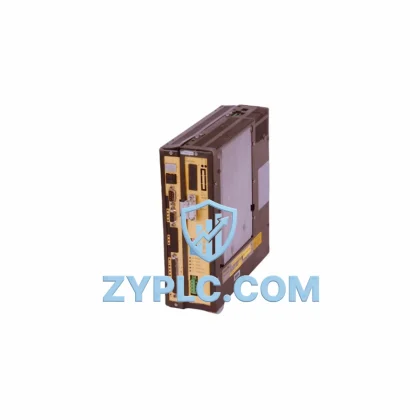
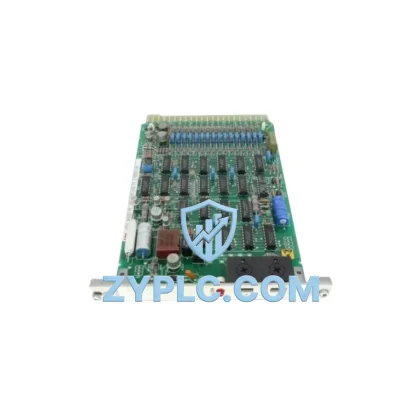
ABB PM645C 3BSE010537R1 Processor Module for Advant Automation
The ABB PM645C (3BSE010537R1) is a high-performance central processor module engineered for the ABB Advant/Master Distributed Control System (DCS). Designed to meet the rigorous demands of continuous industrial production environments, this processor module delivers precision control execution, deterministic scan cycle management, and robust communication handling — all of which directly contribute to measurable reductions in unplanned downtime, unplanned downtime, and maintenance overhead across complex manufacturing lines.
In modern industrial facilities where energy costs represent a significant share of operating expenditure, the quality and responsiveness of the central processing unit within a DCS architecture is a critical lever. The PM645C addresses this by maintaining stable, low-latency control loops that prevent energy-intensive process oscillations, reduce motor hunting in variable-load applications, and ensure that actuators and drives receive precisely timed commands — eliminating the inefficiency of over-correction cycles that consume excess power and accelerate mechanical wear.
Product Specification Table
| Parameter |
Specification / Value |
| SKU / Part Number |
PM645C / 3BSE010537R1 |
| Brand |
ABB |
| Series / Platform |
Advant / Master DCS |
| Product Type |
Central Processor Module |
| Origin |
Sweden (SE) |
| Operating Voltage |
24 VDC (via backplane) |
| Electrical / System Notes |
≤ 8 W (module level) |
| Control Execution Efficiency |
Deterministic scan cycle; supports real-time PID and sequence control |
| Compatible Systems |
ABB Advant OCS / Master DCS; AC 450, AC 410 controllers |
| Communication Interfaces |
MasterBus 300, PROFIBUS DP, Modbus RTU/TCP (via gateway) |
| Application Environments |
Power generation, chemical processing, pulp & paper, oil & gas, water treatment |
| Maintenance Value |
Stable loop control reduces process oscillation and motor over-cycling |
| Inventory Status |
In Stock — tested and verified prior to shipment |
| Warranty |
12-Month Warranty |
System Compatibility and Application
The PM645C does not operate in isolation — its maintenance planning value is fully realized when integrated within a well-structured Advant DCS architecture. At the field level, ABB S800 I/O modules (such as the AI810 analog input and DI810 digital input units) feed real-time process signals — including motor current draw, valve positions, and temperature readings — directly to the PM645C for closed-loop evaluation. This tight integration eliminates the signal latency that causes control systems to over-respond, a common source of unplanned downtime risk in poorly tuned loops.
For drive-level maintenance planning, the PM645C interfaces with ABB ACS800 and ACS880 variable frequency drives (VFDs) via PROFIBUS DP or Modbus communication. By issuing precise speed reference commands based on actual process demand rather than fixed setpoints, the processor enables the drives to operate motors at optimal efficiency points — a strategy that can help restore stable operation when a compatible replacement is required.
On the motion and servo side, coordination with ABB MicroFlex e150 servo drives and associated servo motors allows the PM645C to synchronize multi-axis motion sequences with minimal dwell time between production steps, directly improving line throughput and reducing the energy cost per unit produced. The ABB AC 450 controller — the host platform for the PM645C — manages the overall execution environment, while the PM645C module handles the real-time processing tasks that demand the highest determinism.
Power quality and condition monitoring are handled upstream by ABB M2M energy meters and ABB B23 / B24 series power analyzers, which provide kWh consumption data, power factor readings, and harmonic distortion metrics. This data can be fed back into the DCS via Modbus TCP, enabling the PM645C to make demand-aware control decisions — for example, shedding non-critical loads during peak tariff periods or adjusting process rates to flatten energy demand curves.
At the human-machine interface layer, ABB CP600 series HMI panels provide operators with real-time visibility into energy KPIs, loop performance trends, and alarm states. When paired with the PM645C’s diagnostic outputs, operators can identify underperforming control loops, detect early signs of actuator degradation, and schedule predictive maintenance interventions before failures cause unplanned downtime — each of which carries a direct energy cost in the form of restart transients, scrap production, and idle equipment running at partial load.
Maintenance and Replacement Notes
In a typical continuous process plant — such as a pulp and paper mill or a chemical reactor facility — the PM645C contributes to maintenance planning across multiple production stages simultaneously. During startup sequences, the processor executes pre-programmed ramp profiles that bring motors and heaters online gradually, avoiding the high inrush currents that stress power infrastructure and inflate peak demand charges. During steady-state operation, its PID control algorithms maintain process variables within tight bands, preventing the energy-wasting oscillations that occur when control loops are poorly tuned or when processing hardware introduces excessive latency.
When production rates need to be adjusted — for example, during shift changes or raw material transitions — the PM645C coordinates setpoint changes across multiple control loops simultaneously, ensuring that drives, valves, and heating elements adjust in a coordinated sequence rather than independently. This coordination prevents the temporary energy spikes that occur when subsystems respond asynchronously to demand changes.
From a maintenance cost perspective, the PM645C’s self-diagnostic capabilities continuously monitor its own operating status and the health of connected I/O channels. Early fault detection allows maintenance teams to address issues during planned downtime windows rather than responding to emergency failures — a practice that not only reduces repair costs but also eliminates the unplanned downtime associated with emergency restarts, off-spec production runs, and extended idle periods while waiting for replacement parts.
All units supplied by ZYPLC undergo functional testing prior to shipment, including power-on verification, communication interface checks, and basic I/O response testing. Each PM645C is backed by a 12-month warranty, and our inventory is maintained to support rapid dispatch for both planned upgrades and emergency replacement scenarios.
Product Sourcing FAQ
Q1: How does the PM645C (3BSE010537R1) contribute to reducing operating load in a DCS-controlled plant?
The PM645C improves energy efficiency primarily through precise, low-latency control execution. By maintaining tight PID loop performance and issuing timely, accurate commands to drives and actuators, it prevents the process oscillations and over-corrections that cause motors and heating systems to consume more energy than the process actually requires. When integrated with ABB ACS800/ACS880 VFDs, the processor enables demand-proportional speed control that can reduce motor energy use by 20–50% versus fixed-speed operation.
Q2: Is the PM645C compatible with modern communication protocols for condition monitoring integration?
Yes. The PM645C supports MasterBus 300 natively within the Advant/Master DCS architecture, and can communicate with external condition monitoring systems via Modbus RTU/TCP or PROFIBUS DP through appropriate gateway modules. This allows energy meter data from ABB B23/B24 power analyzers or third-party meters to be integrated into the DCS control strategy, enabling demand-aware automation decisions.
Q3: Can the PM645C replace a failed processor module in an existing Advant/Master DCS without full system reconfiguration?
In most cases, yes. The PM645C (3BSE010537R1) is a direct replacement for compatible processor slots within the Advant/Master DCS backplane. Configuration data is typically stored on the system’s engineering workstation and can be reloaded after module replacement. We recommend verifying firmware revision compatibility with your existing system configuration before installation. Our technical team can assist with compatibility assessment prior to purchase.
Q4: What does the 12-month warranty cover, and what is the testing process before shipment?
Every PM645C supplied by ZYPLC is tested prior to shipment: this includes power-on functional verification, backplane communication interface testing, and basic I/O channel response checks. The 12-month warranty covers hardware defects and functional failures under normal operating conditions. In the event of a warranty claim, we support rapid replacement dispatch to minimize production downtime. Contact our team at plc.sales@zyplc.com or +86 19859288691 for warranty service inquiries.
© 2026 ZYPLC. All rights reserved.
Original Source: https://zyplc.com
Contact: +86 19859288691 | plc.sales@zyplc.com