ABB SPAJ140C Industrial Network Interface for SPAJ Series Systems: Bridging Field Devices and Smart Factory Data Links
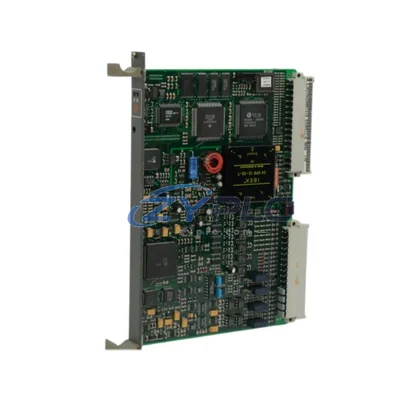
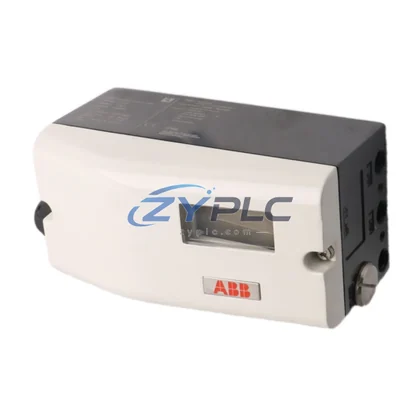
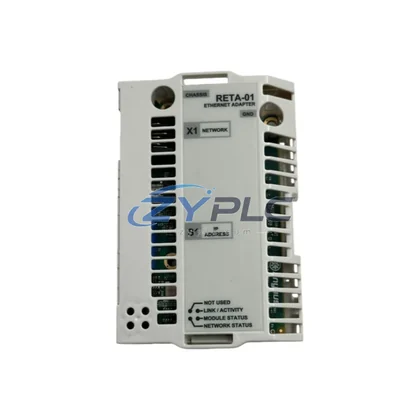
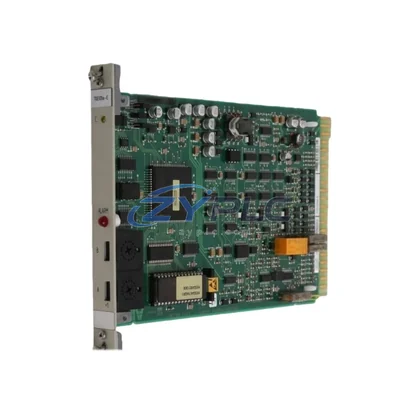
The ABB SPAJ140C is a high-performance overcurrent and earth fault protection relay engineered for demanding industrial power distribution environments. As a core industrial network interface within the ABB SPAJ series, the SPAJ140C delivers reliable Modbus RTU communication over RS-485, enabling seamless integration between field-level protection devices, PLC controllers, SCADA platforms, and HMI systems. In modern smart factory architectures where real-time data visibility and network stability are non-negotiable, the SPAJ140C serves as a critical node in the industrial data chain — from signal acquisition at the switchgear level all the way to enterprise-level monitoring and remote diagnostics.
Designed and manufactured in Finland, the ABB SPAJ140C combines decades of ABB protection engineering with the communication capabilities demanded by today’s connected industrial sites. Whether deployed in power substations, motor control centers, or distributed feeder protection panels, this relay ensures that fault events, current measurements, and status signals are continuously available to upstream control and monitoring systems without latency or data loss.
Compatibility & Integration Notes
| Parameter |
Specification |
| Communication Protocol |
Modbus RTU |
| Physical Interface |
RS-485 (2-wire serial) |
| Baud Rate |
Up to 19,200 bps (configurable) |
| Network Topology |
Multi-drop RS-485 bus, up to 32 nodes |
| Protection Functions |
Overcurrent (ANSI 50/51), Earth Fault (ANSI 50N/51N) |
| Measurement Outputs |
Phase currents (IL1, IL2, IL3), Earth fault current (I0) |
| SCADA/HMI Compatibility |
Compatible with Modbus RTU-based SCADA, DCS, and HMI systems |
| System Integration |
PLC, RTU, Gateway, IED, SCADA, HMI, Energy Management Systems |
| Network Stability |
Deterministic RS-485 polling, noise-immune differential signaling |
| Operating Temperature |
-10°C to +55°C |
| Origin |
Finland (ABB OY) |
| Warranty |
Warranty and support terms confirmed before quote — Ships fully tested |
Connected Automation Data Flow
In a typical smart factory power distribution network, the ABB SPAJ140C sits at the intersection of physical protection and digital data flow. At the field level, current transformers feed phase and earth fault current signals directly into the SPAJ140C’s measurement inputs. The relay continuously processes these analog signals, applying configurable overcurrent and earth fault thresholds to detect abnormal conditions in real time.
Once a fault condition is detected or a measurement threshold is crossed, the SPAJ140C encodes this information into Modbus RTU registers and transmits it upstream over the RS-485 bus. An ABB AC500 PLC or a Siemens S7-1200 PLC acting as the Modbus master polls the SPAJ140C cyclically, collecting current values, trip status, and alarm flags. This data is then forwarded to an ABB Ability SCADA system or a Wonderware InTouch HMI, where operators can visualize feeder loading, fault history, and relay status on a single unified dashboard.
For sites using a Moxa NPort 5150 RS-485 to Ethernet gateway or an Advantech EKI-1521 serial device server, the SPAJ140C’s Modbus RTU data can be transparently converted to Modbus TCP, enabling integration with Ethernet-based SCADA platforms and cloud-connected edge gateways such as the Advantech WISE-5231 or the Siemens SIMATIC IOT2040. This protocol conversion layer is essential for bridging legacy serial protection relays into modern IIoT architectures without replacing existing field hardware.
Remote I/O modules such as the ABB CI830 PROFIBUS communication interface or the Phoenix Contact Inline Modbus adapter can extend the SPAJ140C’s data reach across larger plant networks, feeding alarm and measurement data into distributed control systems. Variable frequency drives (VFDs) protecting the same motor feeders — such as the ABB ACS880 or the Schneider Electric Altivar 630 — can share the same RS-485 segment, allowing the SCADA system to correlate motor current data from the drive with protection trip events from the SPAJ140C, enabling root cause analysis without manual data collection.
At the top of the data chain, energy management systems and MES platforms consume the aggregated data from the SPAJ140C and associated devices, enabling production teams to track power quality, identify recurring fault patterns, and schedule predictive maintenance before unplanned downtime occurs. The SPAJ140C’s role in this data flow is not merely protective — it is a live data source that feeds the intelligence layer of the smart factory.
Solving Data Isolation in Industrial Sites
One of the most persistent challenges in industrial power management is data isolation — protection relays that trip and reset without ever communicating fault details to the control room. In older installations, operators must physically walk to the switchgear panel to read relay indicators, manually log fault currents, and reset trip flags. This process introduces delays, increases safety risk, and makes it nearly impossible to identify recurring fault patterns across multiple feeders.
The ABB SPAJ140C directly addresses this problem through its Modbus RTU communication port. By connecting the relay to the plant’s RS-485 network, every trip event, alarm condition, and current measurement becomes immediately visible to the SCADA system. Operators in the control room receive real-time alarm notifications the moment a fault occurs, with full current magnitude data available for analysis. This eliminates the data island created by standalone protection relays and transforms the SPAJ140C from a passive protection device into an active participant in the plant’s digital infrastructure.
For sites with mixed protocol environments — where some devices speak PROFIBUS, others use DeviceNet, and legacy relays communicate over RS-232 — a protocol gateway such as the HMS Anybus Communicator or the Red Lion Data Station Plus can bridge the SPAJ140C’s Modbus RTU output into the plant’s primary network protocol, ensuring that no device is left as a data island regardless of the existing network architecture.
System expansion is equally straightforward. The RS-485 multi-drop topology supported by the SPAJ140C allows up to 32 devices to share a single communication segment. As new feeders are added to the distribution system, additional SPAJ series relays — such as the ABB SPAJ141C or the ABB SPCJ4D29 — can be connected to the existing RS-485 bus without requiring new cabling infrastructure. This scalability makes the SPAJ140C an ideal choice for phased plant expansions where budget and installation time must be carefully managed.
Every SPAJ140C unit shipped by ZYPLC undergoes full functional testing prior to dispatch, including communication port verification, protection function testing, and relay output confirmation. This ensures that the unit arrives on-site prepared for installation after site verification and commissioning, reducing startup time and eliminating the risk of receiving a faulty unit that only fails during live plant testing.
Industrial Connectivity FAQ
Q1: What is the communication latency of the ABB SPAJ140C over Modbus RTU?
The SPAJ140C communicates via Modbus RTU over RS-485 with typical polling cycle times of 100–500 ms depending on the number of devices on the bus and the baud rate configured. At 9,600 bps with a single master polling one relay, response times are typically under 50 ms per register read. For time-critical SCADA applications, configuring the bus at 19,200 bps and minimizing the number of polled registers per cycle will optimize latency.
Q2: Is the SPAJ140C compatible with modern Ethernet-based SCADA systems?
The SPAJ140C natively communicates via Modbus RTU over RS-485, which is a serial protocol. For integration with Ethernet-based SCADA or IIoT platforms, a Modbus RTU-to-Modbus TCP gateway (such as the Moxa MGate MB3170 or the Advantech EKI-1521) is required. Once converted to Modbus TCP, the SPAJ140C’s data is fully accessible to any Ethernet SCADA, DCS, or cloud platform that supports the Modbus TCP standard.
Q3: Can multiple ABB SPAJ140C relays share the same RS-485 network segment?
Yes. The RS-485 standard supports up to 32 devices on a single bus segment without repeaters. Each SPAJ140C is assigned a unique Modbus slave address (1–247), allowing a single Modbus master — such as an ABB AC500 PLC or a dedicated RTU — to poll all relays on the segment sequentially. For larger installations exceeding 32 devices, RS-485 repeaters can extend the bus to support additional relay nodes.
Q4: What warranty and testing does ZYPLC provide for the ABB SPAJ140C?
All ABB SPAJ140C units supplied by ZYPLC carry a warranty and support terms confirmed before quote covering manufacturing defects and functional failures under normal operating conditions. Prior to shipment, each unit undergoes a full outgoing inspection including communication port testing, protection function verification, and relay output confirmation. Units are shipped with test documentation upon request. For urgent requirements, expedited shipping and priority stock allocation are available — contact our team at plc.sales@zyplc.com or +86 19859288691 for availability and lead time confirmation.