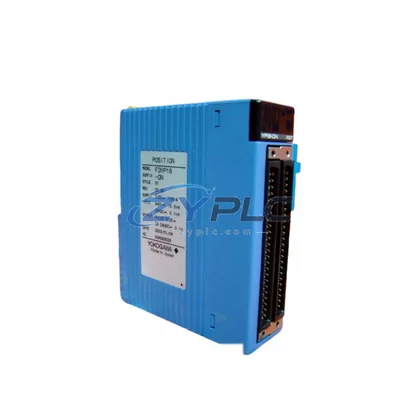
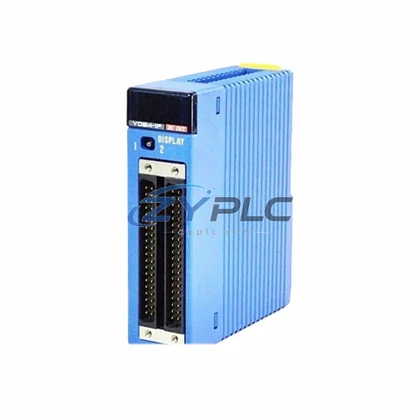
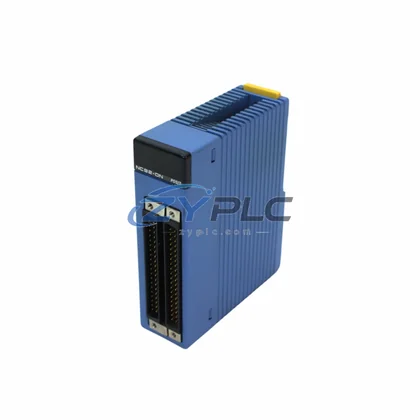
The ABB SPASI23 is a precision-engineered analog input module designed to operate as a core signal acquisition component within the ABB SPASI distributed control system (DCS) architecture. Rather than functioning as a standalone device, the SPASI23 is conceived as an integral node within a layered automation hierarchy — one that bridges field-level instrumentation with the supervisory control layer, enabling seamless data flow, system-wide consistency, and long-term operational reliability across complex industrial environments.
In modern industrial automation, the analog input module occupies a critical position in the I/O layer. The SPASI23 receives 4–20 mA or voltage-based signals from field transmitters — including pressure, temperature, flow, and level sensors — and converts them into digitized process values that the CPU module can act upon in real time. This signal conditioning role is foundational: without accurate, noise-immune analog acquisition, the entire control loop from sensor to actuator loses integrity. The SPASI23 addresses this challenge through high-resolution A/D conversion, channel isolation, and configurable input ranges that adapt to diverse process instrumentation standards.
Within the SPASI system architecture, the SPASI23 is mounted on a dedicated I/O backplane that interfaces directly with the system bus. This backplane-based design ensures deterministic communication latency between the analog input module and the central processing unit, supporting scan-cycle synchronization that is essential for closed-loop control applications. Engineers integrating the SPASI23 into a control cabinet benefit from its compact DIN-rail-compatible form factor, which simplifies panel layout and reduces wiring complexity when deployed alongside other SPASI-series I/O modules.
Product Specification Table
| Parameter |
Specification |
| System Role |
Analog Input Module — I/O Layer, SPASI DCS Architecture |
| SKU / Part Number |
SPASI23 |
| Brand / Manufacturer |
ABB (Asea Brown Boveri), Sweden |
| Series |
SPASI (Distributed Control System Series) |
| Input Signal Types |
4–20 mA current loop; 0–10 V / 1–5 V voltage (configurable per channel) |
| Number of Channels |
8 differential analog input channels (typical for SPASI23 class) |
| Resolution |
12-bit A/D conversion (0.025% full-scale resolution) |
| Channel Isolation |
Optical isolation per channel group; withstands 500 V AC common-mode |
| Communication Interface |
SPASI internal system bus; backplane-mounted, no external cabling required |
| Power Supply |
Supplied via SPASI backplane bus (24 V DC nominal) |
| Operating Temperature |
0°C to +55°C (storage: –40°C to +70°C) |
| Humidity |
5%–95% RH, non-condensing |
| Mounting |
SPASI I/O backplane slot; DIN-rail compatible enclosure |
| Certifications |
CE marked; compliant with IEC 61131-2 for programmable controller I/O |
| system integration |
Full system integration support within SPASI DCS platform |
| Warranty |
Warranty and support terms confirmed before quote — all units tested prior to dispatch |
System Compatibility Notes
The SPASI23 does not operate in isolation. Its value is realized through coordinated interaction with every layer of the SPASI control platform. At the processing layer, the SPASI23 feeds digitized analog values directly to the SPASI CPU module — such as the SPASI10 or SPASI11 central processing unit — which executes the control algorithm and issues output commands within the same scan cycle. This tight coupling between analog acquisition and CPU processing is what enables the SPASI architecture to achieve the sub-100 ms response times demanded by process control applications in refining, power generation, and chemical manufacturing.
On the power supply side, the SPASI23 draws regulated DC power from the SPASI PS module (e.g., SPASIP1 or equivalent power supply unit), which provides stable 24 V DC across the backplane bus. Redundant power supply configurations — using dual SPASI power modules in parallel — ensure that a single power unit failure does not interrupt analog signal acquisition, a critical requirement in continuous process industries where unplanned shutdowns carry significant financial and safety consequences.
For digital I/O coordination, the SPASI23 works alongside SPASI digital input modules (such as the SPASID21 or SPASID22) and digital output modules (SPASIDO series) within the same I/O rack. This mixed I/O architecture allows a single SPASI rack to handle both analog process variables and discrete on/off signals — motor run status, valve position feedback, emergency stop inputs — within a unified backplane, reducing the number of racks required and simplifying cabinet design.
At the network and communication layer, the SPASI system communicates with supervisory SCADA platforms and historian servers via the SPASI communication gateway module, which supports PROFIBUS DP, Modbus RTU/TCP, and OPC DA/UA protocols. The SPASI23’s analog data is packaged by the CPU and transmitted upstream through this gateway, enabling real-time process visualization on HMI terminals — including ABB CP600 series operator panels or third-party SCADA workstations — without any additional signal conditioning hardware.
For redundancy-critical applications, the SPASI23 can be deployed in a hot-standby I/O configuration using SPASI redundancy modules (SPASIRM series), where a secondary analog input module mirrors the primary SPASI23 in real time. Upon detection of a primary module fault, the redundancy controller performs a bumpless transfer to the standby unit within milliseconds, maintaining continuous process monitoring without operator intervention. This architecture is particularly valued in nuclear auxiliary systems, offshore platform control, and high-availability water treatment facilities.
Terminal modules and marshalling components — such as SPASI TB series terminal blocks — connect field wiring to the SPASI23 without direct contact with the module’s backplane connector, enabling hot-swap maintenance procedures where the analog input module can be replaced during operation without disconnecting field cables. This design philosophy significantly reduces mean time to repair (MTTR) and supports the long-term maintainability goals of plant asset management programs.
Industrial Application Notes
Process Manufacturing & Chemical Plants: In continuous process environments — petrochemical reactors, distillation columns, and blending systems — the SPASI23 acquires temperature and pressure transmitter signals that feed PID control loops executed by the SPASI CPU. The module’s channel isolation prevents ground loops that are common in large chemical plants with extensive field wiring runs, ensuring measurement accuracy even in electrically noisy environments.
Power Generation & Utilities: Thermal power stations and combined-cycle plants rely on analog input modules to monitor boiler drum levels, turbine exhaust temperatures, and generator output parameters. The SPASI23’s high-resolution A/D conversion supports the tight measurement tolerances required by boiler protection systems and turbine governor control loops, where a 0.1% measurement error can trigger unnecessary protective trips.
Water & Wastewater Treatment: Municipal water treatment facilities deploy the SPASI23 to monitor flow meters, pH analyzers, dissolved oxygen sensors, and chlorine dosing transmitters. The module’s configurable input ranges accommodate the diverse 4–20 mA transmitter outputs used across different instrument vendors, simplifying system integration during plant expansions or instrument upgrades.
Mining & Metallurgy: In ore processing and smelting operations, the SPASI23 handles analog signals from conveyor load cells, furnace temperature pyrometers, and hydraulic pressure transducers. Its wide operating temperature range and robust optical isolation make it suitable for the harsh electromagnetic environments typical of large motor drives and arc furnace installations.
Packaging & Discrete Manufacturing: High-speed packaging lines use the SPASI23 to monitor servo drive feedback signals, tension control transducers, and web tension sensors. Integration with the SPASI CPU’s high-speed interrupt processing enables the analog input data to trigger immediate output responses — such as reject actuators or speed corrections — within a single PLC scan cycle.
Product Compatibility FAQ
Q1: Is the SPASI23 compatible with both legacy SPASI racks and newer SPASI-II backplane systems?
The SPASI23 is designed for the original SPASI backplane bus architecture. Compatibility with SPASI-II or upgraded rack systems depends on the specific backplane revision and firmware version of the CPU module in use. We recommend providing your existing rack model number and CPU firmware version when enquiring, so our technical team can confirm direct compatibility or identify any required adapter modules or firmware updates before shipment.
Q2: Can the SPASI23 be installed or replaced while the control system is powered (hot-swap)?
Hot-swap capability on the SPASI23 depends on the backplane design and whether SPASI terminal modules (TB series) are used to separate field wiring from the module connector. In systems equipped with SPASI marshalling terminal blocks, the analog input module can typically be removed and reinserted without disconnecting field cables, provided the CPU is configured to handle the temporary loss of that I/O slot gracefully. We advise reviewing the SPASI system engineering manual for your specific rack configuration and confirming hot-swap procedures with your site safety officer before performing live maintenance.
Q3: What does the Warranty and support terms confirmed before quote cover, and what support is available for system integration issues?
All SPASI23 units supplied by ZYPLC carry a Warranty and support terms confirmed before quote covering manufacturing defects and functional failures under normal operating conditions. Each module undergoes functional testing prior to dispatch to verify analog channel accuracy, isolation integrity, and backplane communication. For system integration support — including configuration guidance, compatibility verification, and architecture consulting — our engineering team is available via the contact details below. Replacement units for warranty claims are processed with priority dispatch to minimize control system downtime.