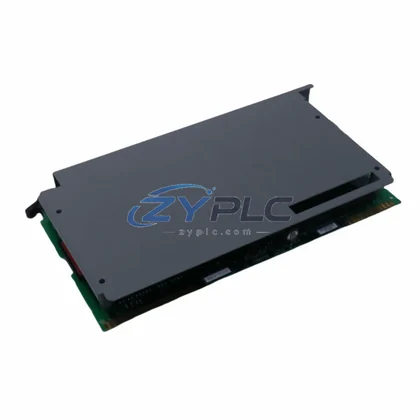
AI-Tek 70084-1713-111 Industrial Speed Sensor: Precision Data Link for T77335 Smart Factory Systems
The AI-Tek 70084-1713-111 is a high-reliability passive magnetic speed sensor from the renowned T77335 Series, engineered to deliver accurate rotational speed signals at the field device level of industrial automation architectures. As a foundational element in the industrial data chain, this sensor bridges the gap between rotating machinery — turbines, motors, compressors, and gearboxes — and the upstream control, monitoring, and diagnostic systems that depend on real-time speed data to maintain process integrity.
In modern smart factory environments, speed sensing is not merely a measurement function — it is a critical node in the plant-wide data flow. The 70084-1713-111 generates a clean, interference-resistant pulse signal that feeds directly into PLC input modules, remote I/O racks, and signal conditioning gateways, enabling seamless integration with SCADA platforms, HMI displays, and edge computing nodes. Its passive (self-generating) design eliminates the need for external power at the sensor head, reducing wiring complexity and improving system reliability in harsh industrial environments.
Compatibility & Integration Notes
| Parameter |
Specification |
| Sensor Type |
Passive Magnetic Pickup (Variable Reluctance) |
| Part Number / SKU |
70084-1713-111 |
| Series |
AI-Tek T77335 |
| Output Signal |
Sinusoidal AC pulse (frequency proportional to speed) |
| Interface / Connection |
2-wire passive output; compatible with differential and single-ended inputs |
| Protocol Compatibility |
Analog pulse / frequency signal; integrates with Modbus RTU, PROFIBUS DP, PROFINET, EtherNet/IP via signal conditioning modules |
| Communication Gateway Support |
Compatible with frequency-to-digital converters and protocol gateways for SCADA/DCS integration |
| Network Architecture |
Field Device Layer → PLC/Remote I/O → Industrial Ethernet / Fieldbus → SCADA/HMI |
| Application |
Turbine speed monitoring, motor RPM feedback, compressor control, rotating machinery protection |
| Operating Environment |
Industrial-grade; suitable for high-vibration, high-temperature field installations |
| Warranty |
Warranty and support terms confirmed before quote | Pre-shipment functional test included |
| Origin |
USA (AI-Tek Instruments) |
| Availability |
Confirmed via RFQ before quotation |
Connected Automation Data Flow
The AI-Tek 70084-1713-111 operates at the very origin of the industrial data chain. Mounted in close proximity to a toothed wheel or gear on a rotating shaft, it generates a frequency signal whose pulse rate is directly proportional to rotational speed. This raw signal is then routed to a signal conditioning module — such as an AI-Tek T77350 Series speed monitor or a compatible frequency input card — which converts the analog pulse into a digital value readable by the control system.
From the signal conditioner, the speed data enters the PLC layer. In typical installations, this may be a Siemens S7-1500 CPU with a SM 1231 analog input module, or an Allen-Bradley CompactLogix controller receiving the conditioned signal via a 1769-IF4 analog input module. The PLC processes the speed value in real time, comparing it against setpoints to trigger alarms, adjust drive output, or initiate protective shutdowns.
For distributed architectures, the speed signal may be acquired by a remote I/O module — such as a Siemens ET 200SP or Phoenix Contact Axioline F station — and transmitted over PROFINET or EtherNet/IP to the main controller. This approach is common in large turbine halls or compressor stations where field devices are spread across significant distances.
At the HMI and SCADA level, the speed data from the 70084-1713-111 appears as a real-time trend on operator panels such as a Siemens SIMATIC HMI TP1200 Comfort or a Rockwell PanelView Plus 7. SCADA systems — including Wonderware InTouch, Ignition by Inductive Automation, or Siemens WinCC — log the speed data for historical trending, alarm management, and production reporting. In advanced implementations, the speed signal is also consumed by edge gateway devices such as a Moxa UC-8112 or Advantech WISE-5000, which perform local analytics and push aggregated data to cloud-based MES or ERP platforms.
Variable frequency drives (VFDs) — such as the ABB ACS880 or Siemens SINAMICS G120 — may also receive speed feedback derived from the 70084-1713-111 signal to enable closed-loop speed regulation, ensuring that motor output precisely matches process demand. This closed-loop architecture is essential in applications such as pump speed control, fan regulation, and conveyor synchronization.
Solving Data Isolation in Industrial Sites
One of the most persistent challenges in industrial automation is data isolation — the condition where field devices generate valuable process data that never reaches the control room, SCADA historian, or maintenance system. The AI-Tek 70084-1713-111 directly addresses this challenge by providing a reliable, high-fidelity speed signal that can be integrated into virtually any industrial communication architecture through appropriate signal conditioning and protocol conversion.
Protocol fragmentation is a common barrier in brownfield plants where legacy equipment uses proprietary or older fieldbus protocols. The passive analog output of the 70084-1713-111 is inherently protocol-agnostic — it produces a universal frequency signal that can be adapted to Modbus RTU, PROFIBUS DP, DeviceNet, PROFINET, or EtherNet/IP through standard frequency-to-digital converters or multi-protocol gateways. This makes it an ideal sensor for both greenfield smart factory deployments and brownfield retrofit projects.
Remote monitoring is another area where this sensor delivers significant value. In unmanned substations, offshore platforms, or remote pumping stations, the speed data from the 70084-1713-111 can be transmitted over cellular or fiber networks to a central SCADA system, enabling operators to monitor equipment health without physical site visits. Alarm thresholds configured in the PLC or speed monitor will automatically notify maintenance teams of overspeed or underspeed conditions, enabling predictive maintenance strategies that reduce downtime.
Production line transparency is achieved when speed data from multiple rotating assets — motors, gearboxes, turbines, and conveyors — is aggregated in a unified SCADA or MES dashboard. The 70084-1713-111, deployed across multiple measurement points, contributes to a plant-wide speed monitoring network that gives operations managers real-time visibility into equipment performance, energy consumption, and process efficiency. System expansion is straightforward: additional sensors can be added to existing remote I/O stations or PLC input modules without architectural changes, making the T77335 series a scalable solution for growing industrial facilities.
Industrial Connectivity FAQ
Q1: What is the signal output of the AI-Tek 70084-1713-111, and how does it connect to a PLC or SCADA system?
The 70084-1713-111 produces a sinusoidal AC frequency signal whose frequency is proportional to the rotational speed of the monitored shaft. This signal is typically routed to a frequency input module on a PLC (e.g., Siemens SM 1231 or Allen-Bradley 1769-IF4) or to a dedicated speed monitor/signal conditioner. The conditioned digital value is then transmitted to the SCADA system via standard industrial protocols such as Modbus RTU or PROFINET, with typical scan cycle latencies well under 100 ms for real-time monitoring applications.
Q2: Is the 70084-1713-111 compatible with both PROFIBUS and EtherNet/IP network architectures?
Yes — while the sensor itself outputs a universal analog frequency signal, it is fully compatible with both PROFIBUS DP and EtherNet/IP architectures when used with an appropriate frequency-to-digital signal conditioner or protocol gateway. This makes it suitable for integration into both legacy fieldbus networks and modern Industrial Ethernet environments without requiring sensor replacement during network upgrades.
Q3: How does the 70084-1713-111 support network stability and reliable data transmission in high-vibration environments?
The passive magnetic pickup design of the 70084-1713-111 contains no active electronic components at the sensor head, which significantly enhances its reliability in high-vibration, high-temperature industrial environments. The absence of internal electronics eliminates common failure modes such as component fatigue or thermal drift, ensuring consistent signal quality over extended operating periods. The robust construction of the T77335 series is specifically designed for demanding industrial applications including turbine monitoring and heavy rotating machinery.
Q4: What quality assurance and warranty coverage is provided with the AI-Tek 70084-1713-111?
Every AI-Tek 70084-1713-111 unit supplied by ZYPLC undergoes pre-shipment functional testing to verify signal output integrity and mechanical condition. Warranty terms are confirmed during quotation. Availability confirmed by RFQ inventory is maintained to support urgent project timelines, with Export shipping options available after RFQ confirmation to minimize lead times for international customers.