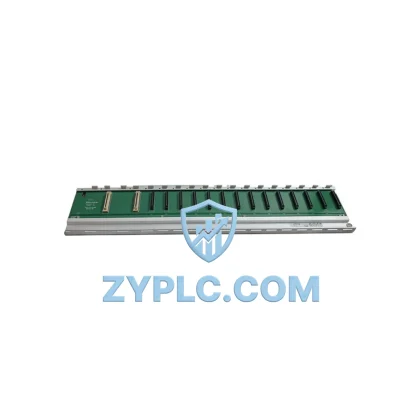
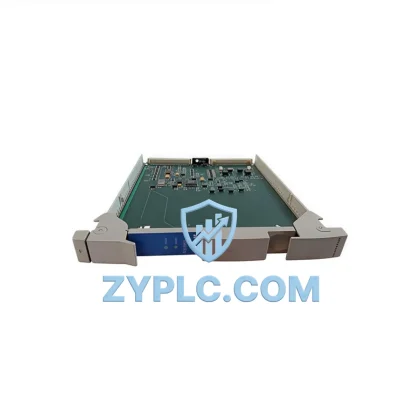
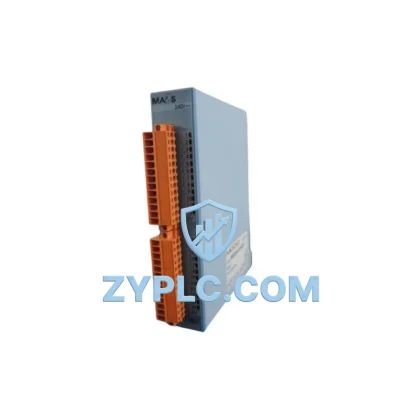
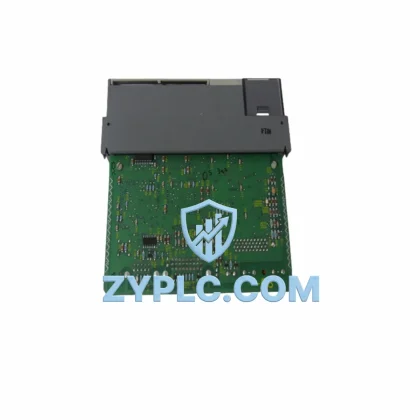
Alfa Laval EPC1000 Energy-Saving Controller EPC Series: Precision Energy Control for Industrial Automation
The Alfa Laval EPC1000 is a high-performance energy-saving industrial controller from the EPC Series, engineered to deliver measurable improvements in equipment utilization, motor control accuracy, and production line throughput. Designed for demanding process automation environments — including heat transfer, fluid handling, and continuous manufacturing — the EPC1000 addresses the core challenge facing modern factories: reducing idle energy consumption while maintaining precise control over every actuator, drive, and sensor in the system.
Unlike generic automation controllers, the EPC1000 is purpose-built for energy-aware process management. Its closed-loop control architecture continuously monitors real-time load conditions and adjusts output signals to eliminate over-driving of motors, pumps, and compressors. In high-cycle production lines, this translates directly into lower kWh consumption per unit produced, reduced thermal stress on connected equipment, and extended mean time between failures (MTBF) across the entire drive chain.
Efficiency Performance Table
| Parameter |
Specification |
| Model / SKU |
Alfa Laval EPC1000 |
| Series |
EPC (Energy Process Controller) |
| Typical Power Consumption |
Low-standby architecture; optimized active-state draw |
| Control Loop Efficiency |
Closed-loop PID with adaptive gain tuning |
| Compatible Drive Systems |
Variable frequency drives (VFDs), servo amplifiers, soft starters |
| Communication Protocols |
PROFIBUS, Modbus RTU/TCP, EtherNet/IP (series-dependent) |
| Application Environment |
Process automation, HVAC, pump/fan control, heat exchanger management |
| Energy Saving Value |
Reduces motor over-run and idle losses; supports demand-based control |
| Origin |
Sweden (SE) |
| Warranty |
12-Month Warranty — all units shipped from verified stock |
Energy-Aware Automation Architecture
Deploying the Alfa Laval EPC1000 effectively requires understanding how it fits within a broader energy-aware automation architecture. In a typical installation, the EPC1000 acts as the central process controller, receiving setpoint commands from an upstream HMI panel — such as a Siemens TP700 Comfort or an Allen-Bradley PanelView Plus — and translating those commands into precise analog or digital output signals directed at field devices.
On the drive side, the EPC1000 interfaces directly with variable frequency drives such as the ABB ACS880 or Danfoss FC302, modulating motor speed in real time based on actual process demand rather than fixed schedules. This demand-based speed regulation is one of the most impactful energy-saving strategies available in industrial automation: reducing motor speed by just 20% can cut energy consumption by nearly 50% due to the cubic relationship between speed and power in centrifugal loads.
For servo-driven axes — common in packaging, filling, and precision assembly lines — the EPC1000 coordinates with servo amplifiers such as the Alfa Laval EPC Series servo module or compatible third-party units, ensuring that axis motion profiles are synchronized with production line rhythm to eliminate unnecessary acceleration-deceleration cycles that waste energy and increase mechanical wear.
Power quality and energy metering are handled by dedicated power monitoring modules. Integrating a Schneider Electric PowerLogic PM5000 or equivalent power meter into the same control cabinet as the EPC1000 allows operators to correlate controller output states with real-time kWh consumption, enabling granular energy auditing at the machine level. This data feeds into the plant’s energy management system (EMS), supporting ISO 50001 compliance and continuous improvement cycles.
On the I/O side, the EPC1000 supports distributed I/O expansion through standard fieldbus-connected modules — for example, Beckhoff EL series EtherCAT terminals or Phoenix Contact Axioline F modules — allowing engineers to extend the controller’s reach to remote sensors, flow transmitters, and pressure transducers without running long analog cable runs that introduce noise and signal degradation. Clean signal integrity at the input stage is essential for accurate PID control and, by extension, for avoiding the energy waste caused by control hunting and oscillation.
Communication with the plant-level SCADA or MES is typically handled via Modbus TCP or PROFINET, with the EPC1000 publishing real-time process variables — flow rates, temperatures, pressures, and energy indices — to supervisory systems such as Wonderware System Platform or Ignition by Inductive Automation. This bidirectional data flow enables predictive maintenance algorithms to flag abnormal energy consumption patterns before they escalate into unplanned downtime events.
Power Optimization in Real Production Lines
In real-world deployments, the Alfa Laval EPC1000 has demonstrated consistent value across several categories of production line optimization:
Reducing Idle Energy Consumption: Many factories run motors, pumps, and compressors at full speed even during low-demand periods — a practice that wastes significant energy. The EPC1000’s demand-tracking logic detects low-load conditions and automatically reduces drive output to match actual process requirements, cutting idle-state energy draw without operator intervention. In continuous process plants operating 24/7, this alone can represent thousands of kWh saved per month.
Optimizing Production Line Rhythm (Takt Time): In discrete manufacturing, the EPC1000 synchronizes actuator timing with upstream and downstream equipment states, reducing inter-station wait times and eliminating the micro-stops that fragment production flow. Tighter takt time control means each machine cycle consumes energy only when productive work is being performed, improving the energy-per-unit-produced metric that is increasingly tracked in sustainability reporting.
Reducing Maintenance Costs Through Predictive Control: By maintaining precise control over motor load profiles and avoiding the mechanical stress caused by abrupt starts, stops, and speed changes, the EPC1000 extends the service life of bearings, seals, couplings, and other wear components. Fewer unplanned maintenance events mean lower spare parts consumption, reduced labor costs, and — critically — fewer production interruptions that force lines to restart from cold, consuming disproportionate energy during warm-up.
Inventory Availability and Shipping Readiness: ZYPLC maintains verified stock of the Alfa Laval EPC1000. All units undergo pre-shipment functional testing to confirm output signal integrity, communication port operation, and power supply performance before dispatch. Standard lead time is subject to current stock levels; customers are encouraged to confirm availability directly. Every EPC1000 shipped by ZYPLC is covered by a 12-month warranty from the date of delivery, providing assurance for both planned installations and emergency replacement scenarios.
Energy Optimization FAQ
Q1: How much energy can the Alfa Laval EPC1000 save in a typical pump or fan application?
Actual savings depend on the baseline operating profile, but in variable-load pump and fan applications where the motor previously ran at fixed speed, integrating the EPC1000 with a compatible VFD and implementing demand-based speed control typically reduces motor energy consumption by 20–40%. The exact figure depends on the load curve, duty cycle, and the quality of the PID tuning applied during commissioning.
Q2: Is the EPC1000 compatible with existing Alfa Laval heat exchanger control systems?
The EPC1000 is designed for integration within Alfa Laval process automation architectures and is compatible with standard Alfa Laval sensor and actuator interfaces used in plate heat exchanger and gasketed heat exchanger control applications. For installations involving third-party equipment, compatibility should be verified against the specific I/O signal types and communication protocols in use. ZYPLC’s technical team can assist with compatibility assessment prior to purchase.
Q3: Can the EPC1000 replace an older generation Alfa Laval EPC controller without rewiring?
In many cases, yes. The EPC Series was designed with backward compatibility in mind, and the EPC1000 shares terminal layouts and signal conventions with earlier EPC generation units. However, firmware version compatibility and any site-specific parameter configurations should be reviewed before replacement. ZYPLC recommends requesting the existing controller’s configuration backup before proceeding with a swap.
Q4: What does the 12-month warranty cover, and what is the testing process before shipment?
Every Alfa Laval EPC1000 unit shipped by ZYPLC is covered by a 12-month warranty against manufacturing defects and functional failures under normal operating conditions. Prior to shipment, each unit is tested for power-on functionality, I/O signal response, and communication port operation. Units that do not pass the pre-shipment test protocol are not dispatched. Warranty claims are handled directly through ZYPLC; customers should retain their invoice as proof of purchase and warranty start date.
© 2026 ZYPLC. All rights reserved.
Original Source: https://zyplc.com
Contact: +86 19859288691 | plc.sales@zyplc.com