Allen-Bradley 1746-OA8: Industrial Data Link and Smart Factory Connectivity for SLC 500 Systems
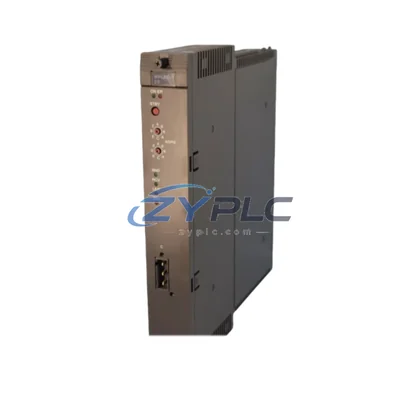
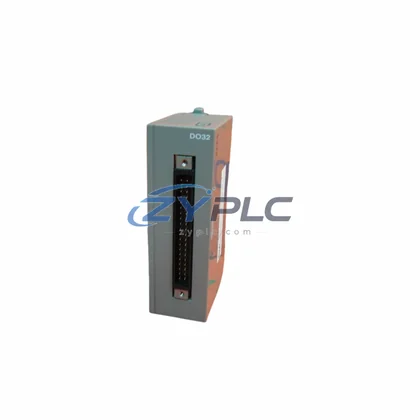
The Allen-Bradley 1746-OA8 is an 8-point 120/240V AC discrete output module engineered for the SLC 500 modular I/O platform. Designed to bridge field-level actuators and the SLC 5/05 processor’s control logic, this module plays a critical role in the industrial data chain — from signal actuation at the device layer through to real-time status feedback in SCADA and HMI environments. Whether deployed in standalone machine control or integrated into a multi-node DeviceNet or DH-485 network, the 1746-OA8 delivers the output reliability that smart factory architectures demand.
Compatibility & Integration Notes
| Attribute |
Specification |
| SKU / Part Number |
1746-OA8 |
| Brand / Manufacturer |
Allen-Bradley (Rockwell Automation) |
| Series |
SLC 500 |
| Module Type |
Discrete AC Output Module |
| Output Points |
8 Points |
| Output Voltage |
120/240V AC |
| Communication Protocol |
DH-485, DeviceNet (via SLC 5/05 processor) |
| Network Compatibility |
SLC 500 Modular I/O Chassis (1746 Series) |
| Interface Type |
Backplane I/O (SLC 500 chassis slot) |
| System Application |
PLC Output Control, SCADA Integration, HMI Feedback, Remote I/O |
| Transmission Capability |
Real-time discrete output switching, status feedback to processor |
| Warranty |
Warranty and support terms confirmed before quote |
| Origin |
USA |
Connected Automation Data Flow
In a typical smart factory deployment, the 1746-OA8 sits at the intersection of control logic and physical actuation. The SLC 5/05 processor — communicating upstream via Ethernet/IP or DH+ to a FactoryTalk View SCADA system — sends discrete output commands down through the SLC 500 backplane to the 1746-OA8. These commands energize field devices such as solenoid valves, motor starters, and indicator lamps, completing the control loop that begins with sensor data collected by companion input modules like the 1746-IA8 or 1746-IB16.
Within the same chassis, the 1746-OA8 operates alongside analog modules such as the 1746-NI4 for process variable monitoring, and specialty communication modules like the 1747-SDN DeviceNet Scanner, which aggregates data from distributed field devices — variable frequency drives, photoelectric sensors, and smart actuators — across a DeviceNet segment. This multi-module architecture allows a single SLC 500 rack to serve as both a local controller and a network gateway, forwarding I/O status data to a PanelView Plus HMI terminal for operator visualization.
For plants running DH-485 networks, the 1747-AIC Advanced Interface Converter links multiple SLC 500 nodes in a peer-to-peer topology, enabling the 1746-OA8’s output status to be shared across controllers without routing through a central SCADA server. This distributed data flow reduces latency in time-critical sequences such as conveyor interlocking, press safety circuits, and batch process control. When integrated with a ControlLogix gateway via the 1756-DHRIO module, the SLC 500 system — including the 1746-OA8’s output states — becomes visible to plant-wide MES and ERP platforms, supporting full production transparency.
Edge connectivity is further enhanced when the SLC 500 system is paired with an industrial protocol gateway such as the ProSoft MVI56-DFNT or a Moxa MGate series device, translating legacy DH-485 data into MQTT or OPC-UA streams consumable by cloud-based analytics platforms. In this architecture, every output event logged by the 1746-OA8 — from a conveyor start command to a safety relay trip — becomes a timestamped data point in the plant’s digital twin, enabling predictive maintenance and remote diagnostics without on-site intervention.
Solving Data Isolation in Industrial Sites
Many manufacturing facilities running legacy SLC 500 infrastructure face a common challenge: output modules like the 1746-OA8 operate reliably at the device layer but remain invisible to modern SCADA, MES, and cloud monitoring systems due to protocol fragmentation. When a motor starter controlled by the 1746-OA8 trips on overload, that event may never reach the control room dashboard — creating a data island that delays response and inflates downtime.
The solution lies in leveraging the SLC 5/05 processor’s native Ethernet/IP port to publish output module status — including the 1746-OA8’s eight output states — directly to FactoryTalk Historian or a third-party OPC-DA/UA server. Combined with a 1747-L553 or 1747-L552 processor upgrade and a structured data mapping strategy, every output transition becomes a logged, time-stamped event accessible from any authorized HMI or SCADA node on the plant network.
For sites requiring remote monitoring without full SCADA deployment, pairing the SLC 500 system with a cellular or Ethernet-based remote I/O gateway enables engineers to view 1746-OA8 output states, acknowledge alarms, and initiate controlled shutdowns from mobile devices — eliminating the need for on-site presence during off-hours incidents. This approach also supports phased system expansion: additional 1746-series I/O modules can be added to the chassis without disrupting existing network topology, protecting capital investment while scaling production capacity.
Protocol unification across mixed-vendor environments is addressed through gateway devices that translate DH-485 and DeviceNet data into Modbus TCP or PROFINET, enabling the 1746-OA8’s output data to integrate with Siemens S7, Mitsubishi MELSEC, or Omron NJ-series controllers sharing the same plant network. This interoperability eliminates data silos, supports cross-platform alarming, and enables unified production reporting across heterogeneous automation environments.
Industrial Connectivity FAQ
Q1: What communication protocols does the Allen-Bradley 1746-OA8 support for SCADA integration?
The 1746-OA8 itself is a discrete output module that communicates via the SLC 500 backplane. SCADA integration is achieved through the host SLC 5/05 processor, which supports Ethernet/IP, DH-485, and DH+ protocols. Using FactoryTalk Linx or RSLinx Classic as the OPC server, output states from the 1746-OA8 can be published to any SCADA platform supporting OPC-DA or OPC-UA, including FactoryTalk View SE, Ignition, and Wonderware.
Q2: How does the 1746-OA8 perform in high-cycle industrial environments, and what is the expected network latency?
The 1746-OA8 is rated for high-frequency switching applications with an output response time determined by the SLC 500 scan cycle — typically 1–10ms depending on program size and chassis configuration. Backplane communication is synchronous with the processor scan, ensuring deterministic output response. For time-critical applications, optimizing the SLC 500 program scan and minimizing inter-module communication overhead will maintain sub-10ms end-to-end latency from SCADA command to field device actuation.
Q3: Can the 1746-OA8 be integrated into a mixed-protocol plant network alongside Modbus or PROFINET devices?
Yes. While the 1746-OA8 operates natively on the SLC 500 backplane, integration with Modbus TCP or PROFINET networks is achieved through protocol gateway devices such as the ProSoft MVI46-MCM (Modbus) or third-party PROFINET adapters. These gateways map SLC 500 data table values — including output states controlled by the 1746-OA8 — into the target protocol’s address space, enabling seamless data exchange with mixed-vendor automation systems.
Q4: What warranty and pre-shipment testing does ZYPLC provide for the Allen-Bradley 1746-OA8?
Every Allen-Bradley 1746-OA8 supplied by ZYPLC is Warranty terms are confirmed during quotation. Prior to shipment, each unit undergoes functional verification testing to confirm output switching integrity, backplane communication readiness, and LED status indicator operation. Units are shipped via DHL or FedEx with full export documentation, and our technical team provides post-sale support for installation, network configuration, and system integration queries.