Allen-Bradley 1746-OW16/C: Industrial Data Link and Smart Factory Connectivity for SLC 500 Systems
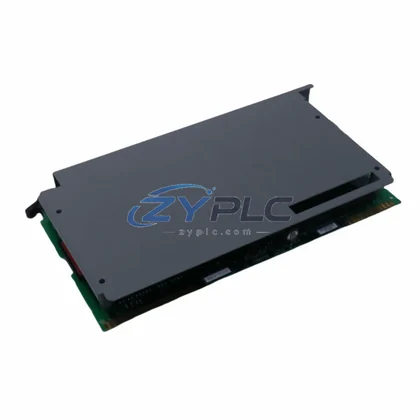
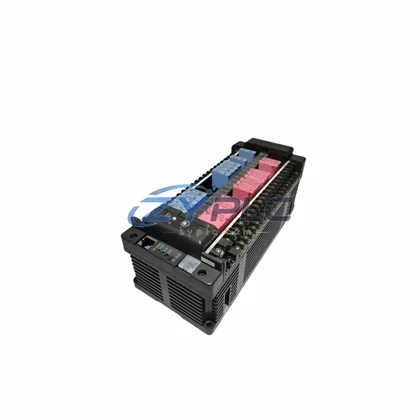
The Allen-Bradley 1746-OW16/C is a 16-point relay output module engineered for the SLC 500 programmable controller platform — one of Rockwell Automation’s most widely deployed discrete control architectures in global manufacturing. Designed to bridge the gap between PLC logic and field-level actuators, the 1746-OW16/C delivers reliable, isolated relay switching across 16 independent output channels, making it a foundational component in industrial data flow chains that span signal acquisition, protocol-level communication, real-time monitoring, and remote diagnostics.
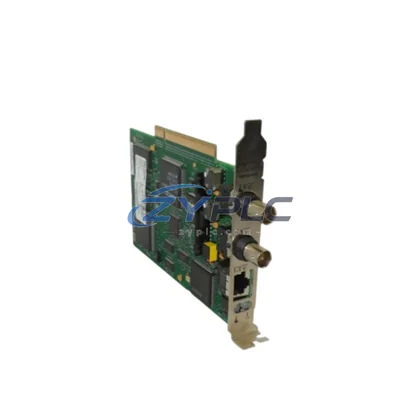
In modern smart factory environments, the integrity of the output layer is as critical as the intelligence of the controller itself. The 1746-OW16/C integrates directly into the SLC 500 backplane alongside communication modules such as the 1747-KE (DH-485 to RS-232 interface) and the 1747-SDN (DeviceNet Scanner), enabling the SLC 500 rack to participate in multi-node industrial networks where field devices, drives, and remote I/O must exchange data with SCADA systems and HMI platforms in real time.
Compatibility & Integration Notes
| Attribute |
Specification |
| SKU / Part Number |
1746-OW16/C |
| Brand |
Allen-Bradley (Rockwell Automation) |
| Series |
SLC 500 |
| Module Type |
Relay Output Module |
| Output Points |
16 relay outputs (isolated) |
| Output Type |
Form A (SPST-NO) relay contacts |
| Communication Protocol |
SLC 500 backplane I/O bus; compatible with DH-485, DeviceNet, ControlNet via scanner modules |
| Interface Compatibility |
SLC 5/01, 5/02, 5/03, 5/04, 5/05 processors |
| Network Architecture |
Rack-based I/O; integrates with remote I/O via 1747-ASB adapter |
| SCADA / HMI Integration |
Compatible via RSLinx, FactoryTalk View, PanelView terminals |
| System Application |
Discrete output control, motor starter switching, valve actuation, alarm relay |
| Warranty |
Warranty and support terms confirmed before quote — All units tested before shipment |
Connected Automation Data Flow
Understanding the 1746-OW16/C’s role requires tracing the full data path from field sensor to enterprise system. At the signal acquisition layer, discrete inputs from proximity sensors, limit switches, and photoelectric detectors are captured by companion modules such as the 1746-IB16 (24VDC input module) or the 1746-IA16 (120VAC input module), both residing in the same SLC 500 chassis. The SLC 5/04 or SLC 5/05 processor evaluates this input data against ladder logic, then writes output commands to the 1746-OW16/C, which physically energizes relay coils to switch motors, solenoids, and indicator lamps.
For protocol conversion and network upward integration, the 1747-KE module provides a DH-485 to RS-232 gateway, allowing the SLC 500 rack to communicate with legacy serial devices and upstream SCADA hosts. Where DeviceNet topology is required, the 1747-SDN DeviceNet Scanner enables the SLC 500 to act as a network master, polling distributed I/O nodes — including 1794-AENT FLEX I/O EtherNet/IP adapters — across the plant floor. This architecture supports real-time data exchange between the relay output layer and supervisory systems running on FactoryTalk View SE or third-party SCADA platforms via OPC-DA or OPC-UA bridges.
In drive integration scenarios, the 1746-OW16/C relay outputs are commonly wired to the enable and fault-reset terminals of PowerFlex 40 or PowerFlex 400 variable frequency drives, providing hardwired interlock logic that complements the drive’s own DeviceNet or EtherNet/IP communication channel. This dual-path architecture — relay hardwire plus network soft command — is a best practice in safety-critical conveyor, pump, and compressor applications.
Remote I/O expansion is handled through the 1747-ASB Remote I/O Adapter, which allows additional SLC 500 I/O racks — including further 1746-OW16/C modules — to be distributed across the facility while remaining under the control of a central SLC 5/04 processor. Alarm feedback from the relay output layer is routed back through the input modules, processed by the PLC, and surfaced on PanelView Plus 700 HMI terminals, giving operators real-time visibility into output state, fault conditions, and interlock status without requiring physical inspection of the panel.
At the edge computing layer, data aggregated from the SLC 500 network can be forwarded to industrial edge gateways — such as the Moxa MGate MB3180 Modbus gateway or Kepware KEPServerEX — for protocol normalization before transmission to cloud-based MES or ERP platforms. This positions the 1746-OW16/C not merely as a switching device, but as an active participant in the plant-wide data ecosystem that underpins Industry 4.0 transparency and predictive maintenance strategies.
Solving Data Isolation in Industrial Sites
One of the most persistent challenges in brownfield industrial facilities is protocol fragmentation — legacy SLC 500 systems running DH-485 alongside newer EtherNet/IP infrastructure, with no unified data path between them. The 1746-OW16/C addresses the output side of this equation by providing a protocol-agnostic relay interface: regardless of whether the upstream command originates from a DH-485 message instruction, a DeviceNet explicit message, or an EtherNet/IP tag write via the SLC 5/05’s built-in Ethernet port, the relay output behavior is identical and deterministic.
Data isolation — where field device status is invisible to SCADA operators — is eliminated by pairing the 1746-OW16/C with input echo logic in the SLC 500 program. Each relay output state is mirrored to an internal bit, which is then mapped to a FactoryTalk Historian tag or an OPC item, making output status continuously available to production dashboards and alarm management systems. This approach enables production line transparency without requiring additional hardware investment.
For remote diagnostics, the SLC 5/05 processor’s Ethernet port supports MSG instructions that allow remote engineers to read and write I/O data — including the status of 1746-OW16/C relay channels — from any networked workstation running RSLogix 500 or RSLinx Classic. Combined with scheduled data logging and alarm journaling in FactoryTalk View SE, this creates a complete remote monitoring and fault-response capability that reduces mean time to repair (MTTR) and supports predictive maintenance programs.
System expansion is straightforward: additional 1746-OW16/C modules can be inserted into available backplane slots or added to remote I/O racks via the 1747-ASB adapter, scaling output capacity without processor replacement. All units supplied by ZYPLC are drawn from RFQ-confirmed availability, subjected to pre-shipment functional testing, and covered by a warranty and support terms confirmed before quote — ensuring that expansion projects proceed on schedule with full confidence in component reliability.
Industrial Connectivity FAQ
Q1: What communication protocols does the 1746-OW16/C support for SCADA integration?
The 1746-OW16/C itself is a relay output module that communicates over the SLC 500 backplane I/O bus. SCADA integration is achieved through the processor and communication modules in the same rack: the SLC 5/05 provides native EtherNet/IP connectivity, while the 1747-KE and 1747-SDN modules add DH-485 and DeviceNet capability respectively. RSLinx Classic or RSLinx Enterprise acts as the OPC server, exposing relay output tags to FactoryTalk View, Wonderware, or any OPC-compliant SCADA platform.
Q2: How is network stability maintained when the 1746-OW16/C is used in high-cycle relay applications?
The 1746-OW16/C relay contacts are rated for mechanical and electrical endurance consistent with industrial duty cycles. Network stability is maintained by the SLC 500’s deterministic scan cycle, which ensures output updates occur at fixed intervals regardless of network load. For high-frequency switching, it is recommended to monitor relay contact wear via input echo logic and schedule preventive replacement based on cycle count data logged to the SCADA historian.
Q3: Can the 1746-OW16/C be integrated into a mixed EtherNet/IP and DeviceNet architecture?
Yes. The SLC 500 platform supports mixed network architectures through the use of multiple communication modules in the same chassis. The 1746-OW16/C operates transparently within this architecture — its relay outputs are controlled by the SLC processor regardless of which network protocol delivers the command. This makes it fully compatible with hybrid automation environments where EtherNet/IP handles supervisory communication and DeviceNet manages device-level I/O.
Q4: What warranty and pre-shipment testing does ZYPLC provide for the 1746-OW16/C?
All 1746-OW16/C units supplied by ZYPLC are functionally tested prior to shipment to verify relay contact integrity, backplane communication, and output channel operation. Each unit is covered by a warranty and support terms confirmed before quote from the date of delivery. In the event of a warranty claim, ZYPLC provides direct technical support and replacement coordination to minimize production downtime.