Allen-Bradley 1747-BSN Industrial Network Interface for SLC 500 Systems: Bridging the Smart Factory Data Link
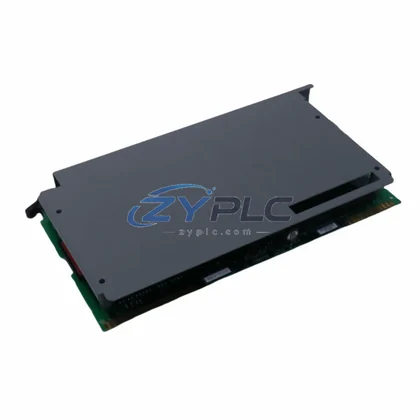
The Allen-Bradley 1747-BSN is a dedicated Remote I/O Scanner Module engineered for the SLC 500 programmable controller platform. Designed to extend the reach of industrial automation networks, the 1747-BSN enables the SLC 500 processor to communicate with distributed remote I/O racks across a plant floor, forming a reliable, high-speed data backbone between field devices and the control system. In modern smart factory environments where real-time data visibility, protocol consistency, and network stability are non-negotiable, the 1747-BSN delivers the connectivity infrastructure that keeps production lines transparent, responsive, and scalable.
As industrial sites evolve from isolated control islands toward fully integrated SCADA and MES architectures, the role of a dependable Remote I/O Scanner becomes central to the entire automation data flow. The 1747-BSN occupies a critical position in this chain — sitting between the SLC 500 CPU and the remote I/O network, it continuously scans discrete and analog I/O data from field devices, ensuring that every signal — from proximity sensors on a conveyor to pressure transmitters in a process loop — is captured, validated, and delivered to the controller with minimal latency.
Compatibility & Integration Notes
| Specification |
Details |
| SKU / Part Number |
1747-BSN |
| Brand |
Allen-Bradley (Rockwell Automation) |
| Product Type |
Remote I/O Scanner Module |
| Compatible Platform |
SLC 500 Modular Chassis |
| Communication Protocol |
Allen-Bradley Remote I/O (RIO) — 1771 Blue Hose Network |
| Network Role |
Scanner (Master) — controls up to 32 remote I/O racks |
| Interface Type |
Remote I/O Link (Belden 9463 / Blue Hose) |
| Data Transfer Rate |
57.6 Kbps / 115.2 Kbps / 230.4 Kbps (switch-selectable) |
| I/O Capacity |
Up to 4096 discrete I/O points (256 words) |
| Network Compatibility |
Compatible with 1771 I/O chassis, 1746 SLC I/O adapters via 1747-ASB |
| System Application |
PLC-based distributed I/O, SCADA integration, remote monitoring |
| Chassis Slot |
Single slot, SLC 500 modular chassis |
| Power Consumption |
800 mA @ 5 VDC |
| Operating Temperature |
0°C to 60°C (32°F to 140°F) |
| Warranty |
Warranty and support terms confirmed before quote — Covered by ZYPLC |
| Availability |
Confirmed via RFQ before quotation |
Connected Automation Data Flow
In a typical SLC 500-based automation architecture, the 1747-BSN acts as the network master, continuously polling remote I/O racks distributed across the production floor. Consider a packaging line where the SLC 500 processor — housed in a 1746 modular chassis — needs to monitor and control equipment spread across three separate control panels. The 1747-BSN scanner module connects to each remote rack via the Remote I/O link, reading discrete inputs from photoelectric sensors and limit switches, and writing output commands to motor starters and solenoid valves in real time.
At the remote end, 1747-ASB Remote I/O Adapter Modules installed in each 1746 SLC chassis translate the Remote I/O network protocol into local backplane communication, allowing standard 1746 digital and analog I/O modules to participate in the distributed network. This means a single SLC 500 processor with the 1747-BSN can supervise dozens of I/O points spread across a large facility without requiring additional processors at each location.
For process-level integration, analog signals from 1746-NI4 analog input modules — measuring temperature, pressure, or flow — are scanned by the 1747-BSN and delivered to the SLC 500 data table, where the processor executes PID control loops and alarm logic. The processed data is then made available to upstream systems: a PanelView 550 or PanelView 600 HMI terminal connected via DH-485 or DH+ reads real-time process values and displays them to operators, while a 1747-KE or 1747-KFC15 communication interface bridges the SLC 500 network to a PC-based SCADA platform running RSView32 or FactoryTalk View SE.
In more complex architectures, the SLC 500 with 1747-BSN integrates into a broader Data Highway Plus (DH+) network alongside other Allen-Bradley controllers — including PLC-5 processors and additional SLC 500 systems — enabling peer-to-peer messaging and coordinated multi-zone control. A 1785-KA5 or 1784-KTX communication card at the SCADA workstation provides the gateway between the DH+ network and the supervisory software layer, completing the data path from field sensor to enterprise dashboard.
For sites requiring Ethernet connectivity, a 1761-NET-ENI Ethernet Interface or a ProSoft Technology MVI56-MCM communication module can be deployed alongside the SLC 500 system to bridge legacy Remote I/O data onto a modern EtherNet/IP backbone, enabling integration with Manufacturing Execution Systems (MES), OPC servers, and cloud-based analytics platforms without replacing the existing SLC 500 infrastructure.
Variable frequency drives — such as the PowerFlex 40 or PowerFlex 70 series — connected via DeviceNet or hardwired I/O to the remote racks are also managed through the 1747-BSN scan cycle, giving the SLC 500 full visibility into drive status, fault codes, and speed references. This closed-loop data flow — from field device through the Remote I/O network, into the SLC 500 processor, and up to the SCADA and HMI layer — is the foundation of a transparent, data-driven production environment.
Solving Data Isolation in Industrial Sites
One of the most persistent challenges in legacy industrial environments is data isolation — control systems that operate in silos, unable to share process information with adjacent systems or upper-level management platforms. The Allen-Bradley 1747-BSN directly addresses this challenge by providing a structured, deterministic communication link between the SLC 500 controller and its distributed I/O network, eliminating the need for point-to-point hardwiring between the main panel and remote equipment locations.
Without a Remote I/O Scanner like the 1747-BSN, extending an SLC 500 system to cover additional production zones would require either running hundreds of individual I/O wires back to the main panel — a costly and error-prone approach — or installing additional standalone controllers at each zone, creating separate data islands with no native communication path. The 1747-BSN solves this by providing a single, managed network link that carries all I/O data over a two-wire shielded cable, dramatically reducing installation complexity and enabling centralized monitoring of the entire production area from one SLC 500 processor.
For remote diagnostics, the 1747-BSN provides fault detection and network status reporting directly to the SLC 500 data table. When a remote rack loses communication — due to a cable fault, power interruption, or adapter failure — the scanner immediately flags the fault in the processor’s I/O status file, triggering alarm logic that can notify operators via the HMI or send an alert through the SCADA system. This real-time fault visibility reduces mean time to repair (MTTR) and prevents undetected failures from causing extended production downtime.
As production requirements grow, the 1747-BSN supports system expansion without architectural redesign. Additional remote I/O racks can be added to the network up to the module’s maximum capacity, accommodating new equipment, additional sensors, or expanded process zones without modifying the core SLC 500 program structure. This scalability makes the 1747-BSN a long-term connectivity investment for facilities that need to grow their automation footprint incrementally while maintaining a consistent control platform.
ZYPLC supplies the Allen-Bradley 1747-BSN from verified inventory, with each unit subject to pre-shipment functional testing to confirm communication integrity and module health. Warranty terms are confirmed during quotation.
Industrial Connectivity FAQ
Q1: What is the maximum network length supported by the 1747-BSN Remote I/O link?
The Allen-Bradley Remote I/O network supported by the 1747-BSN can extend up to 3,048 meters (10,000 feet) at the lowest baud rate of 57.6 Kbps using Belden 9463 (Blue Hose) cable. At higher baud rates (115.2 Kbps or 230.4 Kbps), the maximum cable length is reduced accordingly. Proper cable termination with 82-ohm resistors at both ends of the network is required to ensure signal integrity and network stability.
Q2: Is the 1747-BSN compatible with both 1771 PLC-5 I/O racks and 1746 SLC I/O racks?
Yes. The 1747-BSN can scan standard 1771 remote I/O racks directly, as these use the native Allen-Bradley Remote I/O protocol. For 1746 SLC I/O racks, a 1747-ASB Remote I/O Adapter Module must be installed in the remote chassis to translate between the Remote I/O network and the SLC backplane. This flexibility allows the 1747-BSN to integrate both PLC-5 era hardware and SLC 500 I/O modules within the same distributed network.
Q3: How does the 1747-BSN handle communication faults, and can fault data be accessed by SCADA systems?
The 1747-BSN continuously monitors the health of each remote I/O rack on the network. When a communication fault occurs — such as a rack going offline or a cable break — the module sets fault bits in the SLC 500 I/O status file (S:, N:, or dedicated fault words depending on configuration). These fault bits can be mapped to SCADA tags via the DH+ or DH-485 network, enabling supervisory systems like FactoryTalk View SE or RSView32 to display real-time network health, generate alarm notifications, and log fault events for maintenance analysis.
Q4: Does ZYPLC provide pre-shipment testing and warranty coverage for the 1747-BSN?
Yes. Every Allen-Bradley 1747-BSN unit supplied by ZYPLC undergoes pre-shipment functional verification to confirm module communication, LED status indicators, and network initialization behavior. Warranty terms are confirmed during quotation. In the event of a confirmed hardware defect within the warranty period, ZYPLC will arrange replacement or repair. For urgent requirements, expedited shipping via DHL or FedEx is available to minimize equipment downtime.
—
Contact: +86 19859288691 | plc.sales@zyplc.com