Allen-Bradley 1756-HSC/B Industrial Network Interface for ControlLogix Systems: Precision Data Links Across the Smart Factory Floor
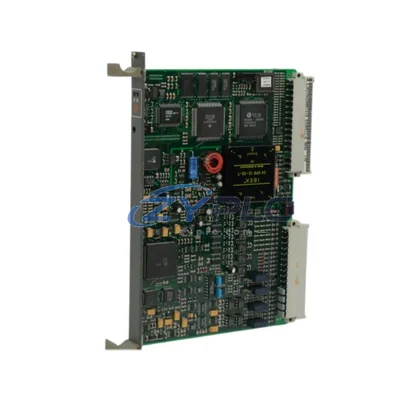
The Allen-Bradley 1756-HSC/B is a high-speed counter module engineered for the ControlLogix 1756 platform, purpose-built to capture, process, and transmit high-frequency pulse and encoder signals across industrial automation networks. In modern smart factory environments where every microsecond of signal latency can affect product quality, line throughput, and system reliability, the 1756-HSC/B serves as a critical data acquisition node — bridging field-level sensing devices with upper-layer control, monitoring, and analytics systems.
Designed to accept quadrature encoder inputs, SSI (Synchronous Serial Interface) signals, and discrete pulse trains, this module delivers real-time positional and velocity data directly into the ControlLogix backplane. From there, the 1756 chassis infrastructure — including EtherNet/IP communication modules such as the 1756-EN2T or 1756-EN3TR — routes that data upstream to SCADA platforms, MES layers, and cloud-connected edge gateways without protocol conversion bottlenecks.
Compatibility & Integration Notes
| Attribute |
Specification |
| SKU / Part Number |
1756-HSC/B |
| Brand / Manufacturer |
Allen-Bradley (Rockwell Automation) |
| Series |
ControlLogix 1756 |
| Module Type |
High-Speed Counter Module |
| Input Protocols |
Quadrature Encoder, SSI, Pulse / Direction, Up/Down Count |
| Backplane Communication |
ControlLogix Backplane (1756 chassis) |
| Network Integration |
EtherNet/IP (via 1756-EN2T / 1756-EN3TR), ControlNet, DeviceNet |
| SCADA / HMI Compatibility |
FactoryTalk View SE/ME, Ignition SCADA, WonderWare, Kepware OPC-UA |
| Counter Channels |
4 independent high-speed counter channels |
| Max Count Frequency |
Up to 1 MHz per channel |
| System Application |
Motion feedback, conveyor speed, flow metering, position tracking, packaging lines |
| Origin |
United States |
| Warranty |
Warranty and support terms confirmed before quote |
| Availability |
Confirmed via RFQ before quotation |
Connected Automation Data Flow
In a fully integrated ControlLogix automation architecture, the 1756-HSC/B sits at the intersection of physical motion and digital intelligence. Consider a high-speed packaging line: rotary encoders mounted on servo axes feed quadrature signals into the 1756-HSC/B at frequencies exceeding 500 kHz. The module’s onboard counter logic processes these pulses in real time, making position and velocity data immediately available on the 1756 backplane — accessible to the 1756-L85E ControlLogix controller within the same chassis.
The 1756-L85E controller executes motion logic, compares live counter values against recipe setpoints, and triggers output commands to PowerFlex 755 variable frequency drives controlling conveyor belts and indexing tables. Simultaneously, the EtherNet/IP network module — typically a 1756-EN2T — publishes tag data to a FactoryTalk View SE HMI panel, giving operators a real-time graphical view of line speed, product count, and fault conditions.
Further upstream, an Ignition SCADA gateway subscribes to the same EtherNet/IP tag space via OPC-UA, logging counter data to a historian database for trend analysis and OEE (Overall Equipment Effectiveness) reporting. Remote I/O nodes — such as the 1734 POINT I/O modules connected via EtherNet/IP — extend the network to distributed sensor clusters across the plant floor, feeding additional discrete signals back into the same ControlLogix program.
For facilities running mixed-protocol environments, a ProSoft Technology MVI56E-MCM communication module installed in the same 1756 chassis can bridge Modbus RTU or Modbus TCP devices — legacy flow meters, pressure transmitters, and third-party PLCs — into the unified ControlLogix data space. This means the 1756-HSC/B’s counter data can be correlated in real time with analog process values from Modbus-connected sensors, enabling multi-variable process control without separate data aggregation middleware.
At the edge, a Cisco IE-4000 industrial managed switch provides the Layer 2/3 network backbone, ensuring deterministic EtherNet/IP traffic prioritization through DSCP QoS policies. This guarantees that the high-frequency counter data from the 1756-HSC/B reaches the controller and SCADA system within the required cycle time, even on congested plant networks carrying video surveillance and IT traffic.
For remote diagnostics and predictive maintenance, a Stratus everRun edge computing platform or a Moxa UC-8100 industrial computer can be deployed to run local analytics on the counter data stream — detecting encoder signal degradation, counting anomalies, or mechanical wear patterns before they cause unplanned downtime. Alarm events are forwarded via MQTT or OPC-UA to cloud-based CMMS platforms, closing the loop between field data and maintenance scheduling.
Solving Data Isolation in Industrial Sites
One of the most persistent challenges in industrial automation is data isolation — the condition where field devices generate valuable process data that never reaches the systems capable of acting on it. The Allen-Bradley 1756-HSC/B directly addresses this problem within the ControlLogix ecosystem.
Protocol Fragmentation: Many production facilities operate legacy equipment using proprietary or older serial protocols alongside modern EtherNet/IP infrastructure. The 1756-HSC/B’s native backplane integration means encoder and pulse data is immediately available in the ControlLogix tag database — no custom driver development, no serial-to-Ethernet converters, no data mapping delays. Combined with communication modules supporting DeviceNet, ControlNet, or Modbus, the 1756 chassis becomes a unified protocol hub.
Real-Time Visibility: Production managers and process engineers often lack real-time visibility into machine speed, part counts, and positional accuracy. By feeding encoder data from the 1756-HSC/B into FactoryTalk Historian or Ignition’s built-in historian, every counter event is time-stamped and stored — enabling shift-by-shift performance comparison, SPC (Statistical Process Control) analysis, and instant alarm notification when counts deviate from tolerance.
Remote Monitoring and Diagnostics: With EtherNet/IP connectivity through the 1756 chassis, maintenance engineers can remotely access the 1756-HSC/B’s diagnostic registers using Studio 5000 Logix Designer’s online monitoring mode — without physically visiting the machine. Counter overflow events, input signal loss, and module health status are all readable remotely, reducing mean time to repair (MTTR) and enabling proactive maintenance scheduling.
System Scalability: The modular architecture of the ControlLogix 1756 platform means the 1756-HSC/B can be added to existing chassis without system redesign. As production lines expand — adding new conveyor segments, robotic cells, or inspection stations — additional counter channels are available simply by installing more 1756-HSC/B modules in available chassis slots, with automatic tag discovery in Studio 5000.
Shipment and Quality Assurance: Every 1756-HSC/B unit supplied by ZYPLC undergoes pre-shipment functional verification, including backplane communication testing and input channel validation. Units are shipped in original or equivalent protective packaging via DHL or FedEx Express with full tracking. A warranty and support terms confirmed before quote covers all hardware defects, with direct technical support available from our engineering team.
Industrial Connectivity FAQ
Q1: What communication protocols does the 1756-HSC/B support for SCADA integration?
The 1756-HSC/B communicates natively over the ControlLogix backplane, making its counter data available to any EtherNet/IP-connected SCADA or HMI system — including FactoryTalk View SE, Ignition, WonderWare, and Kepware OPC-UA server. No additional protocol gateway is required when using a 1756-EN2T or 1756-EN3TR communication module in the same chassis.
Q2: How does the 1756-HSC/B handle high-frequency encoder signals without data loss?
The module’s dedicated hardware counter logic operates independently of the controller scan cycle, capturing pulse edges at up to 1 MHz per channel without relying on software interrupts. Counter values are latched and transferred to the controller tag database at each program scan, ensuring no counts are missed even during high-speed motion sequences.
Q3: Can the 1756-HSC/B be integrated into an existing ControlLogix system without reprogramming?
Yes. When installed in a 1756 chassis running Studio 5000 Logix Designer, the 1756-HSC/B is automatically recognized and its I/O tags are added to the controller’s tag database. Existing ladder logic or function block programs can reference these tags immediately. Configuration of counter modes (quadrature, pulse/direction, up/down) is performed through the module’s properties dialog without modifying existing program logic.
Q4: What warranty and after-sales support does ZYPLC provide for the 1756-HSC/B?
All 1756-HSC/B units supplied by ZYPLC carry a 12-month hardware warranty from the date of shipment. Pre-shipment testing is performed on every unit. Our technical team provides post-sale support for installation, configuration, and network integration questions. Replacement or refund is available for any unit confirmed defective within the warranty period. Contact us at plc.sales@zyplc.com or +86 19859288691.