Allen-Bradley 1756-HSC Industrial Network Interface for ControlLogix Systems: Precision Data Links for Smart Factory Automation
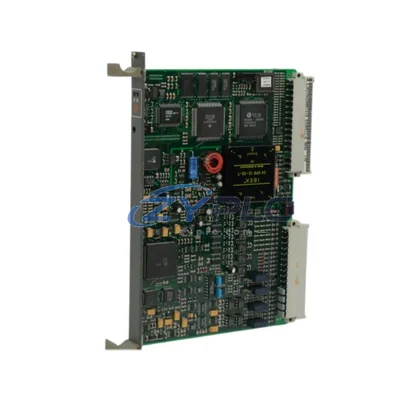
The Allen-Bradley 1756-HSC High-Speed Counter Module is a purpose-built industrial network interface designed to bridge high-speed encoder and pulse-train signals directly into the ControlLogix backplane — delivering real-time, deterministic data to your PLC controller, SCADA platform, and upper-level MES systems. In modern smart factory environments where every microsecond of signal latency matters, the 1756-HSC serves as the critical data acquisition node that transforms raw field-level pulses into actionable process intelligence.
Engineered for demanding industrial sites, the 1756-HSC supports up to four independent counter/encoder channels, each capable of counting at frequencies up to 1 MHz. Whether deployed in high-speed packaging lines, precision CNC machining centers, rotary encoder feedback loops, or flow measurement systems, this module ensures that position, velocity, and event data are captured without loss and transmitted across the ControlLogix backplane with zero ambiguity. Its native integration with the 1756-L8x and 1756-L7x series ControlLogix CPUs means that data is immediately available to Logix Designer ladder logic, function block diagrams, and structured text routines — eliminating the protocol conversion overhead that plagues legacy counter interfaces.
Compatibility & Integration Notes
| Attribute |
Specification |
| Module SKU |
1756-HSC |
| Brand / Vendor |
Allen-Bradley (Rockwell Automation) |
| Series |
ControlLogix 1756 |
| Communication Protocol |
EtherNet/IP (via ControlLogix backplane), CIP (Common Industrial Protocol) |
| Interface Type |
ControlLogix Backplane I/O Module |
| Counter Channels |
4 independent channels (encoder / counter / period / rate) |
| Maximum Input Frequency |
1 MHz per channel |
| Encoder Support |
Quadrature (A/B/Z), Single-ended, Differential (RS-422) |
| Network Compatibility |
ControlLogix, GuardLogix, CompactLogix (via adapter), EtherNet/IP network |
| SCADA / HMI Integration |
FactoryTalk View SE/ME, Ignition SCADA, WonderWare, RSView32 |
| System Application |
Motion feedback, flow metering, packaging, CNC, conveyor speed, press control |
| Power Consumption |
325 mA @ 5 VDC (backplane) |
| Operating Temperature |
0°C to 60°C |
| Certifications |
UL, CE, C-Tick |
| Warranty |
Warranty and support terms confirmed before quote | Tested before shipment |
| Availability |
Availability confirmed by RFQ | Export shipping options available after RFQ confirmation |
Connected Automation Data Flow
In a fully integrated ControlLogix automation architecture, the 1756-HSC sits at the intersection of field-level sensing and upper-level control intelligence. Consider a high-speed bottling line: incremental encoders mounted on conveyor drives feed quadrature pulse trains directly into the 1756-HSC’s differential inputs. The module decodes position and velocity in real time and writes structured CIP data objects to the 1756-L85E ControlLogix CPU across the 1756-A17 chassis backplane — all within a single RPI (Requested Packet Interval) scan cycle.
From the CPU, EtherNet/IP packets carry this counter data upstream through a Stratix 5700 managed industrial Ethernet switch to a FactoryTalk View SE SCADA server, where operators monitor line speed, batch counts, and OEE metrics on FactoryTalk View ME HMI panels mounted at each production station. Simultaneously, the 1756-EN2T EtherNet/IP communication module bridges the ControlLogix rack to the plant-wide EtherNet/IP network, enabling the 1756-HSC’s counter data to be consumed by a PowerFlex 755 variable frequency drive for closed-loop speed regulation — a seamless data loop from sensor to drive without a single protocol gateway in between.
For sites requiring remote I/O expansion, the 1756-HSC data can be aggregated alongside 1734 POINT I/O modules connected via a 1734-AENT EtherNet/IP adapter, feeding a unified data model into an Ignition SCADA gateway. Edge computing nodes running FactoryTalk Analytics or third-party OPC-UA servers can then subscribe to the counter tags, enabling predictive maintenance algorithms to detect encoder degradation before it causes unplanned downtime. In multi-chassis architectures, the 1756-RIO Remote I/O Scanner extends the counter data reach across the facility, while 1756-DNB DeviceNet Bridge modules allow legacy DeviceNet sensors and actuators to coexist on the same ControlLogix platform — all sharing the same real-time data backbone anchored by the 1756-HSC.
For safety-critical applications, the 1756-HSC integrates alongside GuardLogix 1756-L7SP safety controllers, where its high-speed position feedback supports safe speed monitoring and safe limited speed functions in press and robot cell applications. The module’s hardware gate and latch inputs further enable precise event capture — triggering alarm feedback through the ControlLogix I/O tree to FactoryTalk Alarms and Events, ensuring that every production anomaly is logged, timestamped, and escalated to the appropriate operator or maintenance team in real time.
Solving Data Isolation in Industrial Sites
One of the most persistent challenges in industrial automation is data isolation — the condition where field devices, PLCs, drives, and SCADA systems operate in disconnected silos, each speaking a different protocol or using proprietary data formats that prevent unified visibility across the production floor. The Allen-Bradley 1756-HSC directly addresses this challenge by serving as a native CIP data source within the ControlLogix ecosystem, eliminating the need for external protocol converters or signal conditioners that introduce latency, single points of failure, and maintenance complexity.
Sites that previously relied on standalone pulse counters or legacy BCD-output counter modules often struggled with data that was trapped at the field level — visible only to a local display, inaccessible to SCADA, and invisible to MES or ERP systems. By replacing these isolated devices with the 1756-HSC, engineers gain immediate access to counter and encoder data through standard CIP tag structures, readable by any EtherNet/IP-capable device on the network. This transparency enables production line digitization: real-time throughput data flows from the 1756-HSC through the ControlLogix CPU to FactoryTalk ProductionCentre or third-party MES platforms, giving plant managers the live OEE dashboards and shift reports they need to drive continuous improvement.
Remote diagnostics and predictive maintenance are equally transformed. With the 1756-HSC’s counter data available as live CIP tags on the EtherNet/IP network, remote engineers can monitor encoder health, detect missed pulses, and identify mechanical wear trends from any location — using FactoryTalk Remote Access or standard OPC-UA clients — without requiring physical access to the machine. System expansion is equally straightforward: additional 1756-HSC modules can be added to any available slot in the 1756-Axx chassis, and their tags are automatically discovered by the ControlLogix CPU and propagated to all connected SCADA and HMI clients, making capacity scaling a configuration task rather than a rewiring project.
Industrial Connectivity FAQ
Q1: What communication protocols does the 1756-HSC support for SCADA and HMI integration?
The 1756-HSC communicates natively via CIP (Common Industrial Protocol) over the ControlLogix backplane. Its data tags are exposed to the EtherNet/IP network through the ControlLogix CPU and EtherNet/IP communication modules such as the 1756-EN2T or 1756-EN3TR. This makes the counter data directly accessible to FactoryTalk View SE/ME, Ignition SCADA, WonderWare, and any OPC-DA or OPC-UA server configured to browse ControlLogix tags — with no additional protocol gateway required.
Q2: How does the 1756-HSC ensure network stability and data integrity at high counting frequencies?
The 1756-HSC uses dedicated hardware counters and latches that operate independently of the CPU scan cycle, ensuring that no pulses are missed even at 1 MHz input frequencies. Data is transferred to the ControlLogix CPU via the backplane at the configured RPI, with CRC-protected backplane communication guaranteeing data integrity. The module’s differential RS-422 inputs provide excellent noise immunity in electrically harsh industrial environments, maintaining signal integrity across long cable runs from encoders and proximity sensors.
Q3: Can the 1756-HSC be integrated into an existing ControlLogix system without disrupting production?
Yes. The 1756-HSC is a hot-swappable ControlLogix I/O module. It can be inserted into any available slot in a 1756-Axx chassis while the system is running. Once inserted, the module is automatically recognized by the ControlLogix CPU, and its I/O configuration can be downloaded from Logix Designer without requiring a full system restart. This makes it ideal for capacity expansion and system upgrades on live production lines.
Q4: What quality assurance and warranty coverage is provided with the 1756-HSC?
Every 1756-HSC unit supplied by ZYPLC undergoes functional testing prior to shipment, including counter channel verification, encoder input validation, and backplane communication checks. Warranty terms are confirmed during quotation. Availability confirmed by RFQ inventory ensures fast global delivery, and our technical team is available to support installation, configuration, and commissioning via +86 19859288691 or plc.sales@zyplc.com.