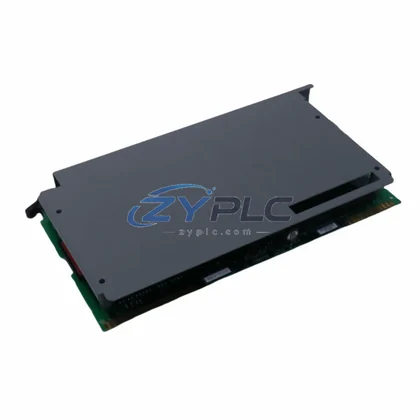
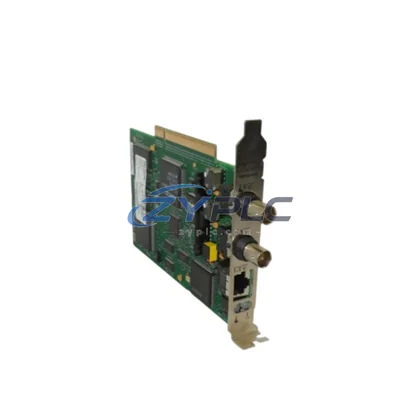
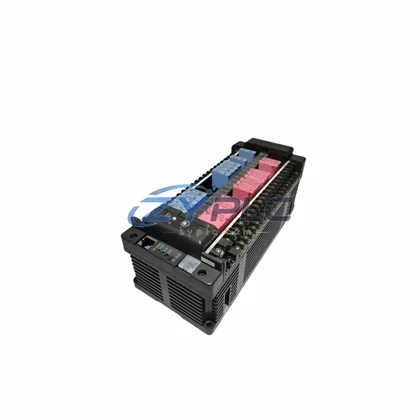
Allen-Bradley 1756-OB32/K: Industrial Data Link for ControlLogix Smart Factory Networks
The Allen-Bradley 1756-OB32/K is a 32-point 24VDC sourcing digital output module engineered for the ControlLogix 1756 chassis platform — one of the most widely deployed programmable automation controller (PAC) architectures in discrete manufacturing, process control, and smart factory environments. Designed to bridge the gap between high-level control logic and field-level actuators, the 1756-OB32/K delivers deterministic, high-density output switching that forms the backbone of reliable industrial data flow from controller to device.
In a modern smart factory, data integrity begins at the field level. The 1756-OB32/K connects directly to the ControlLogix backplane, enabling the 1756-L85E or 1756-L84E controller to issue real-time output commands to solenoid valves, motor starters, indicator lights, and relay coils — all within a single scan cycle. This tight integration with the ControlLogix I/O tree ensures that output state data is continuously reflected in the controller tag database, making it immediately accessible to SCADA systems via EtherNet/IP, the primary industrial Ethernet protocol used across Rockwell Automation’s connected enterprise architecture.
The signal flow begins upstream: field sensors and encoders feed data into companion input modules such as the 1756-IB32 or 1756-IA32, which pass digital state information through the ControlLogix backplane to the resident controller. The controller processes this data against ladder logic or function block programs and issues output commands through the 1756-OB32/K to downstream actuators. This closed-loop data path — from sensor to controller to actuator — is the fundamental communication chain that enables real-time process control, alarm response, and automated sequencing in discrete manufacturing lines.
For facilities running FactoryTalk View SE or FactoryTalk View ME as their HMI platform, the 1756-OB32/K output states are natively visible as controller tags, enabling operators to monitor actuator status, acknowledge alarms, and initiate manual overrides directly from the HMI screen. When integrated with FactoryTalk Historian or a third-party SCADA platform via OPC-UA or EtherNet/IP, output module data contributes to production KPI dashboards, shift reports, and predictive maintenance analytics — transforming raw switching events into actionable operational intelligence.
In multi-chassis or distributed I/O architectures, the 1756-OB32/K can be deployed in remote ControlLogix racks connected via the 1756-EN2T EtherNet/IP communication module or the 1756-CN2 ControlNet bridge. This allows a single controller to manage output modules distributed across a production floor, conveyor system, or multi-zone packaging line without sacrificing scan time performance. The module’s 32-point density reduces chassis slot consumption compared to lower-density alternatives, making it a preferred choice for high-channel-count applications where rack space is at a premium.
For applications requiring protocol translation — such as connecting legacy Modbus RTU devices or PROFIBUS DP field instruments to a ControlLogix-based EtherNet/IP network — the 1756-OB32/K works in conjunction with gateway modules like the 1756-MVI56E or third-party ProSoft Technology communication cards installed in the same chassis. This enables the ControlLogix system to act as a protocol bridge, aggregating data from heterogeneous field devices and presenting a unified data model to upstream SCADA or MES systems.
Remote diagnostics and predictive maintenance are further enhanced by the 1756-OB32/K’s integration with Rockwell’s Studio 5000 Logix Designer environment. Engineers can monitor output channel health, detect field wiring faults, and configure electronic fusing parameters — all without physical access to the panel. When combined with the FactoryTalk Remote Access platform or a VPN-enabled 1783-NATR NAT router, remote engineers can diagnose output module behavior from off-site, reducing mean time to repair (MTTR) and minimizing unplanned downtime.
The 1756-OB32/K is fully compatible with the ControlLogix redundancy system when paired with the 1756-RM2 redundancy module, ensuring that critical output channels remain operational during controller switchover events. This makes it suitable for high-availability applications in oil and gas, water treatment, and pharmaceutical manufacturing where output continuity is a safety and compliance requirement.
Every 1756-OB32/K unit supplied by ZYPLC undergoes pre-shipment functional verification, including output channel continuity testing and backplane communication checks. Units are sourced through verified industrial supply channels and carry a warranty and support terms confirmed before quote covering manufacturing defects and communication failures. Global RFQ sourcing is maintained for fast dispatch, with export documentation available for international shipments.
Compatibility & Integration Notes
| Parameter |
Specification |
| Module SKU |
1756-OB32/K |
| Platform |
Allen-Bradley ControlLogix 1756 |
| Output Points |
32-point sourcing digital output |
| Output Voltage |
10–31.2V DC |
| Communication Interface |
ControlLogix Backplane (proprietary high-speed) |
| Network Protocol |
EtherNet/IP (via 1756-EN2T or 1756-ENBT bridge) |
| Compatible Protocols |
EtherNet/IP, ControlNet, DeviceNet (via gateway) |
| SCADA/HMI Compatibility |
FactoryTalk View SE/ME, Ignition, WinCC, InTouch |
| Remote I/O Support |
Yes — via 1756-EN2T EtherNet/IP adapter |
| Redundancy Support |
Yes — compatible with 1756-RM2 redundancy module |
| System Application |
Discrete manufacturing, process control, smart factory |
| Warranty |
Warranty and support terms confirmed before quote (ZYPLC) |
Connected Automation Data Flow
The 1756-OB32/K sits at the output end of a tightly integrated automation data chain. Field sensors — including photoelectric sensors, proximity switches, and pressure transmitters — feed digital and analog signals into input modules such as the 1756-IB32 (32-point 24VDC digital input) and 1756-IF16 (16-channel analog input). These signals traverse the ControlLogix backplane to the resident 1756-L85E controller, where Studio 5000 Logix Designer processes the logic and generates output commands directed to the 1756-OB32/K.
Network connectivity is established through the 1756-EN2T EtherNet/IP communication module, which bridges the ControlLogix chassis to the plant-floor Ethernet network. This allows the FactoryTalk View SE HMI server to poll real-time output tag data and display actuator states on operator workstations. Simultaneously, the FactoryTalk Historian server logs output switching events for trend analysis and OEE reporting.
In distributed architectures, remote I/O racks equipped with additional 1756-OB32/K modules are connected via 1756-EN2TR dual-port EtherNet/IP adapters, enabling Device Level Ring (DLR) topology for network fault tolerance. Variable frequency drives such as the PowerFlex 755 receive run/stop commands from the 1756-OB32/K output channels, while drive status feedback returns through dedicated input modules — completing the drive control data loop.
For sites integrating legacy Modbus RTU instruments or PROFIBUS DP field devices, the MVI56E-MNETC ProSoft communication module installed in the same chassis acts as a protocol gateway, translating Modbus register data into ControlLogix tags that can trigger 1756-OB32/K output actions. Edge computing nodes such as the Stratus ftServer or Cisco IE-3400 industrial switch aggregate EtherNet/IP traffic from multiple ControlLogix systems and forward consolidated data to cloud-based MES or ERP platforms — enabling end-to-end production visibility from field actuator to enterprise dashboard.
Solving Data Isolation in Industrial Sites
One of the most persistent challenges in industrial automation is data isolation — the condition where field devices, controllers, and enterprise systems operate in disconnected silos, preventing real-time visibility and coordinated control. The 1756-OB32/K directly addresses this challenge by serving as the final-mile output node in a unified ControlLogix data architecture.
In facilities where legacy equipment communicates over incompatible protocols — Modbus RTU, PROFIBUS DP, or DeviceNet — the ControlLogix platform’s multi-protocol gateway capability allows the 1756-OB32/K to receive commands derived from translated legacy data, effectively bridging old and new automation generations without requiring full system replacement. This protocol unification eliminates the data gaps that prevent SCADA systems from achieving complete production line transparency.
Remote monitoring challenges are resolved through EtherNet/IP connectivity, which allows SCADA platforms like Ignition by Inductive Automation or Wonderware System Platform to subscribe to 1756-OB32/K output tag data in real time. Alarm conditions — such as output channel overcurrent or field wiring faults — are immediately surfaced to operator HMI screens and forwarded to maintenance management systems via OPC-UA, enabling rapid response without physical panel inspection.
System scalability is inherent to the ControlLogix architecture. Additional 1756-OB32/K modules can be added to existing chassis or deployed in new remote racks as production capacity expands, with no changes required to the upstream network infrastructure. This modular expansion model protects capital investment and reduces the engineering cost of future production line extensions.
Industrial Connectivity FAQ
Q: What is the communication latency between the 1756-OB32/K and the ControlLogix controller?
A: The 1756-OB32/K communicates over the ControlLogix high-speed backplane, which operates at a fixed backplane clock rate. Output update times are determined by the controller’s RPI (Requested Packet Interval) setting, typically configurable from 1ms to 750ms. For most discrete control applications, an RPI of 10–20ms provides deterministic output response with negligible latency impact on process performance.
Q: Is the 1756-OB32/K compatible with third-party SCADA and HMI systems?
A: Yes. Via the 1756-EN2T EtherNet/IP communication module, the 1756-OB32/K output tags are accessible to any SCADA or HMI platform that supports EtherNet/IP or OPC-DA/OPC-UA, including Ignition, Wonderware InTouch, Siemens WinCC, and GE iFIX. No additional driver licensing is required for standard EtherNet/IP tag browsing.
Q: How does ZYPLC verify the 1756-OB32/K before shipment?
A: Each unit undergoes pre-shipment functional testing, including output channel continuity verification, backplane communication handshake testing, and visual inspection for physical damage. Units are packaged in anti-static materials with full documentation. A warranty and support terms confirmed before quote is provided covering manufacturing defects and communication failures from the date of shipment.
Q: Can the 1756-OB32/K be used in a redundant ControlLogix system?
A: Yes. The 1756-OB32/K is compatible with the ControlLogix redundancy system when the chassis includes a 1756-RM2 redundancy module and the system is configured in Studio 5000 for redundant operation. During a controller switchover event, output states are maintained by the redundancy system, ensuring continuity of field device control without interruption.
—