Allen-Bradley 1769-IT6: Industrial Data Link for Smart Factory Thermocouple Networks
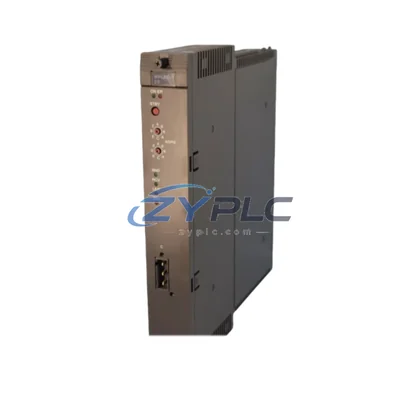
The Allen-Bradley 1769-IT6 is a high-precision, 6-channel thermocouple and millivolt input module engineered for seamless integration within the CompactLogix control platform. Designed to serve as a critical node in the industrial data chain, the 1769-IT6 bridges the gap between field-level thermal sensors and upper-level control, monitoring, and analytics systems. Whether deployed in continuous process manufacturing, discrete automation, or hybrid smart factory environments, this module delivers the signal fidelity, protocol compatibility, and network transparency that modern industrial connectivity demands.
In a typical smart factory deployment, the 1769-IT6 sits at the heart of the thermal data acquisition layer. Thermocouple sensors — Types J, K, E, T, R, S, B, and N — connect directly to the module’s six isolated input channels, converting raw millivolt signals into calibrated engineering-unit values that are immediately available to the 1769-L33ER CompactLogix processor over the high-speed CompactLogix backplane. This backplane communication eliminates the latency and signal degradation associated with traditional analog wiring runs, ensuring that temperature data reaches the PLC scan cycle with sub-millisecond consistency.
From the CompactLogix controller, process data flows upward through the plant network via EtherNet/IP — the open industrial Ethernet protocol that underpins Rockwell Automation’s Integrated Architecture. The 1769-L33ER’s onboard EtherNet/IP port connects to managed industrial Ethernet switches such as the Stratix 5700, aggregating data from multiple CompactLogix nodes across the production floor into a unified, high-availability network fabric. This architecture supports real-time data exchange with FactoryTalk View SE SCADA/HMI stations, enabling operators to monitor thermocouple readings, trend historical temperature profiles, and configure alarm thresholds — all from a centralized supervisory interface.
For facilities that require protocol bridging between legacy fieldbus systems and modern Ethernet infrastructure, the 1769-IT6 ecosystem integrates naturally with communication gateways such as the 1769-SDN DeviceNet Scanner module, which can co-reside on the same CompactLogix chassis. This allows temperature data from the 1769-IT6 to be correlated with process variables sourced from DeviceNet-connected drives, sensors, and remote I/O adapters — creating a unified data namespace that eliminates information silos across heterogeneous automation networks.
Remote I/O expansion is equally well-supported. The 1734 POINT I/O platform, connected via EtherNet/IP adapter modules, can extend the reach of the CompactLogix system to distributed measurement points throughout a large facility, while the 1769-IT6 continues to handle the high-accuracy thermocouple inputs at the main control panel. This distributed architecture is particularly valuable in industries such as food and beverage, pharmaceuticals, and metal processing, where temperature uniformity across multiple zones must be continuously verified and logged for regulatory compliance.
Integration with variable frequency drives is another key application. When the 1769-IT6 monitors motor winding or bearing temperatures in conjunction with PowerFlex 525 or PowerFlex 755 drives — also communicating over EtherNet/IP — the CompactLogix controller can implement closed-loop thermal protection logic: automatically reducing drive speed or triggering a controlled shutdown before thermal damage occurs. This predictive protection strategy reduces downtime and extends equipment service life.
At the edge computing layer, data aggregated by the CompactLogix system can be forwarded to Rockwell Automation FactoryTalk Edge Gateway or third-party edge platforms for local analytics, anomaly detection, and cloud forwarding. The 1769-IT6’s high-resolution 16-bit analog-to-digital conversion ensures that the temperature data entering this analytics pipeline is accurate enough to support machine learning models for predictive maintenance — a cornerstone of Industry 4.0 transformation.
Every Allen-Bradley 1769-IT6 unit supplied by ZYPLC undergoes pre-shipment functional verification, including channel-by-channel input accuracy checks and backplane communication validation. Units are sourced through verified industrial supply channels and ship with a warranty and support terms confirmed before quote, providing procurement teams and maintenance engineers with the confidence of a fully supported, quality-assured component.
Compatibility & Integration Notes
| Parameter |
Specification |
| SKU / Part Number |
1769-IT6 |
| Brand |
Allen-Bradley (Rockwell Automation) |
| Series |
CompactLogix / MicroLogix 1500 |
| Input Channels |
6 Channels (Isolated) |
| Supported Thermocouple Types |
J, K, E, T, R, S, B, N + mV Input |
| Communication Protocol |
EtherNet/IP (via CompactLogix backplane) |
| Backplane Interface |
CompactLogix 1769 Backplane Bus |
| Resolution |
16-bit ADC |
| Network Compatibility |
EtherNet/IP, DeviceNet (via gateway), ControlNet |
| SCADA / HMI Integration |
FactoryTalk View SE, FactoryTalk Historian, RSView32 |
| System Application |
Process Temperature Monitoring, Thermal Protection, Smart Factory IIoT |
| Product Category |
Analog Input Module / Thermocouple Interface |
| Warranty |
12 Months |
| Supply Condition |
New / Surplus / Tested |
Connected Automation Data Flow
The 1769-IT6 operates as the thermal sensing anchor in a layered industrial data flow. At the field level, Type K and Type J thermocouples embedded in furnace walls, conveyor bearings, or reactor vessels feed millivolt signals into the module’s six isolated input channels. The 1769-IT6 performs cold-junction compensation and linearization internally, delivering calibrated temperature values directly to the 1769-L33ER CompactLogix processor via the 1769 backplane — no external signal conditioning required.
The CompactLogix processor aggregates these values alongside digital I/O states from 1769-IQ16 discrete input modules and analog process variables from 1769-IF4 current/voltage input modules co-mounted in the same chassis. This consolidated data set is then published to the plant EtherNet/IP network through the processor’s dual-port EtherNet/IP interface, where it becomes available to all network-connected consumers: FactoryTalk View SE HMI clients display live temperature trends; FactoryTalk Historian archives time-stamped data for compliance reporting; and PowerFlex 755 drives receive thermal interlock signals that protect motor windings from overtemperature conditions.
At the network infrastructure layer, Stratix 5700 managed Ethernet switches provide VLAN segmentation, Quality of Service prioritization, and ring redundancy (DLR protocol), ensuring that temperature alarm messages from the 1769-IT6 reach the SCADA server within deterministic time windows even under peak network load. For remote sites or multi-building campuses, 1783-NATR NAT Router modules extend the EtherNet/IP topology across routed network boundaries without disrupting implicit I/O connections.
Where legacy fieldbus devices coexist with the CompactLogix system, a 1769-SDN DeviceNet Scanner module bridges DeviceNet-connected proximity sensors, valve positioners, and remote I/O banks into the same data namespace as the 1769-IT6 thermocouple channels. This unified view is surfaced through RSLinx Classic or FactoryTalk Linx communication middleware, which provides OPC-DA and OPC-UA data access to third-party SCADA platforms, MES systems, and edge analytics engines — completing the data chain from sensor to enterprise.
Solving Data Isolation in Industrial Sites
One of the most persistent challenges in industrial automation is the fragmentation of process data across incompatible protocols, proprietary networks, and isolated control islands. A facility may operate CompactLogix controllers alongside legacy SLC 500 or PLC-5 systems, each managing its own thermocouple inputs through separate, non-communicating analog modules. The result is a patchwork of temperature data that operators must manually reconcile — a process that is slow, error-prone, and incompatible with real-time decision-making.
The 1769-IT6, deployed within a modernized CompactLogix architecture, directly addresses this fragmentation. By consolidating thermocouple inputs onto the EtherNet/IP backbone, all temperature data becomes accessible through a single, unified network layer. FactoryTalk View SE can display temperature trends from every zone in the plant on a single operator screen, while FactoryTalk Historian captures every data point for post-event analysis and regulatory audit trails. Remote monitoring becomes straightforward: maintenance engineers can access live thermocouple readings and historical trends from any networked workstation or mobile device, eliminating the need for physical presence at the control panel.
System scalability is equally well-served. As production capacity expands, additional 1769-IT6 modules can be added to existing CompactLogix chassis — up to the maximum backplane slot count — or new chassis can be networked via EtherNet/IP without architectural redesign. This modular expansion model protects the initial automation investment while accommodating future growth, making the 1769-IT6 a long-term asset in any smart factory roadmap.
Industrial Connectivity FAQ
Q1: What communication protocols does the Allen-Bradley 1769-IT6 support for SCADA integration?
The 1769-IT6 communicates via the CompactLogix 1769 backplane bus and exposes its data to upper-level systems through the host CompactLogix processor’s EtherNet/IP port. This enables native integration with FactoryTalk View SE, FactoryTalk Historian, and any OPC-UA or OPC-DA compliant SCADA platform via FactoryTalk Linx or RSLinx Classic middleware. DeviceNet and ControlNet connectivity is available through co-resident gateway modules in the same chassis.
Q2: How does the 1769-IT6 ensure network stability and data integrity in high-noise industrial environments?
Each of the six input channels is individually isolated, providing channel-to-channel and channel-to-backplane isolation that rejects common-mode noise from variable frequency drives, welding equipment, and high-current motor circuits. The module’s 16-bit ADC and internal cold-junction compensation algorithm ensure that temperature readings remain accurate and stable even in electrically noisy environments typical of heavy manufacturing.
Q3: Can the 1769-IT6 be integrated into an existing system without replacing the entire control architecture?
Yes. The 1769-IT6 is designed for modular insertion into any existing CompactLogix or MicroLogix 1500 chassis with available backplane slots. No changes to the network infrastructure are required — the module is automatically recognized by the CompactLogix processor and configured via RSLogix 5000 / Studio 5000 Logix Designer. For facilities migrating from SLC 500 or PLC-5 platforms, the 1769-IT6 can be introduced as part of a phased modernization without disrupting ongoing production.
Q4: What quality assurance and warranty coverage does ZYPLC provide for the 1769-IT6?
Every 1769-IT6 unit shipped by ZYPLC undergoes pre-delivery functional testing, including channel accuracy verification across the full thermocouple type range and backplane communication validation. Warranty terms are confirmed during quotation. Shipment timing is confirmed after RFQ review, testing, and export packing.