Allen-Bradley 1771-DMC Industrial Network Interface for PLC-5 Systems: Bridging the Industrial Data Link
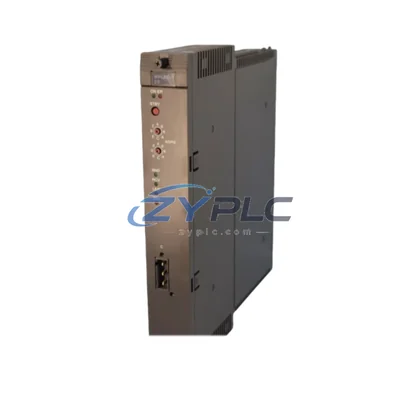
The Allen-Bradley 1771-DMC Control Coprocessor Module is a high-performance industrial network interface engineered for seamless integration within PLC-5 Series control architectures. Designed by Rockwell Automation, the 1771-DMC serves as a dedicated coprocessor that offloads complex communication and protocol-handling tasks from the main PLC-5 CPU, enabling real-time data exchange across multi-node industrial networks. In smart factory environments where data latency, protocol fragmentation, and network instability can cripple production efficiency, the 1771-DMC delivers a robust, field-proven solution for connecting field devices, supervisory systems, and enterprise platforms into a unified automation data fabric.
Whether deployed in automotive assembly lines, chemical processing plants, oil and gas facilities, or discrete manufacturing cells, the 1771-DMC enables the PLC-5 platform to participate actively in modern industrial communication architectures — from legacy Data Highway Plus (DH+) networks to bridged Ethernet/IP gateways — ensuring your existing infrastructure remains productive and scalable without costly full-system replacements.
Compatibility & Integration Notes
| Specification |
Details |
| SKU / Part Number |
1771-DMC |
| Brand |
Allen-Bradley (Rockwell Automation) |
| Series |
PLC-5 |
| Module Type |
Control Coprocessor Module |
| Primary Protocol |
Data Highway Plus (DH+) |
| Communication Interface |
1771 I/O Chassis Backplane |
| Network Compatibility |
PLC-5 Chassis, 1771 I/O Platform, DH+ Network |
| Transmission Capability |
Coprocessor offload for real-time protocol handling and data computation |
| SCADA / HMI Integration |
Compatible via DH+ bridge to FactoryTalk View, RSView, and third-party SCADA platforms |
| System Application |
PLC-5 coprocessing, motion coordination, protocol bridging, remote I/O supervision |
| Origin |
USA |
| Warranty |
Warranty and support terms confirmed before quote — Tested & Verified Before Shipment |
Connected Automation Data Flow
In a fully integrated smart factory, the 1771-DMC sits at the heart of the PLC-5 chassis, acting as a coprocessor that manages intensive data computation and communication tasks independently of the main CPU scan cycle. This architecture allows the Allen-Bradley PLC-5/40 or PLC-5/60 processor to maintain deterministic ladder logic execution while the 1771-DMC handles protocol-intensive operations — a critical advantage in high-throughput production environments.
At the field device level, sensors, actuators, and servo drives transmit raw process signals into the 1771 I/O chassis via 1771-IFE Analog Input Modules and 1771-OFE Analog Output Modules. The 1771-DMC processes these signals in coordination with the PLC-5 CPU, enabling closed-loop control with sub-millisecond response times. For motion-critical applications, the coprocessor interfaces directly with Allen-Bradley 1771-QA Servo Interface Modules, synchronizing axis positioning data across multi-drive configurations.
Upstream, the 1771-DMC communicates over the Data Highway Plus (DH+) network, where it exchanges real-time process data with Allen-Bradley SLC 500 controllers and MicroLogix 1500 systems operating on the same DH+ segment. This peer-to-peer communication eliminates data silos between production zones, enabling plant-wide visibility without requiring a centralized polling master.
For SCADA and HMI integration, the DH+ network bridges to Ethernet/IP via a 1761-NET-ENI Serial-to-Ethernet Interface or a 1784-PKTX DH+ Communication Card, allowing FactoryTalk View SE and RSView32 supervisory platforms to pull live tag data from the PLC-5 system. Operators at HMI terminals receive real-time alarm notifications, trend data, and production KPIs — all sourced from the 1771-DMC’s coprocessed data streams.
Remote I/O expansion is handled through 1771-ASB Remote I/O Adapter Modules, which extend the 1771 chassis across plant floors without additional cabling infrastructure. The 1771-DMC coordinates data flow between the local chassis and remote I/O racks, ensuring consistent scan times and reliable signal integrity across distances up to 3,000 meters on Remote I/O links.
At the network edge, an Allen-Bradley 1756-ENBT ControlLogix Ethernet Bridge Module can serve as a gateway between the legacy DH+ segment and modern EtherNet/IP infrastructure, enabling the 1771-DMC-equipped PLC-5 system to participate in plant-wide MES and ERP data exchanges — a key enabler for Industry 4.0 migration strategies that preserve existing capital investments.
Solving Data Isolation in Industrial Sites
One of the most persistent challenges in legacy industrial environments is protocol fragmentation — where PLC-5 systems running DH+ cannot natively communicate with newer EtherNet/IP or Modbus TCP devices, creating data islands that prevent plant-wide transparency. The 1771-DMC addresses this by offloading protocol translation and data formatting tasks from the PLC-5 CPU, freeing processing capacity for control logic while the coprocessor manages cross-protocol data mapping.
For facilities struggling with remote monitoring gaps, the 1771-DMC enables the PLC-5 to serve as a data concentrator, aggregating field device status, alarm states, and process variables into structured data blocks that SCADA systems can poll efficiently. This eliminates the need for manual data collection rounds and enables 24/7 remote diagnostics from centralized control rooms or off-site engineering stations.
Production line transparency is further enhanced through the 1771-DMC’s ability to support structured data exchange with MES platforms. By bridging PLC-5 process data to higher-level systems via DH+ gateway configurations, manufacturers gain real-time OEE metrics, batch traceability, and predictive maintenance triggers — all without replacing the existing PLC-5 infrastructure.
For system expansion, the 1771-DMC’s coprocessor architecture allows engineers to add computational complexity — such as advanced PID algorithms, motion profiles, or custom protocol handlers — without upgrading the main PLC-5 processor. This modular scalability protects capital investment while enabling incremental capability growth aligned with evolving production requirements.
Every 1771-DMC unit shipped by ZYPLC undergoes full functional testing, including backplane communication verification, DH+ network handshake testing, and coprocessor task execution validation. Units are supplied with a warranty and support terms confirmed before quote and are available from RFQ-confirmed availability, ensuring export shipping options after RFQ confirmation to minimize downtime on your production lines.
Industrial Connectivity FAQ
Q1: What communication protocols does the Allen-Bradley 1771-DMC support?
The 1771-DMC operates within the PLC-5 chassis backplane and communicates over the Data Highway Plus (DH+) network. It can be integrated into broader Ethernet/IP architectures through DH+-to-Ethernet bridge modules such as the 1761-NET-ENI or 1784-PKTX, enabling connectivity with modern SCADA, MES, and ERP systems without replacing the core PLC-5 infrastructure.
Q2: Is the 1771-DMC compatible with current FactoryTalk and RSView SCADA platforms?
Yes. When the PLC-5 system is connected to a DH+ network bridged to Ethernet/IP, FactoryTalk View SE, RSView32, and compatible third-party SCADA platforms can access real-time tag data processed by the 1771-DMC. Communication latency on DH+ networks typically ranges from 5–57.6 Kbps depending on baud rate configuration, which is suitable for supervisory data polling in most process and discrete manufacturing applications.
Q3: How does the 1771-DMC improve network stability in multi-node PLC-5 environments?
By offloading coprocessing tasks from the main PLC-5 CPU, the 1771-DMC reduces CPU scan time variability, which directly improves network communication determinism on DH+ segments. In multi-node configurations where multiple PLC-5 and SLC 500 controllers share a DH+ network, the coprocessor ensures that communication tasks do not compete with time-critical control logic, maintaining stable token-passing intervals and reducing network collision risks.
Q4: What warranty and testing standards apply to the 1771-DMC units supplied by ZYPLC?
All 1771-DMC modules supplied by ZYPLC are covered by a warranty and support terms confirmed before quote from the date of shipment. Each unit undergoes pre-shipment functional testing including backplane communication verification, DH+ network handshake validation, and coprocessor task execution checks. Units are sourced from verified supply channels and are available from Availability confirmed by RFQ inventory for rapid global dispatch.
|