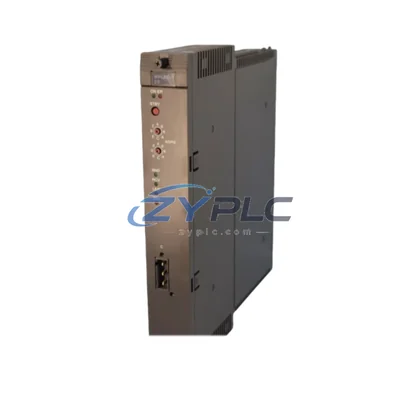
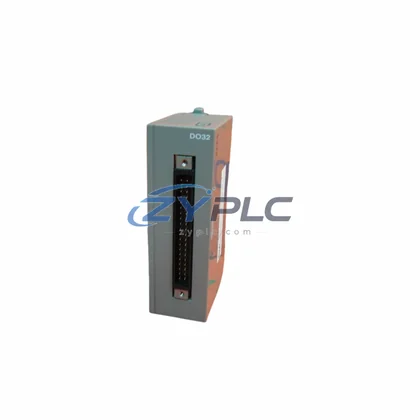
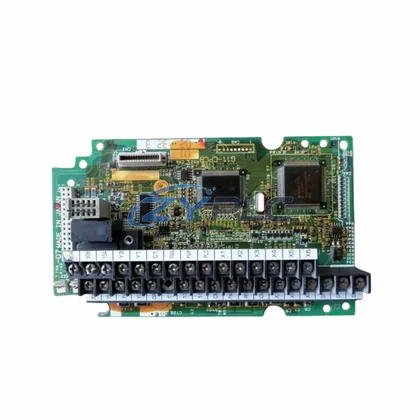
The Allen-Bradley 1771-IB DC Input Module is a field-proven discrete input component engineered for the PLC-5 programmable controller platform. Designed to bridge the gap between field-level sensing devices and the PLC backplane, the 1771-IB captures 24VDC digital signals from limit switches, proximity sensors, pushbuttons, and photoelectric detectors, converting them into structured data that the PLC-5 processor can act upon in real time. In modern smart factory environments where data transparency and network continuity are paramount, this module serves as a foundational node in the plant-wide automation data chain.
Compatibility & Integration Notes
| Specification |
Detail |
| SKU / Part Number |
1771-IB |
| Brand |
Allen-Bradley (Rockwell Automation) |
| Series |
PLC-5 I/O System |
| Module Type |
DC Input Module |
| Input Voltage |
24VDC |
| Communication / Backplane Protocol |
1771 I/O Backplane (Parallel I/O Bus) |
| Interface Type |
1771 I/O Chassis Slot |
| Network Compatibility |
PLC-5 Processor Families (5/10, 5/12, 5/15, 5/25, 5/40, 5/60, 5/80) |
| System Application |
Discrete Signal Acquisition, Field Device Integration, SCADA I/O, DCS Front-End |
| Gateway / Protocol Conversion |
Compatible with 1785-KA, 1785-KE DH+ / Remote I/O Gateway Adapters |
| Origin |
USA |
| Warranty |
12 Months |
| Pre-Shipment Testing |
Yes — Functionally tested before dispatch |
| Shipping |
DHL / FedEx Global Express |
Connected Automation Data Flow
In a fully integrated smart factory, the 1771-IB sits at the very beginning of the industrial data pipeline. Field-level sensors — including inductive proximity switches, photoelectric barriers, and mechanical limit switches — generate 24VDC discrete signals that are wired directly into the 1771-IB’s input terminals. The module conditions and debounces these signals before presenting them to the Allen-Bradley PLC-5 processor via the 1771 I/O backplane bus.
Once the PLC-5 processor — such as the 1785-L40B or 1785-L60B — reads the input states, the data enters the controller’s data table, where ladder logic programs execute control decisions in scan-cycle time. Paired with output modules such as the 1771-OB DC Output Module or the 1771-OBD, the processor closes the control loop by actuating solenoids, motor starters, and variable frequency drives on the plant floor.
For facilities running distributed control architectures, the 1771-IB chassis can be located remotely from the host PLC-5 processor using the 1771-ASB Remote I/O Adapter. This adapter communicates over Allen-Bradley’s Remote I/O (RIO) network — a deterministic token-passing protocol — allowing I/O racks to be distributed across large production areas without sacrificing scan-time performance. The RIO network links back to the host processor or to a 1785-KA Remote I/O Scanner module installed in the PLC-5 chassis.
At the supervisory level, SCADA systems such as Rockwell FactoryTalk View SE or third-party platforms like Wonderware InTouch connect to the PLC-5 via the 1784-KTXD Data Highway Plus (DH+) Interface Card or through an Ethernet gateway such as the 1761-NET-ENI. This path carries real-time I/O status, alarm conditions, and production counters from the 1771-IB’s input data table up to the SCADA historian and HMI displays, enabling operators to monitor discrete field states — conveyor running, valve open, part present — from centralized control rooms or remote workstations.
For plants migrating toward Ethernet/IP-based architectures, the 1771-IB chassis can be bridged using a 1756-DHRIO ControlLogix DH+/RIO Bridge Module, allowing legacy PLC-5 I/O data to flow into modern ControlLogix controllers and EtherNet/IP networks without requiring a full I/O hardware replacement. This hybrid topology protects capital investment while enabling incremental modernization toward IIoT-ready infrastructure.
Edge computing gateways — such as the Moxa MGate MB3180 or similar industrial protocol converters — can further extract I/O data from the DH+ or RIO network and publish it via MQTT or OPC-UA to cloud-based MES and ERP platforms, completing the data journey from a single 24VDC field contact all the way to enterprise dashboards.
Solving Data Isolation in Industrial Sites
One of the most persistent challenges in legacy manufacturing environments is data isolation — the condition where field-level signals exist only within a local PLC and are invisible to plant-wide monitoring, analytics, or remote maintenance systems. The 1771-IB, when properly integrated within a networked PLC-5 architecture, directly addresses this problem.
Protocol Fragmentation: Many older plants operate a mix of Remote I/O, DH+, Modbus RTU, and proprietary fieldbus segments. The 1771-IB’s data, once in the PLC-5 data table, can be mapped and re-published through protocol gateway modules, eliminating the need for manual data transcription between systems.
Production Line Transparency: By connecting discrete field signals — machine cycle counts, fault indicators, safety interlocks — into the SCADA data stream via the PLC-5 and its communication modules, plant managers gain real-time visibility into line status, OEE metrics, and downtime events without requiring additional sensor infrastructure.
Remote Monitoring and Diagnostics: With the 1771-IB’s input states accessible over DH+ or Ethernet/IP bridges, maintenance engineers can remotely interrogate field device status, identify open circuits or stuck contacts, and diagnose faults without traveling to the machine. This capability is especially valuable in multi-site operations or hazardous-area installations.
System Scalability: The 1771 I/O platform supports mixed module configurations within a single chassis, allowing engineers to add analog input modules (1771-IFE), thermocouple modules (1771-IX), or specialty communication modules alongside the 1771-IB as process requirements evolve — all without changing the backplane or processor.
Inventory Assurance: ZYPLC maintains RFQ-confirmed availability of the 1771-IB and related PLC-5 I/O modules. Every unit undergoes functional testing prior to shipment, and all products are covered by a warranty and support terms confirmed before quote. Global delivery is handled via DHL and FedEx Express, with typical lead times of 3–7 business days to most destinations.
Industrial Connectivity FAQ
Q1: What communication protocols does the 1771-IB support, and can it integrate with modern Ethernet/IP networks?
The 1771-IB communicates natively over the 1771 I/O backplane bus within a PLC-5 chassis. It does not have a standalone Ethernet/IP port, but its data is fully accessible over Ethernet/IP networks when the PLC-5 is connected via a 1756-DHRIO bridge or a 1761-NET-ENI Ethernet interface. This allows the module’s discrete input data to be consumed by ControlLogix controllers, SCADA systems, and OPC-UA clients without hardware replacement.
Q2: How does the 1771-IB perform in terms of network stability and scan-time latency?
The 1771 I/O backplane is a deterministic parallel bus, meaning input states are updated every PLC scan cycle — typically 5–50ms depending on processor model and program size. There is no network-induced jitter on the backplane itself. For remote I/O configurations using the 1771-ASB adapter over the RIO network, additional latency of one to two RIO scan periods (typically 5–20ms) applies, which is well within the tolerance of most discrete control applications.
Q3: Is the 1771-IB compatible with all PLC-5 processor variants, and can it be used in expanded I/O chassis?
Yes. The 1771-IB is compatible with all PLC-5 processor families including the 5/10, 5/12, 5/15, 5/25, 5/40, 5/60, and 5/80 series. It can be installed in any 1771-series I/O chassis — local, expanded local, or remote — provided the chassis uses a compatible power supply (1771-P4 or equivalent) and the slot addressing is correctly configured in the processor’s I/O configuration table.
Q4: What does the warranty and support terms confirmed before quote cover, and how is pre-shipment testing conducted?
Every 1771-IB unit supplied by ZYPLC is functionally tested under simulated field conditions prior to dispatch — input channels are verified for correct state reporting, backplane communication is confirmed, and the module’s LED indicators are checked for proper operation. The warranty and support terms confirmed before quote covers manufacturing defects and functional failures under normal operating conditions. In the event of a warranty claim, ZYPLC provides advance replacement or repair service with priority handling to minimize production downtime.