Allen-Bradley 1771-OBD: Industrial Data Link for PLC-5 Smart Factory Systems
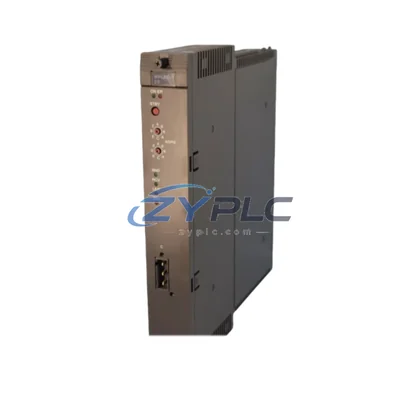
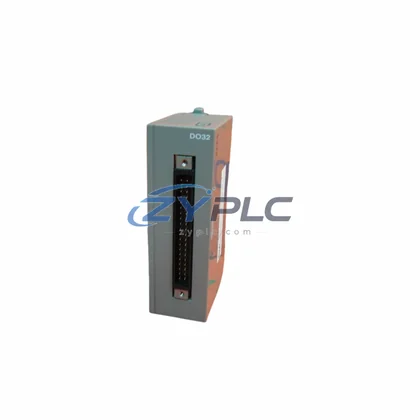
The Allen-Bradley 1771-OBD is a 16-point, 24VDC digital output module engineered for the PLC-5 I/O chassis platform — one of Rockwell Automation’s most enduring and widely deployed control architectures in discrete manufacturing, process automation, and critical infrastructure. Designed to slot directly into the 1771 I/O chassis backplane, the 1771-OBD serves as a precision output interface between the PLC-5 processor and field-level actuators, solenoids, motor starters, and relay-driven devices, forming the foundational output layer of a connected industrial data chain.
In modern smart factory deployments, the 1771-OBD is not simply an output card — it is a critical node in the plant-wide data flow architecture. From the moment a PLC-5 processor executes a ladder logic rung, the 1771-OBD translates digital commands into real-world switching actions with deterministic timing, ensuring that the control loop between the SCADA layer and the physical process remains tight, reliable, and auditable. This determinism is what makes the 1771-OBD indispensable in legacy modernization projects where uptime cannot be compromised.
Compatibility & Integration Notes
| Parameter |
Specification |
| Module SKU |
1771-OBD |
| Brand / Manufacturer |
Allen-Bradley (Rockwell Automation) |
| Compatible Platform |
PLC-5 Series (1771 I/O Chassis) |
| Output Points |
16-point digital output |
| Output Voltage |
24VDC |
| Communication Protocol |
1771 Backplane I/O Bus |
| Network Compatibility |
DH+, DH-485, ControlNet (via PLC-5 processor) |
| SCADA / HMI Integration |
FactoryTalk View, RSView32, Wonderware, Ignition |
| Gateway Support |
Compatible with 1756-DHRIO, 1784-PKTX ControlLogix gateway bridges |
| System Application |
Discrete manufacturing, process control, conveyor systems, utilities |
| Warranty |
Warranty and support terms confirmed before quote |
| Availability |
Availability confirmed by RFQ, global shipping, RFQ available |
Connected Automation Data Flow
Understanding the 1771-OBD’s role requires tracing the full industrial data chain from signal origination to physical actuation. At the top of the hierarchy, a FactoryTalk View SE SCADA/HMI station issues operator commands or automated setpoints that travel down through the Ethernet/IP network to the PLC-5/40 or PLC-5/80 processor. The processor evaluates ladder logic in real time and writes output states to the 1771-OBD module via the 1771 backplane bus — a deterministic, rack-based communication path that guarantees sub-millisecond output response.
On the network side, the PLC-5 processor communicates upstream via Data Highway Plus (DH+), a robust token-passing protocol that links multiple PLCs, operator panels, and programming terminals across the plant floor. For facilities that have begun migrating toward modern Ethernet-based architectures, the 1756-DHRIO gateway module bridges DH+ segments into the ControlLogix backplane, allowing the 1771-OBD-equipped PLC-5 rack to participate in a unified EtherNet/IP plant network alongside newer 1769 CompactLogix and 1756 ControlLogix systems.
Remote I/O expansion is handled through the 1771-ASB remote I/O adapter, which allows 1771 I/O racks — including those populated with 1771-OBD modules — to be distributed across the plant floor while maintaining a single logical I/O map in the PLC-5 processor. This architecture is common in automotive assembly lines, water treatment facilities, and oil and gas processing plants where field devices are geographically dispersed.
At the field device level, the 1771-OBD’s 24VDC outputs directly drive solenoid valves, motor starter coils, pilot lights, and relay inputs on variable frequency drives such as the PowerFlex 40 and PowerFlex 70 series. This creates a seamless data and control path from the SCADA operator interface all the way to the rotating machinery on the production floor. Sensor feedback from 1771-IB or 1771-IBD digital input modules closes the loop, feeding process status back to the PLC-5 for alarm evaluation and historian logging.
For facilities running Ignition SCADA by Inductive Automation, the 1771-OBD-equipped PLC-5 system connects via the Allen-Bradley DF1 or DH+ driver, enabling real-time tag reads and writes, alarm management, and trend logging without requiring a full controls upgrade. This makes the 1771-OBD a cost-effective bridge between legacy infrastructure and modern data visibility platforms.
Solving Data Isolation in Industrial Sites
One of the most persistent challenges in mature manufacturing facilities is data isolation — the condition where field devices, PLCs, and supervisory systems operate in disconnected silos, making plant-wide visibility and coordinated control impossible. The 1771-OBD, as part of the broader PLC-5 and 1771 I/O ecosystem, directly addresses this challenge in several ways.
Protocol Fragmentation: Many plants operate a mix of DH+, Modbus RTU, DeviceNet, and Ethernet/IP devices. The PLC-5 processor paired with 1771-OBD output modules can serve as the central control node, with protocol gateway modules such as the 1784-PKTX or third-party Modbus-to-DH+ converters bridging disparate device networks into a unified control architecture. This eliminates the need for parallel wiring runs and reduces the risk of command conflicts between isolated control islands.
Remote Monitoring and Diagnostics: With the PLC-5 connected to a DH+ network and bridged to Ethernet via a 1756-DHRIO or 1761-NET-ENI adapter, maintenance engineers can remotely access the PLC-5 program online using RSLogix 5, monitor 1771-OBD output states in real time, and diagnose field device faults without traveling to the machine. This capability is critical for multi-site operations and reduces mean time to repair (MTTR) significantly.
Production Line Transparency: By integrating the 1771-OBD’s output data into a FactoryTalk Historian or Ignition historian tag database, operations teams gain full visibility into actuator cycle counts, output fault events, and production throughput metrics. This data feeds continuous improvement initiatives and supports predictive maintenance programs that reduce downtime.
System Scalability: The 1771 I/O platform supports up to 128 I/O points per local chassis and can be expanded via remote I/O drops, making it straightforward to add additional 1771-OBD modules as production lines grow. Combined with the PLC-5’s large program memory and multi-tasking capability, this scalability ensures that the control system can grow with the facility without requiring a full platform migration.
Every 1771-OBD unit supplied by ZYPLC undergoes pre-shipment functional testing, verifying output switching, backplane communication integrity, and LED status indication before dispatch. Warranty terms are confirmed during quotation.
Industrial Connectivity FAQ
Q1: What communication protocols does the Allen-Bradley 1771-OBD support?
The 1771-OBD communicates via the 1771 backplane I/O bus within the PLC-5 chassis. The PLC-5 processor itself supports Data Highway Plus (DH+), DH-485, and ControlNet, enabling the 1771-OBD’s output data to be integrated into plant-wide networks. With appropriate gateway modules such as the 1756-DHRIO, the system can also participate in EtherNet/IP architectures.
Q2: Is the 1771-OBD compatible with modern SCADA and HMI platforms?
Yes. The PLC-5 system, including 1771-OBD I/O modules, is compatible with FactoryTalk View SE/ME, RSView32, Wonderware InTouch, and Ignition SCADA via Allen-Bradley DF1, DH+, and Ethernet drivers. This allows existing PLC-5 installations to be monitored and controlled from modern supervisory platforms without replacing the control hardware.
Q3: How does ZYPLC ensure the quality of the 1771-OBD before shipment?
Each 1771-OBD unit undergoes a pre-shipment functional test that verifies output channel switching, backplane communication, and module self-diagnostics. Units are inspected for physical integrity and shipped with a warranty and support terms confirmed before quote covering manufacturing defects and functional failures under normal operating conditions.
Q4: Can the 1771-OBD be used in a system expansion alongside newer Rockwell platforms?
Absolutely. The 1771 I/O platform integrates with ControlLogix and CompactLogix systems via the 1756-DHRIO remote I/O scanner, allowing 1771-OBD modules to function as remote output drops in a mixed-generation control architecture. This makes the 1771-OBD an excellent choice for phased modernization projects where full platform replacement is not immediately feasible.