Allen-Bradley 1772-LS Industrial Network Interface for PLC-2/05 Systems: Bridging Legacy Control and Smart Factory Data Flow
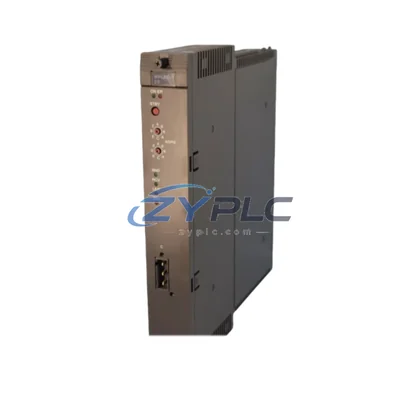
The Allen-Bradley 1772-LS is a dedicated PLC processor module engineered for the PLC-2/05 platform, delivering reliable DH-485 network communication in demanding industrial environments. As factories transition toward connected automation architectures, the 1772-LS continues to serve as a critical node in the industrial data chain — linking field-level devices to supervisory control systems with proven stability and deterministic communication performance. Whether deployed in discrete manufacturing, process control, or material handling applications, this processor module provides the network backbone that keeps production data moving accurately and continuously.
Compatibility & Integration Notes
| Parameter |
Specification |
| Communication Protocol |
DH-485 (Data Highway 485) |
| Interface Type |
RS-485 Serial Network Port |
| Network Topology |
Multi-drop, Token-passing Bus |
| Max Network Nodes |
Up to 32 nodes per DH-485 segment |
| Transmission Rate |
1.2K / 2.4K / 9.6K / 19.2K baud |
| Compatible Platform |
Allen-Bradley PLC-2/05 Series |
| System Application |
SCADA Integration, HMI Connectivity, Remote I/O Supervision |
| Network Compatibility |
DH-485 segment, compatible with 1747-AIC link coupler |
| Gateway Capability |
Supports MSG instruction for inter-node data exchange |
| Warranty |
Warranty and support terms confirmed before quote, Pre-shipment Functional Test |
Connected Automation Data Flow
In a typical smart factory deployment, the Allen-Bradley 1772-LS sits at the heart of a layered communication architecture. At the field level, discrete sensors — including photoelectric sensors, proximity switches, and pressure transmitters — feed real-time process signals into the PLC-2/05 rack. The 1772-LS processor executes the ladder logic scan and manages data table updates, then transmits structured process data upstream via the DH-485 network to supervisory systems.
The DH-485 link, established through the 1747-AIC Advanced Interface Converter, connects the 1772-LS to other network nodes including Allen-Bradley SLC 5/03 and SLC 5/04 processors, enabling peer-to-peer MSG instruction communication across the production floor. This allows distributed PLC nodes to share production counts, alarm states, and recipe parameters without requiring a central polling master — reducing network latency and improving system responsiveness.
At the HMI layer, PanelView 550 and PanelView 900 operator terminals connect directly to the DH-485 segment, reading real-time data from the 1772-LS data tables to display process status, setpoints, and alarm conditions to operators. The deterministic token-passing protocol ensures that HMI screen refresh rates remain consistent even under high network load, supporting operator decision-making in time-sensitive production scenarios.
For SCADA integration, the DH-485 network interfaces with RSLinx Classic communication software via a 1784-U2DHP USB-to-DH+/DH-485 adapter, enabling FactoryTalk View SE or third-party SCADA platforms to poll the 1772-LS for historian data, KPI trending, and alarm management. This data pathway supports OEE calculation, shift reporting, and predictive maintenance analytics at the supervisory level.
Remote I/O expansion is supported through the PLC-2/05 rack’s I/O chassis, where 1771-series I/O modules — including analog input modules for temperature and pressure signals and digital output modules for actuator control — extend the 1772-LS’s reach to distributed field devices across the production cell. For applications requiring remote rack communication, the 1771-ASB Remote I/O Adapter bridges the local rack to the plant-wide Remote I/O network, enabling centralized supervision of geographically distributed equipment.
In drive integration scenarios, the 1772-LS communicates with PowerFlex 40 variable frequency drives via the DH-485 network using the 22-COMM-E EtherNet/IP adapter as a protocol bridge, allowing the PLC to issue speed references, read drive fault codes, and monitor motor current in real time. This closed-loop data flow between the processor and the drive system enables automated speed adjustment based on process feedback, reducing energy consumption and mechanical wear.
At the edge, Moxa NPort 5150 serial device servers can be deployed to extend the DH-485 segment over Ethernet infrastructure, enabling remote diagnostic access to the 1772-LS from engineering workstations located outside the production floor. This architecture supports remote program upload/download, online monitoring, and fault diagnosis without requiring physical access to the control panel — a critical capability for multi-site manufacturing operations.
Solving Data Isolation in Industrial Sites
Many legacy manufacturing sites operate with isolated control islands — individual PLC systems that collect process data but cannot share it with adjacent systems or upper-level management platforms. The Allen-Bradley 1772-LS, with its native DH-485 communication capability, directly addresses this data isolation challenge by providing a standardized network interface that connects the PLC-2/05 platform into the broader plant communication architecture.
Protocol fragmentation is one of the most common barriers to plant-wide data visibility. Sites running a mix of DH-485, DH+, and Modbus RTU devices often struggle to consolidate data into a unified SCADA or MES platform. The 1772-LS resolves this at the PLC level by serving as the DH-485 network master, while gateway devices such as the ProSoft MVI56-MNET Modbus TCP/IP communication module handle cross-protocol translation — enabling seamless data exchange between the Allen-Bradley ecosystem and third-party field devices.
Production line transparency is another key benefit. By connecting the 1772-LS to a FactoryTalk Historian or equivalent data historian via RSLinx, plant managers gain access to continuous production records — cycle times, reject counts, downtime events, and energy consumption — without manual data collection. This real-time visibility supports root cause analysis, shift performance comparison, and continuous improvement initiatives.
System scalability is preserved through the modular architecture of the PLC-2/05 platform. As production requirements grow, additional I/O modules can be added to the rack, and additional DH-485 nodes can be introduced to the network without disrupting existing communication. The 1772-LS supports up to 32 nodes per DH-485 segment, providing substantial headroom for system expansion in growing facilities.
Every 1772-LS unit supplied by ZYPLC undergoes pre-shipment functional testing, verifying processor operation, DH-485 communication integrity, and I/O bus performance before dispatch. Units are covered by a warranty and support terms confirmed before quote, with RFQ-based availability supporting rapid deployment for both planned upgrades and emergency replacement scenarios.
Industrial Connectivity FAQ
Q1: What is the maximum communication distance for the DH-485 network supported by the 1772-LS?
The DH-485 network supports a maximum cable length of 1,219 meters (4,000 feet) at 1.2K baud, decreasing to 304 meters (1,000 feet) at 19.2K baud. For longer distances, repeaters or serial-to-Ethernet converters such as the Moxa NPort series can extend the network reach without compromising data integrity.
Q2: Is the Allen-Bradley 1772-LS compatible with modern SCADA and HMI platforms?
Yes. The 1772-LS communicates via DH-485, which is supported by RSLinx Classic and RSLinx Enterprise communication drivers. These drivers provide OPC DA/UA data access to FactoryTalk View, Wonderware InTouch, Ignition SCADA, and other modern supervisory platforms, enabling full integration of the PLC-2/05 system into contemporary industrial IT architectures.
Q3: How does the 1772-LS handle network stability in electrically noisy industrial environments?
The DH-485 protocol uses RS-485 differential signaling, which provides inherent noise immunity in environments with high electromagnetic interference from motors, drives, and welding equipment. The token-passing access method eliminates network collisions, ensuring deterministic data delivery even in high-traffic network segments. Proper cable shielding and grounding practices further enhance network stability in demanding plant environments.
Q4: What warranty and testing standards apply to ZYPLC-supplied 1772-LS units?
All 1772-LS units supplied by ZYPLC are covered by a warranty and support terms confirmed before quote from the date of shipment. Each unit undergoes pre-shipment functional testing including processor self-diagnostics, DH-485 communication verification, and I/O bus integrity checks. Shipment timing is confirmed after RFQ review, testing, and export packing.