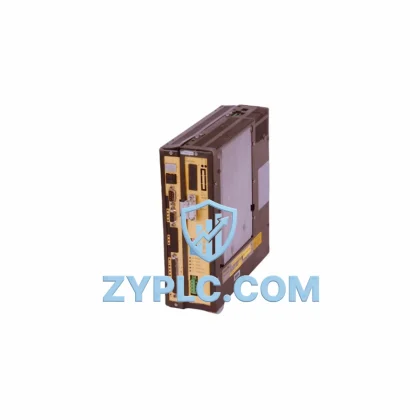
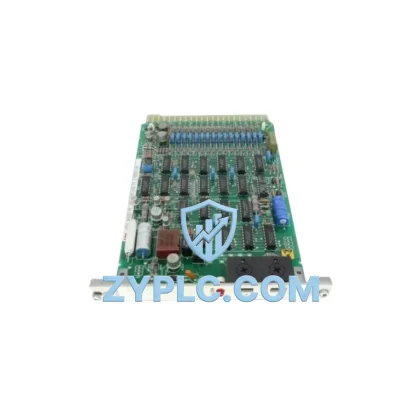
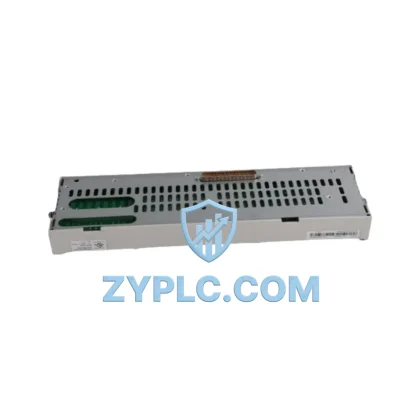
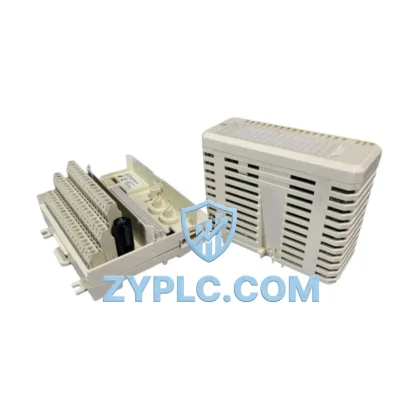
Allen-Bradley 1772-LX Processor for PLC-2
The Allen-Bradley 1772-LX Mini PLC-2/16 Processor is a foundational control element engineered for deployment within the PLC-2 family control architecture. Rather than functioning as a standalone device, the 1772-LX is designed to operate as the central processing node within a layered automation system — coordinating signal acquisition, logic execution, and output command across multiple functional layers of an industrial plant or process facility. Understanding its role within the broader control hierarchy is essential for engineers responsible for system integration, architecture expansion, and long-term maintenance planning.
In a complete PLC-2 control system, the 1772-LX processor resides at the control layer, where it executes ladder logic programs stored in its onboard memory and communicates with peripheral I/O modules mounted on the 1771 I/O chassis. The processor interfaces directly with discrete and analog I/O modules — such as the 1771-IAD AC input module and the 1771-OAD AC output module — to receive field signals from sensors, limit switches, and transmitters, and to issue commands to actuators, motor starters, and solenoid valves. This tight integration between the processor and the I/O subsystem ensures deterministic scan-cycle performance, which is critical in applications where timing accuracy directly affects product quality or process safety.
At the network and communications layer, the 1772-LX supports connection to the Data Highway (DH) network via the 1772-SD or 1772-SD2 serial interface modules, enabling peer-to-peer communication between multiple PLC-2 processors across a plant floor. This network capability allows distributed control architectures where individual 1772-LX units manage local process zones while sharing data with supervisory systems or SCADA platforms. For facilities requiring integration with newer Rockwell Automation platforms, the 1772-LX can be bridged through a 1785-KA communication adapter, enabling data exchange with PLC-5 or ControlLogix systems without requiring a full system replacement — a significant advantage for phased modernization projects.
The power layer of a PLC-2 system relies on the 1771-P4 or 1771-P7 power supply modules, which provide regulated DC voltage to the 1771 I/O chassis backplane. Proper power supply sizing is essential when expanding the system with additional I/O modules, and the 1772-LX processor’s power consumption must be factored into the total chassis load calculation. Engineers planning system expansions should verify that the existing power supply capacity accommodates additional 1771-series I/O modules without exceeding rated output current.
At the human-machine interface layer, the 1772-LX system is commonly paired with PanelView terminals or legacy Allen-Bradley T50 programming terminals for operator interaction and real-time process monitoring. The processor’s memory structure supports data table organization compatible with RSLogix 500 and the older APS (Advanced Programming Software) environments, allowing maintenance teams to perform online edits, force I/O points, and monitor data table values during live production without interrupting the control process.
For applications requiring redundancy, the 1772-LX can be deployed in a hot-standby configuration using the 1772-LXP redundancy module, which monitors processor health and executes automatic switchover in the event of a primary processor fault. This redundancy architecture is particularly valuable in continuous process industries — such as petrochemical refining, water treatment, and power generation — where unplanned downtime carries significant financial and safety consequences. The switchover time achievable with the 1772-LXP redundancy module is sufficient for most process control applications where brief interruptions are tolerable but complete system failures are not.
Product Specification Table
| Parameter |
Specification |
| System Role |
Central Processing Unit — PLC-2 Control Architecture |
| Model / SKU |
1772-LX (Mini PLC-2/16) |
| Brand / Manufacturer |
Allen-Bradley (Rockwell Automation) |
| Series |
PLC-2 Family |
| Memory Capacity |
Up to 16K words (user program + data table) |
| I/O Capacity |
Up to 512 discrete I/O points via 1771 I/O chassis |
| Scan Time |
Approximately 1 ms per 1K words of logic |
| Communication |
Data Highway (DH) via 1772-SD / 1772-SD2 interface |
| Programming Environment |
APS, RSLogix 500 (compatible mode) |
| Power Supply Compatibility |
1771-P4, 1771-P7 chassis power supplies |
| Operating Temperature |
0°C to 60°C (32°F to 140°F) |
| Relative Humidity |
5% to 95% non-condensing |
| Mounting |
1771 I/O chassis, leftmost slot (processor slot) |
| Electrical Standard |
UL Listed, CE Marked |
| Warranty |
12-Month Warranty — Tested, inspected, and ready to deploy |
System Compatibility Notes
A complete PLC-2 control system built around the 1772-LX processor typically incorporates a carefully selected set of coordinated components. The 1771 I/O chassis serves as the physical backplane connecting the processor to field I/O modules, with the 1771-A1B or 1771-A2B chassis configurations being the most common for small-to-medium scale applications. Discrete input signals are acquired through 1771-IAD and 1771-IB input modules, while output commands are delivered via 1771-OAD and 1771-OB output modules to field devices including motor starters, solenoid valves, and indicator lamps.
For analog process control — such as temperature, pressure, flow, and level measurement — the 1771-IFE analog input module and 1771-OFE analog output module extend the 1772-LX’s capability into continuous process regulation. These modules communicate with the processor through the chassis backplane, with data values mapped directly into the processor’s data table for use in PID control instructions and arithmetic operations.
Communication expansion is achieved through the 1772-SD2 Data Highway interface, which connects the 1772-LX to a multi-drop DH network supporting up to 64 nodes. At the supervisory level, a 1785-KA communication adapter bridges the PLC-2 network to a PLC-5 or ControlLogix system, enabling data exchange without requiring a complete system migration. For facilities using DeviceNet or ControlNet field buses, a 1771-SDN scanner module can be added to the chassis to integrate smart field devices — such as PowerFlex drives and E3 Plus overload relays — directly into the PLC-2 control architecture.
Terminal block modules such as the 1492-CABLE series wiring systems simplify field wiring connections to the 1771 I/O modules, reducing installation time and improving wiring accuracy during commissioning. Relay output modules including the 1771-OW relay output module provide isolated switching capability for high-voltage or high-current field devices that cannot be driven directly by solid-state output modules.
Industrial Application Notes
The 1772-LX processor has demonstrated reliable performance across a wide range of industrial automation applications. In discrete manufacturing environments — including automotive assembly, metal fabrication, and packaging lines — the processor manages sequential machine control, interlocking logic, and production counting functions with deterministic scan-cycle performance. Its compatibility with the 1771 I/O platform allows rapid reconfiguration of I/O assignments when production line changes require updated control logic.
In the power generation and electrical utility sector, the 1772-LX has been deployed in substation automation, generator control panels, and switchgear protection systems where reliable ladder logic execution and Data Highway communication are essential for coordinated protection and control. The processor’s proven track record in these environments makes it a preferred choice for facilities maintaining legacy PLC-2 infrastructure while planning phased migration to modern ControlLogix platforms.
Water and wastewater treatment facilities rely on the 1772-LX for pump station control, chemical dosing systems, and filtration process management. The processor’s ability to handle both discrete and analog I/O — when paired with appropriate 1771-series modules — makes it suitable for multi-variable process control applications where flow rates, chemical concentrations, and tank levels must be continuously monitored and regulated.
In the petrochemical and oil and gas industries, the 1772-LX supports wellhead control panels, pipeline monitoring systems, and compressor station automation. Its robust operating temperature range and compatibility with hazardous-area rated I/O modules allow deployment in challenging environmental conditions. Facilities in these sectors benefit from the processor’s long-term parts availability through authorized distributors, ensuring that maintenance teams can source replacement units and spare I/O modules without extended lead times.
Mining and metallurgical operations use the 1772-LX in conveyor control systems, crusher automation, and smelting process control. The processor’s straightforward ladder logic programming model allows plant electricians and maintenance technicians to perform troubleshooting and minor program modifications without specialized training, reducing dependence on external engineering resources for routine maintenance tasks.
Product Compatibility FAQ
Q1: Is the Allen-Bradley 1772-LX compatible with the current 1771 I/O chassis and modules available in the market?
A: Yes. The 1772-LX is fully compatible with the 1771 I/O chassis family, including the 1771-A1B, 1771-A2B, 1771-A3B, and 1771-A4B chassis configurations. It interfaces with the complete range of 1771-series discrete and analog I/O modules. When sourcing replacement modules, verify the catalog number suffix to ensure compatibility with your specific chassis revision. All units supplied by ZYPLC are tested for backplane communication integrity prior to shipment.
Q2: Can the 1772-LX processor be integrated into a mixed architecture that includes newer Allen-Bradley ControlLogix or CompactLogix systems?
A: Yes, integration is achievable through the use of a 1785-KA or 1785-KA5 communication adapter, which bridges the PLC-2 Data Highway network to a ControlLogix or PLC-5 system. This approach allows the 1772-LX to continue managing its local I/O while sharing data with a supervisory ControlLogix controller via the DH+ network. This architecture is commonly used in phased modernization projects where a full system replacement is not immediately feasible. ZYPLC’s engineering support team can assist with communication configuration and data mapping during the integration process.
Q3: What does the 12-Month Warranty cover, and what support is available for installation and commissioning?
A: The 12-Month Warranty covers the 1772-LX processor against defects in materials and workmanship under normal operating conditions. Each unit undergoes functional testing — including memory read/write verification, I/O backplane communication testing, and Data Highway interface validation — before shipment. In the event of a warranty claim, ZYPLC provides replacement or repair within the warranty period. Pre-sales technical support is available to assist with system compatibility verification, chassis slot assignment, and initial program upload procedures. Contact ZYPLC at +86 19859288691 or plc.sales@zyplc.com for engineering assistance.
© 2026 ZYPLC. All rights reserved.
Original Source: https://zyplc.com
Contact: +86 19859288691 | plc.sales@zyplc.com