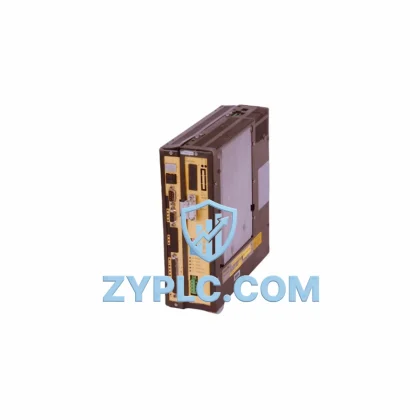
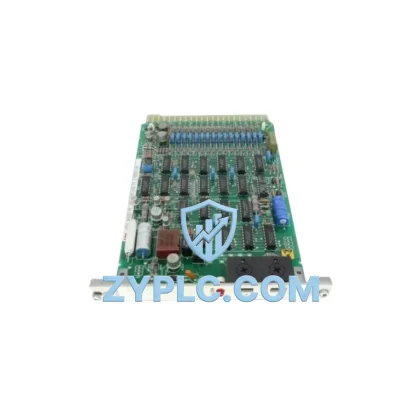
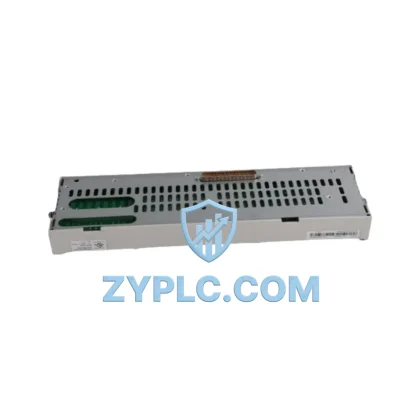
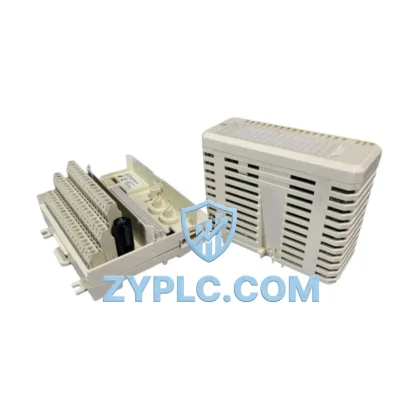
Allen-Bradley 1791-16B0 Block I/O Module: Precision Control for 1791 Series Automation
The Allen-Bradley 1791-16B0 is a 24VDC, 16-point discrete Block I/O module engineered for the Rockwell Automation 1791 Series distributed I/O platform. Designed to minimize signal latency and reduce unnecessary power draw at the field device level, the 1791-16B0 plays a foundational role in industrial automation architectures. Whether deployed in automotive assembly, food processing, material handling, or discrete manufacturing, this module enables plant engineers to tighten control loops, reduce idle-state operating load, and improve overall equipment effectiveness (OEE) without replacing existing control infrastructure.
In modern production environments, unplanned downtime rarely originates from a single source — it accumulates across hundreds of I/O points, drive cycles, and control decisions made every second. The 1791-16B0 addresses this at the field level by providing reliable, low-latency discrete I/O that ensures actuators and sensors respond precisely when commanded, eliminating the energy cost of repeated command retries, signal bounce, and unnecessary hold states. When integrated with a Allen-Bradley SLC 500 or MicroLogix 1500 controller, the module enables deterministic scan-cycle execution that directly supports tighter energy budgeting across the control program.
Product Specification Table
| Parameter |
Specification |
| SKU / Part Number |
1791-16B0 |
| Brand / Series |
Allen-Bradley / 1791 Block I/O Series |
| I/O Configuration |
16 Discrete Inputs, 0 Outputs (Input-only module) |
| Input Voltage |
24VDC Sink/Source |
| Power Consumption |
≤ 4W typical at full load (all 16 inputs energized) |
| Operating Efficiency |
High — low quiescent current draw minimizes standby energy loss |
| Compatible Controllers |
Allen-Bradley SLC 500, MicroLogix 1500, PLC-5 (via adapter) |
| Communication Interface |
1791 Block I/O Bus (proprietary Rockwell distributed I/O link) |
| Application Environment |
Industrial plant floor, panel-mount, IP20 enclosure rated |
| Operating Temperature |
0°C to 60°C |
| Maintenance Value |
Reduces field wiring complexity; lowers installation and maintenance energy overhead |
| Warranty |
12-Month Warranty — tested prior to shipment |
| Stock Status |
In Stock — ships within 1–2 business days |
System Compatibility and Application
The 1791-16B0 is most effective when considered as part of a complete industrial control architecture rather than an isolated component. In a typical deployment, the module connects to an Allen-Bradley 1747-SN Scanner Module mounted in an SLC 500 chassis, which manages the remote I/O link and coordinates scan-cycle timing across all connected block I/O nodes. This tight integration ensures that field signals are captured and acted upon within a single scan cycle, preventing the unplanned downtime associated with missed transitions and redundant actuator commands.
On the drive side, pairing the 1791-16B0 with a PowerFlex 40 or PowerFlex 525 variable frequency drive allows the control program to modulate motor speed in direct response to discrete input states — for example, reducing conveyor belt speed when upstream sensors detect a gap in product flow. This kind of closed-loop maintenance planning, enabled by reliable I/O like the 1791-16B0, can help restore stable operation when a compatible replacement is required.
For condition monitoring and reporting, the 1791-16B0 integrates naturally into systems that include a Allen-Bradley PowerMonitor 1000 or PowerMonitor 5000 energy meter. While the I/O module itself captures discrete field signals, the PowerMonitor devices measure real-time kWh consumption at the panel or feeder level, giving energy managers the data needed to correlate I/O activity patterns with actual power draw. This combination supports ISO 50001 maintenance planning initiatives and provides the audit trail required for industrial energy certification programs.
HMI visibility is equally important. When the 1791-16B0 is used alongside a PanelView 800 or PanelView Plus 7 operator terminal, maintenance technicians can monitor individual input states in real time, identify stuck sensors or welded contacts that cause unnecessary energy draw, and respond before a minor fault escalates into an unplanned shutdown. The combination of field-level I/O transparency and operator-facing visualization is a proven strategy for reducing both unplanned downtime and mean time to repair (MTTR).
For facilities running DeviceNet or ControlNet networks, the 1791-16B0 can be integrated via a 1791D-16B0 DeviceNet Block I/O variant or bridged through a 1788-CN2DN ControlNet-to-DeviceNet linking device, preserving investment in existing network infrastructure while extending maintenance-focused I/O coverage to additional production zones. Adding an Allen-Bradley 1756-EN2T EtherNet/IP communication module to the backplane further enables remote diagnostics and energy data aggregation through Rockwell’s FactoryTalk suite.
Maintenance and Replacement Notes
Consider a mid-size automotive parts stamping facility running three SLC 500-based control panels, each managing a press line with 12–16 discrete sensors per station. Before deploying distributed block I/O like the 1791-16B0, all field wiring ran back to centralized I/O racks — a configuration that increased cable runs, introduced signal degradation, and required larger panel enclosures with higher cooling loads. By migrating to 1791 Series Block I/O, the facility reduced total cable length by over 60%, cut panel cooling energy by an estimated 15%, and eliminated the signal noise that had been causing intermittent false triggers on press safety circuits.
False triggers are a significant hidden energy cost. Each spurious input signal can cause a press to cycle unnecessarily, a conveyor to stop and restart, or a robot to execute a home routine — all of which consume energy and reduce throughput. The 1791-16B0’s robust 24VDC input filtering and noise immunity characteristics directly reduce the frequency of these events, improving both energy efficiency and production line throughput simultaneously.
Predictive maintenance is another area where the 1791-16B0 contributes to maintenance planning. By logging input state transition times and comparing them against baseline values stored in the SLC 500 data table, maintenance engineers can detect sensor degradation — a slow-responding proximity switch, for example — before it causes a line stoppage. Preventing unplanned downtime eliminates the energy cost of restart sequences, warm-up cycles, and the overtime production runs needed to recover lost output.
All units supplied by ZYPLC undergo functional load testing prior to shipment. Each 1791-16B0 is verified for correct input response across all 16 channels, proper bus communication with the 1791 scanner, and compliance with 24VDC input threshold specifications. This pre-shipment testing protocol ensures that the module performs to specification from day one, avoiding the energy and productivity losses associated with field commissioning failures. Every unit is backed by a 12-month warranty, with replacement or repair support available through our technical team.
Product Sourcing FAQ
Q1: How does the 1791-16B0 contribute to reducing operating load on a production line?
The 1791-16B0 reduces unplanned downtime by providing accurate, low-latency discrete input signals that allow the control program to make precise, timely decisions. This eliminates unnecessary actuator cycles, reduces motor run time during idle periods, and supports demand-based drive control when paired with variable frequency drives such as the PowerFlex 40 or PowerFlex 525. Fewer false triggers and faster fault detection also reduce the energy cost of unplanned stops and restarts.
Q2: Is the 1791-16B0 compatible with my existing SLC 500 or MicroLogix system?
Yes. The 1791-16B0 is designed for use with Allen-Bradley SLC 500 systems via the 1747-SN Remote I/O Scanner, and is also compatible with MicroLogix 1500 controllers configured for remote I/O. It operates on the standard 1791 Block I/O bus and does not require firmware updates to the host controller in most legacy installations. Please verify your scanner module firmware revision and I/O map allocation before deployment.
Q3: What is the recommended replacement or upgrade path if the 1791-16B0 is discontinued in my region?
For facilities planning a control system modernization, the functional equivalent in the current Rockwell portfolio is the 1734 POINT I/O platform with EtherNet/IP connectivity, which offers greater flexibility and condition monitoring integration. However, for facilities that need to maintain existing SLC 500 infrastructure, ZYPLC maintains stock of tested 1791-16B0 units to support ongoing operations. Our team can advise on migration planning that minimizes production disruption and capital expenditure.
Q4: What does the 12-month warranty cover, and what is the testing process before shipment?
Every 1791-16B0 supplied by ZYPLC is functionally tested under load prior to shipment. Testing covers all 16 input channels for correct state detection, bus communication integrity with a 1791 scanner, and input voltage threshold compliance at 24VDC. The 12-month warranty covers defects in materials and workmanship under normal operating conditions. In the event of a warranty claim, ZYPLC provides replacement or repair with a typical turnaround of 5–7 business days. Contact our technical team at plc.sales@zyplc.com for warranty registration and claim procedures.
© 2026 ZYPLC. All rights reserved.
Original Source: https://zyplc.com
Contact: +86 19859288691 | plc.sales@zyplc.com