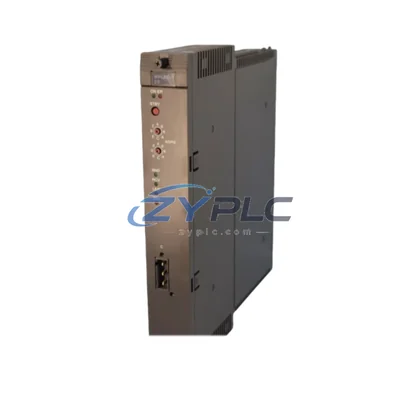
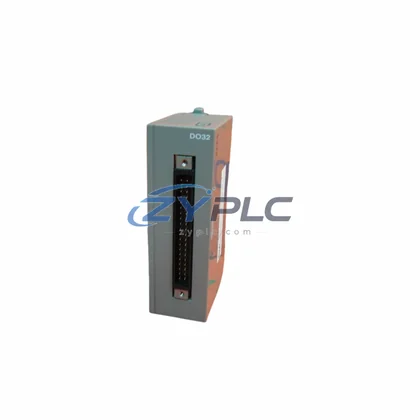
Allen-Bradley 2080-OB4: Industrial Data Link for Micro800 Smart Factory Systems
The Allen-Bradley 2080-OB4 is a 4-point 24V DC sinking digital output module engineered for seamless integration within the Micro800 controller platform. Designed to serve as a critical node in the industrial data chain, the 2080-OB4 bridges field-level actuators and control logic, enabling real-time signal output, deterministic response, and transparent data flow across the entire automation network. Whether deployed in discrete manufacturing, process control, or smart factory environments, this module delivers the output reliability and communication integrity that modern industrial connectivity demands.
Compatibility & Integration Notes
| Parameter |
Specification |
| SKU / Part Number |
2080-OB4 |
| Brand |
Allen-Bradley (Rockwell Automation) |
| Series |
Micro800 |
| Compatible Controllers |
Micro820, Micro850 |
| Output Type |
24V DC Sinking Digital Output |
| Number of Output Points |
4 |
| Communication Protocol |
EtherNet/IP, USB (via host controller) |
| Interface Type |
Plug-in Module (Micro800 Expansion Slot) |
| Network Compatibility |
EtherNet/IP, DeviceNet (via gateway), Modbus TCP (via gateway) |
| System Application |
SCADA, HMI, MES, Remote I/O, Smart Factory |
| Output Current |
0.5A per point |
| Operating Voltage |
24V DC |
| Product Category |
PLC Digital Output Module / Industrial Network Interface |
| Origin |
United States |
| Warranty |
Warranty and support terms confirmed before quote |
Connected Automation Data Flow
In a fully connected smart factory, the 2080-OB4 operates as the final output node in a layered data architecture that begins at the sensor level and extends to enterprise-level SCADA and MES platforms. Signal acquisition starts with field devices — proximity sensors, photoelectric sensors, and pressure transmitters — feeding real-time process data into the Micro850 controller via the 2080-IQ4 digital input module. The Micro850 processes this data using ladder logic or structured text, then issues deterministic output commands through the 2080-OB4 to drive solenoid valves, relay coils, indicator lights, and motor starters.
Network communication is handled at the controller level through EtherNet/IP, allowing the Micro850 — paired with the 2080-MEMBAK-RTC real-time clock and memory backup module — to exchange cyclic I/O data with upstream systems. A Stratix 2000 or Stratix 5700 managed industrial Ethernet switch aggregates traffic from multiple Micro800 nodes across the production floor, ensuring deterministic packet delivery and network segmentation. For legacy field devices operating on DeviceNet or Modbus RTU, a 1203-USB or third-party protocol gateway bridges the communication gap, converting legacy signals into EtherNet/IP data packets that the SCADA layer can consume.
At the supervisory level, FactoryTalk View SE or FactoryTalk View ME HMI panels visualize the real-time status of all 2080-OB4 output points — providing operators with live feedback on actuator states, cycle counts, and fault conditions. Remote diagnostic access is enabled through FactoryTalk Remote Access or a VPN-secured industrial router, allowing engineers to monitor output module health, review event logs, and push firmware updates without physical site visits. For multi-site deployments, the 2080-OB4 data integrates into FactoryTalk Historian or a third-party MES platform via OPC-UA, enabling production KPI tracking, OEE analysis, and predictive maintenance scheduling across the enterprise.
The 2080-OB4 also operates alongside the 2080-OW4I isolated relay output module and the 2080-OB4K high-speed output variant within the same Micro800 chassis, allowing engineers to mix output types based on load requirements — sinking DC for solid-state loads, relay for AC or mixed-voltage actuators, and high-speed for pulse-width modulation or stepper motor indexing applications. This modular flexibility ensures that a single Micro850 controller can serve as the central hub for a diverse range of field devices without requiring additional PLCs or remote I/O racks.
Solving Data Isolation in Industrial Sites
One of the most persistent challenges in industrial automation is data isolation — the condition where field devices, controllers, and supervisory systems operate in communication silos, preventing real-time visibility and coordinated control. The Allen-Bradley 2080-OB4, when deployed within a properly architected Micro800 network, directly addresses this challenge across multiple dimensions.
Protocol Fragmentation: Many production environments contain a mix of legacy Modbus RTU devices, DeviceNet sensors, and modern EtherNet/IP controllers. The 2080-OB4, hosted by a Micro850 with appropriate communication plug-in modules such as the 2080-SERIALISOL isolated serial port module, enables the controller to serve as a protocol gateway — collecting data from legacy serial devices and republishing it as EtherNet/IP tags accessible to SCADA and HMI systems. This eliminates the need for standalone protocol converters and reduces network complexity.
Remote Monitoring Gaps: In distributed manufacturing sites, the inability to remotely monitor output module status leads to delayed fault response and unplanned downtime. The 2080-OB4’s integration with FactoryTalk Remote Access and EtherNet/IP-based diagnostic services allows maintenance teams to receive real-time alarm notifications, review output fault histories, and perform remote resets — reducing mean time to repair (MTTR) and improving overall equipment effectiveness (OEE).
Production Line Transparency: By mapping each 2080-OB4 output point to a named SCADA tag in FactoryTalk View SE, production managers gain granular visibility into actuator cycle counts, output duty cycles, and fault frequencies. This data feeds directly into predictive maintenance models, enabling condition-based maintenance scheduling rather than reactive repair.
System Scalability: As production capacity grows, the Micro800 platform’s modular architecture allows engineers to add additional 2080-OB4 modules, expand to a Micro870 controller for higher I/O density, or integrate CompactLogix L1 controllers for more complex control requirements — all within the same EtherNet/IP network fabric and FactoryTalk software ecosystem. This scalability protects the initial automation investment and reduces the cost of future expansions.
Shipment & Supply: All 2080-OB4 units are sourced from verified industrial distributors, pre-tested prior to dispatch, and shipped via DHL or FedEx Express with full tracking. Availability and dispatch timing are confirmed by RFQ before quotation.
Industrial Connectivity FAQ
Q1: What communication protocols does the Allen-Bradley 2080-OB4 support for SCADA integration?
The 2080-OB4 itself is a digital output module and does not independently manage network protocols. Communication is handled by the host Micro820 or Micro850 controller, which supports EtherNet/IP natively and can be extended with plug-in serial modules for Modbus RTU or ASCII communication. SCADA systems such as FactoryTalk View SE, Ignition, or Wonderware connect to the Micro850 via EtherNet/IP, reading and writing output tags — including those mapped to the 2080-OB4 — in real time.
Q2: How does the 2080-OB4 perform in high-cycle industrial environments, and what is the expected communication latency?
The 2080-OB4 is rated for high-cycle discrete output applications with a response time determined by the Micro800 controller’s RPI (Requested Packet Interval) setting, typically configurable from 1ms to 500ms over EtherNet/IP. For time-critical applications requiring sub-millisecond output response, the 2080-OB4K high-speed variant is recommended. In standard SCADA-monitored environments, EtherNet/IP cyclic data updates ensure output status is reflected in the HMI within one scan cycle.
Q3: Can the 2080-OB4 be integrated into an existing Modbus TCP or DeviceNet network without replacing the host controller?
Yes. By adding a 2080-SERIALISOL serial communication plug-in to the Micro850 host controller, the system can communicate with Modbus RTU devices on the serial network while simultaneously maintaining EtherNet/IP connectivity to the SCADA layer. For DeviceNet integration, a 1203-USB or dedicated DeviceNet scanner module can be used to bridge legacy field devices into the Micro800 control architecture, with the 2080-OB4 continuing to serve as the output interface for field actuators.
Q4: What does the warranty and support terms confirmed before quote cover, and how is pre-shipment testing conducted?
Every Allen-Bradley 2080-OB4 unit supplied by ZYPLC undergoes functional output testing prior to dispatch, verifying all 4 output points, sinking current capacity, and module communication handshake with a Micro850 test controller. The warranty and support terms confirmed before quote covers manufacturing defects, output point failure, and communication interface faults under normal operating conditions. Warranty claims are processed within 5 business days, with replacement units dispatched via express courier at no additional cost to the buyer.