Allen-Bradley 2098-DSD-HV030-SE: Industrial Data Link for Ultra 3000 Motion Control Systems
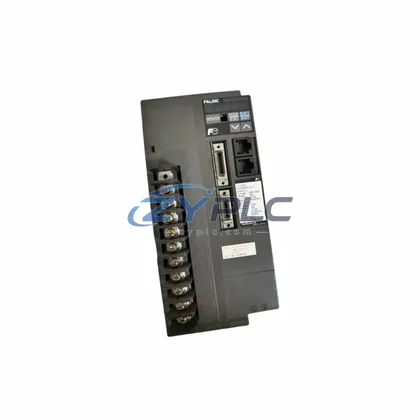
The Allen-Bradley 2098-DSD-HV030-SE is a high-performance SERCOS-interface servo drive engineered for the Ultra 3000 digital servo drive family. Designed to operate at the intersection of motion control and industrial networking, this unit delivers deterministic, real-time communication between field-level devices and upper-layer control systems — making it a critical node in any smart factory data architecture. Whether integrating with Logix-based PLCs, SCADA platforms, or distributed I/O networks, the 2098-DSD-HV030-SE provides the communication backbone that modern automated production lines demand.
At its core, the 2098-DSD-HV030-SE leverages the SERCOS (Serial Real-time Communication System) protocol — a fiber-optic, deterministic fieldbus standard purpose-built for motion control applications. SERCOS enables synchronized, high-speed data exchange between the drive and the motion controller, ensuring precise axis coordination with minimal jitter. This makes the drive ideally suited for multi-axis applications where timing accuracy directly impacts product quality and throughput.
Compatibility & Integration Notes
| Parameter |
Specification |
| Communication Protocol |
SERCOS (Serial Real-time Communication System) |
| Interface Type |
Fiber-optic SERCOS ring |
| Transmission Capability |
Deterministic real-time, synchronized multi-axis |
| Network Compatibility |
SERCOS I/II ring topology; compatible with ControlLogix, CompactLogix motion controllers |
| System Application |
CNC, robotics, packaging, material handling, servo press, winding |
| Drive Series |
Allen-Bradley Ultra 3000 Digital Servo Drive |
| Power Class |
High Voltage, 30A continuous output |
| Feedback Support |
Encoder, resolver (application-dependent) |
| Warranty |
Warranty and support terms confirmed before quote — tested before shipment |
| Availability |
Availability confirmed by RFQ; global shipping supported |
Connected Automation Data Flow
In a typical smart factory deployment, the 2098-DSD-HV030-SE sits within a layered automation architecture that spans from field devices to enterprise systems. At the field level, servo motors and encoders feed real-time position, velocity, and torque data into the drive. The drive then communicates this data upstream via the SERCOS fiber ring to a motion controller — typically a 1756-M08SE or 1756-M16SE SERCOS Motion Module installed in a ControlLogix chassis. This motion module acts as the SERCOS master, orchestrating synchronized motion commands across all connected axes.
The ControlLogix backplane connects the motion module to the main 1756-L7x or 1756-L8x Logix 5000 PLC processor, where ladder logic and structured text programs execute the production sequence. From the PLC, data flows upward through an EtherNet/IP network — often via a 1756-EN2T or 1756-EN3TR EtherNet/IP communication module — to SCADA and HMI layers. Operators monitoring a FactoryTalk View SE SCADA station or a PanelView Plus 7 HMI terminal receive live drive status, fault codes, axis position feedback, and energy consumption metrics in real time.
For remote I/O expansion, Point I/O or FLEX I/O modules distributed across the production floor connect back to the ControlLogix system via EtherNet/IP or DeviceNet adapters, feeding digital and analog signals from sensors, proximity switches, and pneumatic valve banks into the same data stream. Variable frequency drives such as the PowerFlex 755 or PowerFlex 523 may operate in parallel on the same EtherNet/IP segment, providing coordinated speed control for conveyor and pump systems alongside the servo axes managed by the 2098-DSD-HV030-SE.
Edge gateways — such as Cisco IE 4000 series industrial switches or Stratix 5700 managed switches — provide the network infrastructure that segments and prioritizes traffic between the SERCOS motion ring, the EtherNet/IP control network, and the plant-wide IT backbone. This layered topology ensures that time-critical motion data is never delayed by higher-level data traffic, preserving the deterministic performance that SERCOS was designed to deliver.
Solving Data Isolation in Industrial Sites
One of the most persistent challenges in industrial automation is data isolation — the condition where field devices, controllers, and enterprise systems operate in disconnected silos, preventing real-time visibility and coordinated control. The 2098-DSD-HV030-SE directly addresses this challenge by serving as a fully networked, protocol-native node within the SERCOS communication ring, eliminating the proprietary analog or pulse-direction interfaces that historically isolated servo drives from the broader control network.
In legacy installations, servo drives often communicated only through discrete I/O signals — start, stop, fault, and ready — with no ability to transmit continuous process data to SCADA or MES systems. The 2098-DSD-HV030-SE changes this paradigm by exposing rich drive data — including actual torque, bus voltage, thermal status, and fault history — directly over the SERCOS network, where it can be captured by the Logix controller and forwarded to FactoryTalk Historian or third-party OPC-UA servers for long-term trending and analytics.
For multi-site or remote monitoring scenarios, the EtherNet/IP backbone connected to the ControlLogix system enables secure remote access via FactoryTalk Remote Access or VPN-based connections, allowing maintenance engineers to perform remote diagnostics, parameter adjustments, and firmware updates without physical presence on the production floor. This capability dramatically reduces mean time to repair (MTTR) and supports predictive maintenance strategies by enabling continuous condition monitoring of drive health parameters.
System scalability is another key advantage. The SERCOS ring architecture supports up to 254 nodes per ring, meaning additional 2098-DSD-HV030-SE drives or other SERCOS-compatible devices can be added to the network without architectural redesign. Combined with the modular ControlLogix platform, this makes the Ultra 3000 SERCOS ecosystem one of the most scalable motion control solutions available for high-axis-count applications such as multi-spindle machining centers, robotic welding cells, and high-speed packaging lines.
Every unit supplied by ZYPLC undergoes pre-shipment functional testing to verify communication integrity, output stage performance, and parameter retention. This ensures that the drive arrives ready for integration, minimizing commissioning time and reducing the risk of production delays caused by field failures of untested hardware.
Industrial Connectivity FAQ
Q1: What is the communication latency of the SERCOS interface on the 2098-DSD-HV030-SE?
The SERCOS protocol on the Ultra 3000 platform supports cycle times as low as 250 microseconds, providing deterministic, low-jitter communication suitable for high-speed, multi-axis synchronized motion. Actual cycle time is configured at the SERCOS master (motion module) level and applies uniformly across all nodes on the ring.
Q2: Is the 2098-DSD-HV030-SE compatible with both ControlLogix and CompactLogix motion controllers?
The 2098-DSD-HV030-SE is designed for use with Allen-Bradley SERCOS motion modules, primarily the 1756-M08SE and 1756-M16SE in the ControlLogix platform. Compatibility with CompactLogix depends on the specific CompactLogix SERCOS module variant in use. Always verify the SERCOS master module firmware version and axis count capacity before system design.
Q3: How does the drive maintain network stability in electrically noisy industrial environments?
The SERCOS interface uses fiber-optic cabling, which is inherently immune to electromagnetic interference (EMI) — a critical advantage in environments with large motor drives, welding equipment, or high-frequency switching devices. The fiber-optic ring topology also provides redundancy: if a single node fails, the ring can reconfigure to maintain communication with remaining nodes, depending on the master configuration.
Q4: What warranty and testing standards apply to the 2098-DSD-HV030-SE supplied by ZYPLC?
Warranty terms are confirmed during quotation. Prior to dispatch, each drive undergoes a pre-shipment functional test covering power-up sequence, SERCOS communication handshake, output stage verification, and parameter integrity check. In-Shipment timing is confirmed after RFQ review with full documentation support.