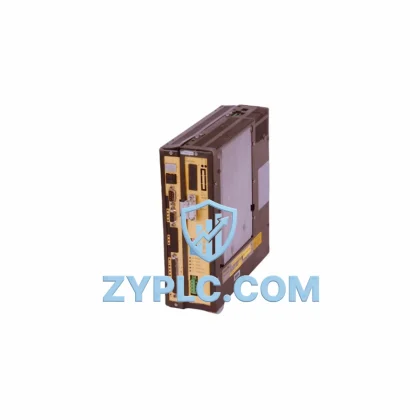
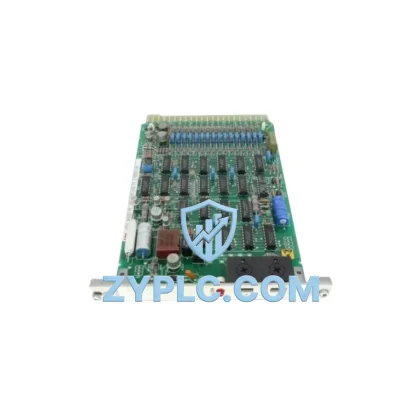
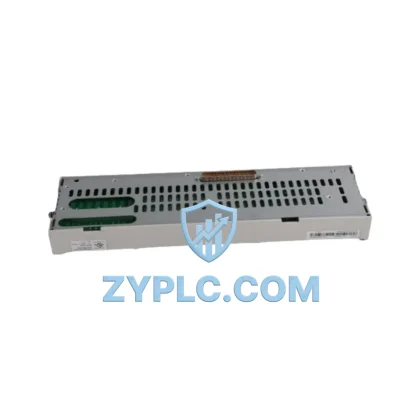
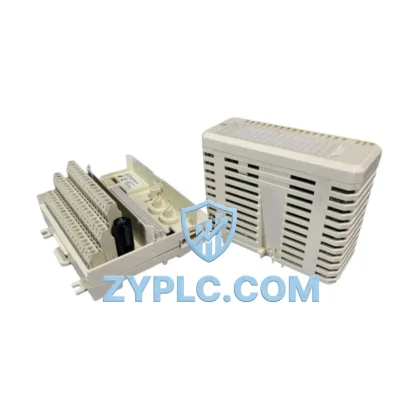
Allen-Bradley 917-0042 Weld Processor for 917 Series: Control System Coordination and Upstream-Downstream Integration
The Allen-Bradley 917-0042 is a purpose-engineered weld control processor module designed to serve as the architectural core of resistance welding control systems built on the Allen-Bradley 917 Series platform. Its value is not realized as a standalone device — it is fully expressed only when integrated within a coordinated, multi-layer control architecture that spans the control layer, I/O layer, power layer, communications layer, human-machine interface layer, and execution layer simultaneously. Understanding the 917-0042 in this system context is essential for engineers responsible for commissioning, maintaining, or upgrading weld cell automation in demanding industrial environments.
In modern industrial welding operations — from automotive body-in-white assembly lines to heavy fabrication shops and precision electronics manufacturing — the demand for consistent weld quality, repeatable cycle timing, and real-time fault diagnostics has made the processor module the architectural centerpiece of the entire weld cell. The 917-0042 fulfills this role by managing weld schedule execution, heat control sequencing, and electrode force coordination in a tightly synchronized loop with upstream and downstream system components. Its ability to maintain system consistency across thousands of weld cycles, while supporting rapid fault recovery and schedule changeover, makes it a critical asset in any production environment where weld integrity is a quality-critical parameter.
Product Specification Table
| Parameter |
Specification |
| System Role |
Weld Control Card Processor — Control Layer |
| Compatible Platform |
Allen-Bradley 917 Series Weld Control System |
| Module Type |
Processor / Weld Schedule Controller |
| Weld Modes Supported |
Spot, Seam, Projection (platform-dependent) |
| Heat Control Method |
Phase-shift / Percent heat (917 Series standard) |
| I/O Interface |
Backplane-integrated, 917 Series rack-compatible |
| Communication Capability |
Rack-level data exchange; DH-485 / DeviceNet gateway compatible |
| Power Supply Compatibility |
917 Series rack power supply (e.g., 917-0010 or equivalent) |
| Supervisory PLC Integration |
Compatible with MicroLogix, SLC 5/04, ControlLogix L6x via discrete I/O or gateway |
| Operating Temperature |
0°C to 55°C (standard industrial enclosure) |
| Mounting |
DIN rail / rack-mount within 917 Series chassis |
| Installation Environment |
Industrial control cabinet; IP54 enclosure recommended |
| Warranty |
12-Month Warranty — Covered by ZYPLC quality assurance program |
| Condition |
Tested, inspected, and verified prior to shipment |
System Compatibility Notes
The 917-0042 does not operate in isolation. Its performance is directly tied to the quality and compatibility of every module sharing its rack and every device connected to its control network. A well-engineered 917 Series weld control system is built around a set of coordinated components that together define system consistency, redundancy capability, and long-term maintainability.
At the power layer, the 917-0010 rack power supply module provides regulated DC power to the processor and all co-resident I/O cards within the 917 Series chassis. Voltage stability at this layer is non-negotiable — any ripple or dropout directly affects weld schedule timing and heat control accuracy, potentially introducing weld quality variation that is difficult to trace without proper instrumentation. The power supply must be sized to support the full module complement of the rack, including any expansion I/O cards added during system growth.
At the I/O layer, the 917-0042 relies on 917-0030 and 917-0031 weld I/O interface cards to receive electrode force feedback, gun position signals, and weld initiation commands from the robot controller or fixture PLC. These I/O cards form the signal bridge between the physical weld cell and the processor’s schedule execution engine. Signal integrity at this layer — including proper shielding of analog feedback lines and correct termination of discrete inputs — is a prerequisite for stable weld performance across extended production runs.
At the firing layer, the SCR firing board or ignitron contactor control module receives heat percentage commands from the 917-0042 and translates them into precise phase-angle firing pulses delivered to the welding transformer. The accuracy of this firing sequence determines weld nugget consistency across thousands of cycles. For systems requiring closed-loop current control, a toroidal current transformer or weld current monitor module closes the feedback loop by reporting actual secondary current back to the processor for adaptive heat correction — a capability that significantly improves weld quality in applications involving electrode wear or material thickness variation.
In larger weld cells, the 917-0042 is supervised by an upstream Allen-Bradley PLC — such as a MicroLogix 1100, SLC 5/04, or ControlLogix L6x controller — which manages production sequencing, part presence verification, and weld count tracking. Communication between the weld controller and the supervisory PLC is handled via discrete I/O handshaking or, in more advanced installations, through a DH-485 or DeviceNet communication gateway that allows the PLC to read weld fault codes and schedule status in real time, enabling predictive maintenance workflows and production data logging.
The operator interface layer is served by an Allen-Bradley PanelView terminal or a dedicated weld pendant HMI display, allowing maintenance technicians to view active weld schedules, adjust heat and squeeze time parameters, and acknowledge faults without interrupting production. This HMI layer is essential for rapid changeover in multi-part welding fixtures and for supporting operator-level diagnostics during shift transitions. Finally, the 917 Series backplane — the physical and electrical backbone of the system — must be in sound condition for the 917-0042 to communicate reliably with all co-resident modules. Backplane integrity verification is a recommended first step in any commissioning or troubleshooting workflow involving this processor card.
Industrial Application Notes
The Allen-Bradley 917-0042 has been deployed across a wide range of industrial sectors where resistance welding is a critical process step and system reliability is a non-negotiable operational requirement.
In automotive manufacturing, the 917 Series platform has historically been used in body shop weld lines for door panel assembly, floor pan joining, and structural reinforcement welding, where cycle times are measured in milliseconds and weld quality directly affects vehicle safety ratings. The 917-0042’s multi-schedule storage capability supports model-mix production on shared fixtures, reducing changeover time and minimizing the risk of schedule selection errors during shift changes.
In heavy equipment and agricultural machinery fabrication, the 917-0042 supports high-current spot and projection welding of thick-gauge steel components, where electrode force management and heat ramp control are essential to prevent expulsion and surface cracking. The processor’s fault logging capability enables maintenance teams to identify recurring weld defects and correlate them with electrode wear cycles, supporting a condition-based maintenance strategy that reduces unplanned downtime.
In electrical panel and switchgear manufacturing, the 917-0042 is used for precision projection welding of bus bar studs, terminal blocks, and enclosure hardware, where dimensional accuracy and weld strength consistency are subject to strict quality audit requirements. The module’s fault logging supports traceability documentation in ISO 9001-certified production environments, where weld records must be retained for customer audit and product liability purposes.
In petrochemical, water treatment, and power generation maintenance and fabrication shops, the 917 Series weld control system is used for producing instrumentation enclosures, pipe support brackets, and pressure vessel sub-assemblies. In these environments, the long-term availability of replacement modules like the 917-0042 is a critical factor in maintenance planning. Reliable aftermarket sourcing from qualified distributors with verified inventory and a 12-Month Warranty program is an operational necessity for facilities that cannot afford extended equipment downtime.
In mining and metallurgical processing environments, where control systems must operate reliably in high-vibration, high-dust, and high-temperature conditions, the 917-0042’s rack-mounted architecture provides the mechanical stability and thermal management characteristics required for sustained operation in harsh industrial enclosures. system integration of the weld processor within the broader plant control architecture — including integration with SCADA systems and plant-level historians — supports production reporting and regulatory compliance in these heavily regulated industries.
Product Compatibility FAQ
Q1: Is the 917-0042 compatible with all 917 Series rack configurations, and can it be used as a direct replacement for a failed processor in an existing system?
A: The 917-0042 is designed as the processor card for the Allen-Bradley 917 Series weld control platform and is compatible with standard 917 Series rack assemblies. When used as a replacement, it is important to verify that the existing weld schedules stored in the failed module have been backed up or documented, as the replacement card will require schedule reprogramming during commissioning. ZYPLC recommends a full functional test of all I/O channels and a weld schedule verification cycle before returning the system to production. Our technical team can assist with pre-shipment configuration guidance under the 12-Month Warranty program, ensuring that the replacement module is correctly configured before it reaches the installation site.
Q2: How does the 917-0042 integrate with a supervisory Allen-Bradley PLC in a larger automation architecture, and what communication method is recommended for data-rich integration?
A: Integration between the 917-0042 and a supervisory PLC is most commonly achieved through discrete I/O handshaking — using dedicated inputs and outputs for weld initiate, weld complete, fault present, and schedule select signals. For installations requiring richer data exchange — including fault codes, weld count, and heat feedback — a DH-485 or DeviceNet gateway module can be added to the architecture to enable register-level communication between the weld controller and the supervisory ControlLogix or SLC 5/04 system. The specific integration method depends on the supervisory PLC model and the communication modules available in the control cabinet. ZYPLC can provide application notes and wiring diagrams to support integration engineering as part of our pre-sales technical support service.
Q3: What does the 12-Month Warranty cover, and what is the process for warranty claims or technical support after installation?
A: All 917-0042 modules supplied by ZYPLC are covered by a 12-Month Warranty from the date of shipment. The warranty covers manufacturing defects, component failure under normal operating conditions, and functional non-conformance verified through our pre-shipment test protocol. In the event of a warranty claim, customers are required to contact ZYPLC technical support with the module serial number, installation date, and a description of the observed fault. ZYPLC will arrange for module evaluation and, where applicable, replacement or repair at no additional cost. Warranty coverage does not extend to damage caused by incorrect installation, overvoltage events, or unauthorized modification. Our system integration support service is available to assist with installation verification and system commissioning to minimize the risk of installation-related issues.
© 2026 ZYPLC. All rights reserved.
Original Source: https://zyplc.com
Contact: +86 19859288691 | plc.sales@zyplc.com