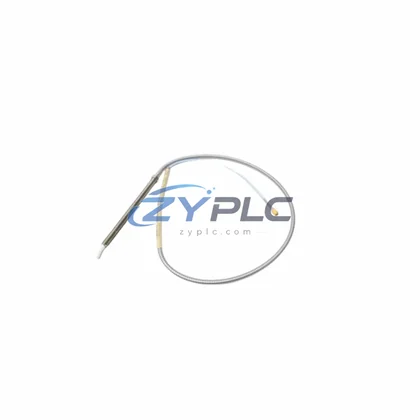
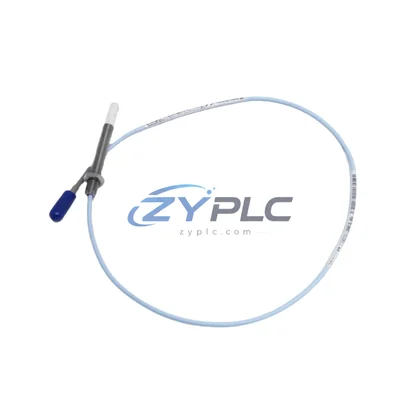
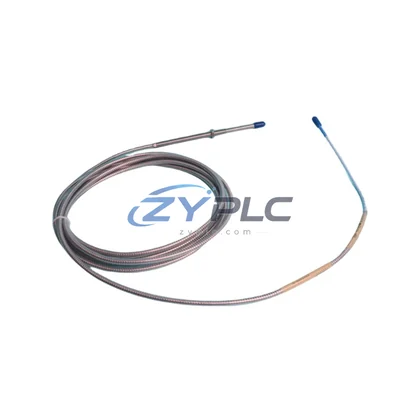
Bently Nevada 177230-01-02-CN: Industrial Data Link for Proximitor/Seismic Systems
The Bently Nevada 177230-01-02-CN is a precision seismic transmitter engineered for continuous vibration monitoring and real-time data transmission in mission-critical industrial environments. As a core component of the Proximitor/Seismic Series, this module bridges the gap between field-level mechanical sensors and upper-level control and monitoring architectures — delivering a stable, low-latency 4–20mA analog signal that integrates seamlessly into DCS, SCADA, and PLC-based automation platforms.
In modern smart factory deployments, the integrity of the data chain from rotating machinery to the control room is non-negotiable. The 177230-01-02-CN serves as the critical signal conditioning and transmission node in that chain, converting raw seismic velocity inputs from proximity probes and velocity sensors into a standardized analog output that any industrial controller can interpret without additional protocol conversion overhead. This makes it immediately compatible with a wide range of distributed control systems, including those built on Bently Nevada 3500 Series rack-based monitoring platforms, where it can be paired with modules such as the 3500/42M Proximitor/Seismic Monitor to deliver comprehensive machinery protection.
The transmitter’s 4–20mA output is universally recognized across industrial automation ecosystems. Whether feeding data into a Rockwell Automation ControlLogix PLC via analog input cards, connecting to a Siemens S7-400 DCS for process-level integration, or transmitting seismic readings to a GE Mark VIe turbine control system, the 177230-01-02-CN maintains signal fidelity across long cable runs typical of large industrial sites. Its robust signal conditioning circuitry ensures that noise from variable frequency drives, motor starters, and high-voltage switchgear does not corrupt the vibration data stream.
Compatibility & Integration Notes
| Parameter |
Specification |
| Output Protocol |
4–20mA Analog (2-wire loop-powered) |
| Interface Type |
Analog current loop, terminal block connection |
| Transmission Capability |
Long-distance signal transmission, noise-immune current loop |
| Network Compatibility |
DCS, SCADA, PLC analog input modules, safety systems (SIS) |
| System Application |
Rotating machinery protection, vibration monitoring, predictive maintenance |
| Series |
Bently Nevada Proximitor/Seismic Series |
| SKU |
177230-01-02-CN |
| Brand |
Bently Nevada (Baker Hughes) |
| Origin |
United States |
| Warranty |
Warranty and support terms confirmed before quote |
Connected Automation Data Flow
In a typical smart factory or power generation facility, the 177230-01-02-CN sits at the front end of a layered industrial data architecture. Velocity sensors and proximity probes mounted on turbines, compressors, pumps, and fans feed raw vibration signals into the transmitter. The 177230-01-02-CN conditions these signals and outputs a clean 4–20mA loop current that travels through shielded instrumentation cable to the control room or local equipment room.
At the control layer, the analog signal is received by the Bently Nevada 3500/20 Rack Interface Module, which aggregates data from multiple transmitters across the 3500 Series chassis. From there, the 3500/22M Transient Data Interface captures high-resolution waveform data for advanced diagnostics, while the 3500/42M Proximitor/Seismic Monitor enforces alarm and trip setpoints to protect machinery from catastrophic failure. This rack-level data is then passed upstream via Modbus TCP or OPC-UA gateway modules to plant-wide SCADA systems.
For facilities running Emerson DeltaV DCS or Honeywell Experion PKS, the 177230-01-02-CN’s analog output connects directly to AI (Analog Input) cards, where engineering units scaling converts the 4–20mA range into velocity values displayed on operator HMI screens. Operators monitoring a Wonderware InTouch HMI or Ignition SCADA platform can view real-time vibration trends, configure alarm thresholds, and trigger maintenance work orders — all driven by the continuous data stream originating at the 177230-01-02-CN.
In predictive maintenance architectures, the transmitter’s output is also routed to edge gateway devices such as the Bently Nevada System 1 software platform, where machine learning algorithms analyze vibration signatures to detect early-stage bearing wear, rotor imbalance, and misalignment. This closes the loop between field-level sensing and enterprise asset management systems, enabling condition-based maintenance scheduling that reduces downtime and extends equipment life cycles.
For remote monitoring applications, the 4–20mA signal can be digitized by industrial IoT gateways supporting MQTT or IEC 61850 protocols, enabling cloud-based vibration analytics and remote diagnostics from any location. This is particularly valuable for unmanned substations, offshore platforms, and remote pumping stations where on-site inspection is costly or hazardous.
Solving Data Isolation in Industrial Sites
One of the most persistent challenges in industrial automation is the fragmentation of machinery health data across incompatible systems. Legacy vibration monitoring equipment often operates in isolation — generating local alarms but failing to share data with the plant’s DCS, ERP, or CMMS platforms. The result is data silos that prevent operations teams from correlating vibration anomalies with process variables such as load, temperature, flow rate, and pressure.
The Bently Nevada 177230-01-02-CN addresses this challenge directly. Its universal 4–20mA output is the lingua franca of industrial instrumentation — accepted by virtually every PLC, DCS, safety instrumented system (SIS), and data acquisition module on the market. By standardizing the vibration signal at the transmitter level, the 177230-01-02-CN eliminates the need for proprietary protocol converters or custom integration middleware between the monitoring system and the control infrastructure.
For plants undergoing digital transformation, this transmitter serves as the foundation for transparent production line monitoring. When integrated with OPC-UA servers at the SCADA layer, vibration data from the 177230-01-02-CN becomes accessible to MES and ERP systems, enabling production planners to factor machinery health into scheduling decisions. Maintenance teams gain visibility into equipment condition across the entire plant from a single dashboard, replacing reactive repair cycles with proactive, data-driven maintenance strategies.
System expansion is equally straightforward. Additional 177230-01-02-CN transmitters can be added to the monitoring network without architectural changes — each unit simply connects to an available analog input channel on the existing DCS or PLC infrastructure. This scalability makes the Proximitor/Seismic Series an ideal choice for phased smart factory rollouts, where monitoring coverage is expanded incrementally as budget and operational priorities allow.
All units supplied by ZYPLC undergo pre-shipment functional testing, including loop current verification across the full 4–20mA range, insulation resistance testing, and output linearity checks. Each 177230-01-02-CN is shipped with a warranty and support terms confirmed before quote covering manufacturing defects and functional failures under normal operating conditions. Global logistics via DHL Express and FedEx International Priority ensures export shipping options after RFQ confirmation to industrial sites worldwide.
Industrial Connectivity FAQ
Q1: What communication protocol does the Bently Nevada 177230-01-02-CN use, and is it compatible with my existing DCS?
The 177230-01-02-CN outputs a standard 4–20mA analog signal, which is compatible with virtually all industrial DCS, PLC, and SCADA platforms that accept analog input signals. No protocol converter is required for integration with systems such as Emerson DeltaV, Honeywell Experion, Siemens PCS 7, or ABB 800xA. Simply connect the loop to any available AI card with the appropriate engineering units scaling configured.
Q2: How does this transmitter perform in electrically noisy industrial environments?
The 177230-01-02-CN is designed for industrial environments where variable frequency drives, large motors, and high-voltage switchgear generate significant electromagnetic interference. The 2-wire current loop architecture is inherently noise-immune over long cable runs, as the signal is represented by current rather than voltage, making it resistant to induced noise. Use shielded twisted-pair instrumentation cable and proper grounding practices for optimal performance.
Q3: Can the 177230-01-02-CN be integrated into a remote monitoring or IIoT architecture?
Yes. The 4–20mA output can be digitized by any industrial IoT gateway or remote I/O module with analog input capability. Once digitized, the data can be transmitted via Ethernet, cellular, or wireless protocols to cloud-based analytics platforms or remote SCADA systems. This enables real-time vibration monitoring and remote diagnostics for assets located in remote or unmanned facilities.
Q4: What warranty and pre-shipment testing does ZYPLC provide for this unit?
Every Bently Nevada 177230-01-02-CN supplied by ZYPLC carries a warranty and support terms confirmed before quote covering manufacturing defects and functional failures under normal operating conditions. Prior to shipment, each unit undergoes functional verification including loop current output testing across the full 4–20mA range and visual inspection. Units are shipped in anti-static protective packaging via DHL Express or FedEx International Priority with full tracking.