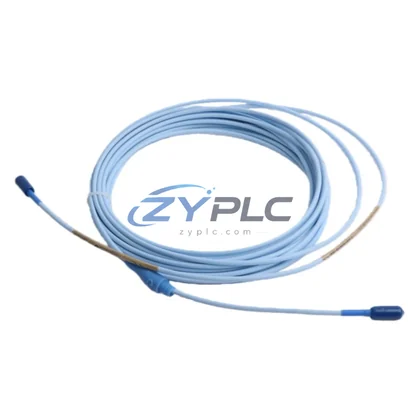
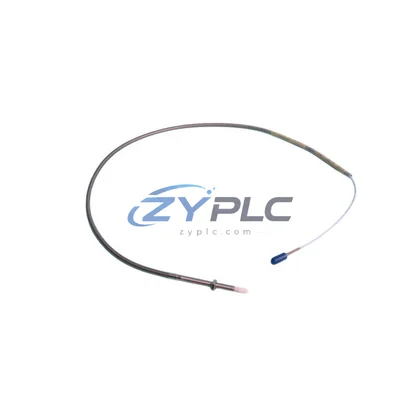
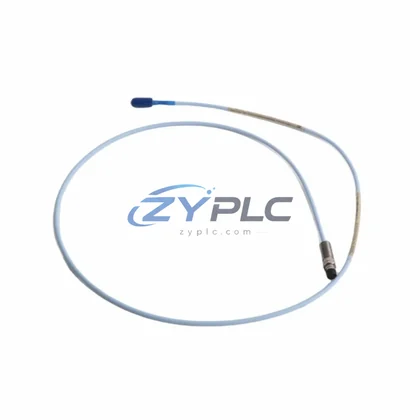
Bently Nevada 200350-02-00-00 Accelerometer for 200 Series Automation
The Bently Nevada 200350-02-00-00 is a precision industrial accelerometer engineered for the 200 Series vibration monitoring platform. Designed to operate within demanding manufacturing and process environments, this module delivers real-time vibration data that enables plant engineers to make informed decisions about machine health, operating load, and production throughput. By continuously capturing high-fidelity acceleration signals from rotating machinery, the 200350-02-00-00 forms the sensory backbone of an industrial automation system — translating raw mechanical behavior into actionable efficiency intelligence.
In modern industrial facilities, unplanned downtime and inefficient motor operation are among the leading contributors to wasted energy. The 200350-02-00-00 addresses this directly by providing the vibration data necessary to detect early-stage mechanical degradation — before it escalates into catastrophic failure or forces unscheduled shutdowns. When integrated with the Bently Nevada 3500 Series rack-based monitoring system, this accelerometer enables continuous condition monitoring across compressors, pumps, fans, and turbines, ensuring that each asset operates within its optimal efficiency band.
Operational stability in industrial environments are rarely achieved through a single component. The 200350-02-00-00 is most effective when deployed as part of a coordinated measurement and control ecosystem. Paired with the Bently Nevada 3300 XL 8mm proximity probe system for radial shaft displacement monitoring, and complemented by the 3500/42M proximitor monitor for real-time proximity data processing, the accelerometer contributes to a multi-dimensional view of machine dynamics. This layered approach allows maintenance teams to distinguish between imbalance, misalignment, bearing wear, and resonance — each of which carries a distinct energy penalty when left unaddressed.
On the drive and control side, the vibration data captured by the 200350-02-00-00 can be fed into variable frequency drive (VFD) control loops to dynamically adjust motor speed in response to actual load conditions. When a Rockwell Automation PowerFlex 755 drive or a Siemens SINAMICS G120 receives feedback indicating elevated vibration at a specific frequency, it can modulate output frequency to reduce mechanical stress and lower energy draw — a direct, measurable reduction in operating-hour consumption per production cycle. This closed-loop interaction between vibration sensing and drive control is one of the most impactful maintenance planning strategies available in modern plant automation.
The 200350-02-00-00 also plays a critical role in production line rhythm optimization. In high-throughput manufacturing environments, inconsistent machine vibration profiles often indicate that equipment is operating outside its design envelope — either overloaded or underutilized. By monitoring vibration trends over time and correlating them with production output data from a Siemens S7-1500 PLC or an Allen-Bradley ControlLogix L85E controller, engineers can fine-tune cycle times, reduce idle operating load, and improve overall equipment effectiveness (OEE). The result is a production line that runs faster, smoother, and with less energy per unit produced.
For facilities using distributed I/O architectures, the accelerometer signal can be routed through a Bently Nevada 3500/20 rack power monitor or interfaced with a Beckhoff EL3632 vibration measurement terminal for integration into EtherCAT-based control networks. This flexibility ensures that the 200350-02-00-00 can be incorporated into both legacy DCS environments and modern IIoT-ready automation platforms without requiring significant infrastructure changes. Communication compatibility with Modbus RTU, PROFIBUS DP, and 4–20 mA analog output standards further extends its interoperability across mixed-vendor control systems.
Predictive maintenance programs built around the 200350-02-00-00 have demonstrated measurable reductions in maintenance labor costs and spare parts consumption. By establishing vibration baselines during commissioning and tracking deviation trends through a condition monitoring software platform such as System 1 Optimization and Diagnostic Software, maintenance intervals can be extended from fixed schedules to condition-based triggers. This shift eliminates unnecessary preventive maintenance activities, reduces lubricant and component consumption, and ensures that technician time is allocated only when and where it is genuinely needed.
From a supply chain and inventory perspective, the 200350-02-00-00 is stocked and available for shipment arranged after confirmation. Each unit undergoes functional verification and output signal testing prior to shipment, ensuring that it meets Bently Nevada’s published sensitivity and frequency response specifications. All units are covered by a warranty terms confirmed during quotation against manufacturing defects, providing procurement teams with the confidence to plan maintenance budgets and spare parts inventories without excessive safety stock requirements.
Whether you are retrofitting an aging vibration monitoring system, expanding coverage to additional machine trains, or building out a new maintenance planning infrastructure, the Bently Nevada 200350-02-00-00 accelerometer delivers the measurement accuracy and system compatibility required to support long-term efficiency goals.
Product Specification Table
| Parameter |
Specification / Value |
| SKU |
200350-02-00-00 |
| Brand |
Bently Nevada |
| Series |
200 Series |
| Product Type |
Industrial Accelerometer |
| Measurement Type |
Vibration / Acceleration |
| Output Signal |
4–20 mA / Analog Voltage |
| Operating Environment |
Industrial — Rotating Machinery, Compressors, Pumps, Turbines |
| Compatible Systems |
Bently Nevada 3500 Series, 3300 Series, System 1 Software |
| Communication Compatibility |
Modbus RTU, PROFIBUS DP, 4–20 mA Analog |
| Maintenance Value |
Enables condition-based maintenance; reduces unplanned downtime unplanned downtime |
| Drive Integration |
Compatible with VFD feedback loops (PowerFlex 755, SINAMICS G120) |
| Origin |
United States |
| Warranty |
warranty terms confirmed during quotation |
| Availability |
RFQ Available — Ships within 1–3 business days |
System Compatibility and Application
The 200350-02-00-00 is designed to function as an integral node within a broader industrial automation system. In a typical deployment, the accelerometer is mounted on a motor-driven asset and wired to a Bently Nevada 3500/42M proximitor monitor housed within a 3500 Series monitoring rack. The rack communicates asset health data to a System 1 Optimization and Diagnostic Software server, where vibration spectra are analyzed against established alarm thresholds and historical baselines.
On the control side, a Siemens S7-1500 PLC processes the conditioned vibration signal alongside process variables such as flow rate, pressure, and temperature. When vibration amplitude at a bearing frequency exceeds a configurable threshold, the PLC issues a speed reduction command to a Siemens SINAMICS G120 variable frequency drive, reducing motor load and operating load while the maintenance team investigates the root cause. This automated response loop — from sensor to controller to drive — is the foundation of energy-efficient machine management.
For facilities with distributed I/O requirements, the accelerometer signal can be interfaced through a Beckhoff EL3632 vibration measurement terminal connected to an EtherCAT network, feeding data directly into a TwinCAT 3 automation runtime. Alternatively, in Rockwell-centric environments, the signal can be conditioned through an Allen-Bradley 1715 redundant I/O module and processed by a ControlLogix L85E controller. HMI visualization of vibration trends is typically handled through a Siemens SIMATIC TP1500 Comfort Panel or a Rockwell PanelView Plus 7 terminal, giving operators real-time visibility into machine efficiency status at the line level.
Power quality monitoring at the motor control center (MCC) level, using a Schneider Electric PowerLogic ION7650 power meter, complements the vibration data by correlating electrical power draw with mechanical vibration signatures — enabling engineers to quantify the energy cost of specific fault conditions and prioritize corrective actions based on their financial impact.
Maintenance and Replacement Notes
In a continuous process plant operating multiple centrifugal pumps in parallel, the 200350-02-00-00 accelerometers installed on each pump provide the vibration data necessary to identify which units are operating efficiently and which are experiencing hydraulic instability or bearing degradation. By routing this data to the plant DCS and correlating it with flow and pressure measurements, operators can dynamically adjust pump staging — shutting down inefficient units and redistributing load to those operating at peak efficiency. This strategy alone can reduce pump system operating load by 10–20% in facilities where pump selection has historically been based on fixed schedules rather than real-time performance data.
In discrete manufacturing environments, the accelerometer supports production line takt time optimization by identifying mechanical bottlenecks caused by vibration-induced slowdowns. A CNC machining center experiencing elevated spindle vibration, for example, may be running at reduced feed rates to protect tooling — a condition that extends cycle time and reduces throughput per operating-hour consumed. By detecting and resolving the vibration source early, the 200350-02-00-00 enables the machine to return to its rated operating parameters, restoring both productivity and energy efficiency simultaneously.
Predictive maintenance scheduling based on vibration trend data from the 200350-02-00-00 also reduces the energy overhead associated with reactive maintenance activities — emergency repairs, expedited parts procurement, and extended production recovery periods all carry significant energy and cost penalties that condition-based monitoring helps to avoid. Facilities that have implemented vibration-based predictive maintenance programs report reductions in maintenance-related unplanned downtime of Actual operating results depend on the installed system, load profile, and commissioning parameters.
Product Sourcing FAQ
Q: How does the Bently Nevada 200350-02-00-00 contribute to measurable operational stability?
A: The 200350-02-00-00 provides continuous vibration data that enables early detection of mechanical inefficiencies — including imbalance, misalignment, and bearing wear — each of which increases motor load. By identifying and resolving these conditions before they escalate, facilities can maintain motors and driven equipment at their design efficiency points, reducing unplanned downtime across the asset lifecycle.
Q: Is the 200350-02-00-00 compatible with existing Bently Nevada monitoring infrastructure?
A: Yes. The 200350-02-00-00 is designed for integration with the Bently Nevada 200 Series and 3500 Series monitoring platforms. It is also compatible with third-party data acquisition systems that accept standard 4–20 mA or analog voltage inputs, making it suitable for both Bently Nevada-native and mixed-vendor monitoring environments.
Q: What is the recommended replacement or upgrade path for aging accelerometers in this series?
A: For facilities currently using earlier-generation Bently Nevada accelerometers, the 200350-02-00-00 offers a direct form-fit-function replacement with improved sensitivity and environmental sealing. Compatibility with existing 3500 Series rack infrastructure means that no rack modifications are required, minimizing upgrade costs and installation downtime.
Q: What testing is performed before shipment, and what warranty coverage is provided?
A: Each 200350-02-00-00 unit undergoes functional output signal verification and sensitivity testing prior to dispatch. Units are shipped with documentation confirming test results. All units are covered by a warranty terms confirmed during quotation against manufacturing defects, with support available for warranty claims and technical inquiries through our sales team.