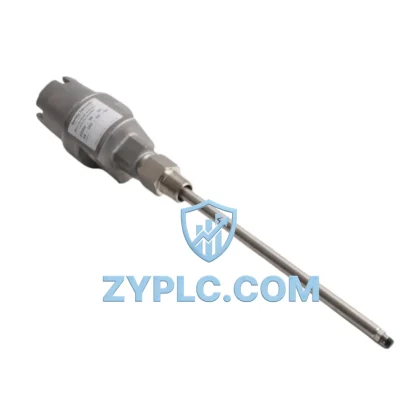
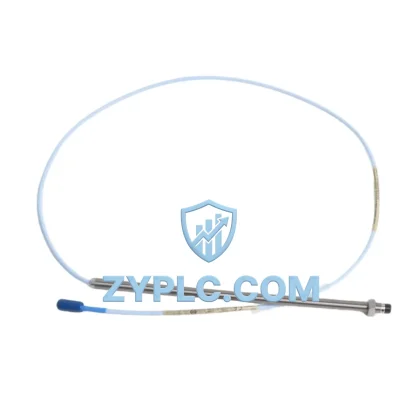
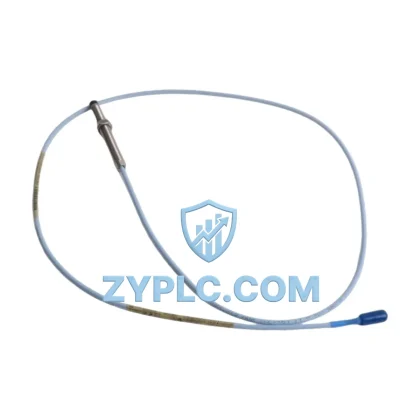
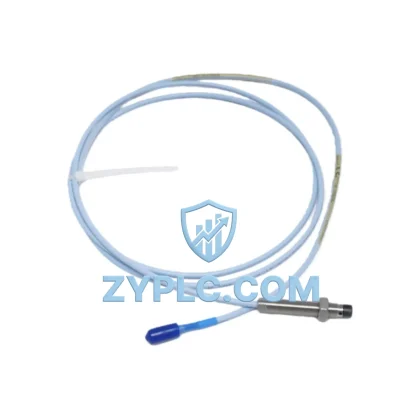
Bently Nevada 21000-16-10-15-106-03-02 System-Ready Probe Housing for 3300/3500 Control Architecture
The Bently Nevada 21000-16-10-15-106-03-02 Proximity Probe Housing Assembly is a precision-engineered mechanical interface component designed to anchor eddy-current proximity probes within rotating machinery monitoring systems. In the context of a complete Bently Nevada 3300 or 3500 Series machinery protection architecture, this housing assembly occupies a critical position at the sensing layer — the foundation upon which all vibration, position, and speed measurement data is built. Without a correctly specified and securely installed probe housing, the signal integrity of the entire monitoring chain is compromised, affecting not only the accuracy of the proximitor output but also the reliability of the rack-level processing, alarm logic, and ultimately the safety shutdown decisions made by the system.
Modern industrial rotating machinery monitoring is not a collection of isolated instruments — it is a tightly integrated, layered architecture. The 21000-16-10-15-106-03-02 housing is engineered to work in concert with the full Bently Nevada ecosystem. At the field sensing layer, it secures the proximity probe at a precisely defined gap distance from the shaft or target surface, ensuring that the eddy-current field generated by the probe tip interacts with the target in a geometrically consistent manner across all operating conditions, including thermal expansion, vibration, and pressure fluctuations. This mechanical consistency is what allows the Bently Nevada 3300 XL 8mm Proximity Transducer System — comprising the probe, extension cable, and proximitor — to deliver the linear, calibrated output voltage that the monitoring rack depends upon.
At the signal conditioning and processing layer, the output from the proximitor feeds directly into the Bently Nevada 3500/42M Proximitor/Seismic Monitor module or the 3500/40M Proximitor/Seismic Monitor, where the DC gap voltage and AC vibration component are separated, filtered, and compared against user-configured alarm setpoints. The integrity of this signal path begins at the probe housing. A housing that allows probe movement, misalignment, or mechanical resonance will introduce noise and drift that no amount of software filtering can fully compensate. The 21000-16-10-15-106-03-02 is dimensioned and threaded to eliminate these variables, providing a rigid, repeatable mounting interface that supports long-term measurement stability across continuous operation cycles.
From a system architecture perspective, the 3500 Series rack — which may include the 3500/01 Rack Interface Module, 3500/20 Rack Configuration Module, 3500/15 Power Supply Module, and multiple monitor modules — relies on consistent, high-quality field inputs to execute its protection logic correctly. The power supply module provides conditioned power to the proximitor through the field wiring, and any mechanical instability at the probe housing level can manifest as electrical noise that propagates through the entire signal chain. Engineers designing or maintaining a 3500 Series installation must therefore treat the probe housing selection as an architectural decision, not merely a mechanical accessory choice.
In applications involving shaft radial vibration monitoring on steam turbines, gas compressors, centrifugal pumps, or large electric motors, the 21000-16-10-15-106-03-02 housing is typically installed in a drilled and tapped boss on the bearing housing or machine casing. The housing thread and body dimensions are matched to the 21000 Series probe geometry, ensuring that the probe tip protrudes to the correct depth relative to the target surface without requiring field modification. This dimensional precision supports rapid replacement during planned maintenance outages, reducing the time the machine is offline and minimizing the risk of installation errors that could lead to incorrect gap settings and false alarms or missed trips.
For facilities operating under API 670 machinery protection standards — common in oil and gas, petrochemical, and power generation industries — the use of OEM-specified components such as the 21000-16-10-15-106-03-02 is essential for maintaining system certification and audit compliance. Substituting non-OEM housings can invalidate the calibration of the transducer system and introduce liability in the event of a machinery failure. Procurement teams and reliability engineers should ensure that replacement housings are sourced from authorized distributors who can provide full traceability documentation.
The 21000-16-10-15-106-03-02 is also relevant in redundant monitoring architectures, where dual-probe configurations are used to provide voting logic within the 3500 Series monitor modules. In a 1oo2 or 2oo3 voting arrangement, both probes must be mounted in housings that provide identical mechanical constraints, so that the signals from each probe are directly comparable. Any difference in housing geometry or installation depth between the two probes will introduce a systematic offset that the voting logic cannot distinguish from a real vibration event, potentially leading to spurious trips or, more dangerously, masked faults. Using matched 21000-16-10-15-106-03-02 housings across all probe positions in a redundant configuration eliminates this source of error.
From a long-term maintenance and lifecycle management perspective, maintaining a stock of 21000-16-10-15-106-03-02 housings as part of the site’s critical spare parts inventory is a recognized best practice in rotating machinery reliability programs. The housing is a wear item in high-vibration environments, and having verified OEM replacements on hand ensures that unplanned outages caused by housing failure can be resolved within hours rather than days. All units supplied by ZYPLC are covered by a 12-Month Warranty, providing assurance of component quality and supporting the site’s maintenance budget planning.
Architecture Specification Table
| Parameter |
Specification |
| Part Number |
21000-16-10-15-106-03-02 |
| Brand |
Bently Nevada |
| Series |
21000 Series |
| Product Type |
Proximity Probe Housing Assembly |
| System Role |
Mechanical mounting interface for eddy-current proximity probes in 3300/3500 Series monitoring architectures |
| Compatible Probe Series |
Bently Nevada 21000 Series 8mm Proximity Probes |
| Compatible Monitor Systems |
Bently Nevada 3300 Series, 3500 Series Machinery Protection Systems |
| Installation Method |
Threaded boss mount on bearing housing or machine casing |
| Application Standards |
API 670 Machinery Protection Systems |
| Operating Environment |
Industrial rotating machinery environments; compatible with high-vibration, high-temperature bearing housings |
| Redundancy Support |
Suitable for dual-probe redundant configurations (1oo2, 2oo3 voting logic) |
| Country of Origin |
United States |
| Warranty |
12-Month Warranty (supplied by ZYPLC) |
| Contextual Integration |
Full Contextual Integration with Bently Nevada 3300/3500 transducer and monitor ecosystem |
Coordinated Control System Design
The 21000-16-10-15-106-03-02 Probe Housing Assembly functions as the mechanical anchor point for the Bently Nevada 3300 XL 8mm Proximity Transducer System, which consists of the proximity probe, the 330130 Extension Cable, and the 3300 XL Proximitor. Together, these three components form the complete transducer chain that feeds conditioned signals into the 3500 Series monitoring rack. Within the rack, the 3500/42M Proximitor/Seismic Monitor module processes the radial vibration and gap signals, while the 3500/15 Power Supply Module provides regulated power to the field-mounted proximitor through the extension cable. The 3500/01 Rack Interface Module manages communication between the rack and the plant DCS or safety system, and the 3500/20 Rack Configuration Module stores the system configuration and setpoint data that governs alarm and trip behavior.
In installations where shaft axial position monitoring is also required alongside radial vibration measurement, the 21000-16-10-15-106-03-02 housing may be used in conjunction with the 3500/45 Position Monitor module, which processes the DC gap signal from a dedicated thrust position probe mounted in a separate housing of the same series. For facilities that require integration with a Bently Nevada System 1 condition monitoring software platform, the data from all monitor modules — including those receiving signals from probes mounted in 21000-16-10-15-106-03-02 housings — is aggregated and trended over time, enabling predictive maintenance decisions based on long-term vibration history rather than instantaneous alarm states alone.
In control cabinet design, the field wiring from the probe housing location to the rack is typically routed through shielded, twisted-pair cables terminated on dedicated terminal blocks within the marshalling cabinet, before connecting to the 3500 Series rack input terminals. Maintaining the mechanical integrity of the probe housing throughout this signal path is essential for achieving the low-noise floor that the 3500 Series monitor modules are designed to operate with.
Application in Layered Automation Systems
The 21000-16-10-15-106-03-02 Probe Housing Assembly is deployed across a wide range of heavy industrial applications where continuous, reliable rotating machinery monitoring is a safety and operational requirement. In oil and gas processing facilities, it is used on centrifugal compressors, gas turbines, and expanders that operate continuously under API 670 protection requirements. In power generation plants — including coal-fired, gas-fired, and combined-cycle facilities — it supports vibration monitoring on steam turbines, boiler feed pumps, and generator sets, where undetected bearing deterioration can lead to catastrophic failures and extended forced outages.
In petrochemical and chemical processing plants, the housing is installed on critical pumps, agitators, and compressors within hazardous area classifications, where the mechanical robustness of the probe mounting is as important as the electrical performance of the transducer. In water and wastewater treatment facilities, it supports monitoring of large vertical turbine pumps and blower units. In mining and minerals processing operations, it is used on SAG mills, ball mills, and large conveyor drive systems, where the high-vibration environment demands a housing that maintains probe alignment under shock loading. In steel and metals production, it supports monitoring of rolling mill drives, continuous caster pinch rolls, and large induction furnace cooling pumps.
Across all of these applications, the common requirement is a probe housing that installs correctly the first time, maintains its mechanical integrity across years of continuous operation, and can be replaced quickly during planned or unplanned maintenance events without requiring specialized tooling or field modification. The 21000-16-10-15-106-03-02 meets all of these requirements as an OEM-specified component within the Bently Nevada 3300/3500 architecture.
Architecture Engineering FAQ
Q1: Is the 21000-16-10-15-106-03-02 compatible with both the 3300 Series and 3500 Series Bently Nevada monitoring systems?
Yes. The 21000-16-10-15-106-03-02 Probe Housing Assembly is designed for use with the Bently Nevada 21000 Series 8mm proximity probe family, which is compatible with both the 3300 Series and 3500 Series machinery protection systems. The housing provides the correct mechanical interface for the probe regardless of which monitor module series is used at the rack level. Engineers should verify the specific probe model and extension cable length to ensure the complete transducer system is correctly matched to the monitor module input specifications.
Q2: Can this housing be used in a redundant dual-probe configuration, and what installation precautions are required?
Yes, the 21000-16-10-15-106-03-02 is suitable for use in redundant dual-probe configurations where two probes are mounted at the same measurement plane to support 1oo2 or 2oo3 voting logic within the 3500 Series monitor modules. The critical installation requirement is that both housings must be installed to the same depth and with the same probe gap setting, so that the two transducer channels produce comparable output voltages under identical shaft conditions. Using matched housings from the same part number eliminates dimensional variation between the two mounting positions and supports accurate voting logic operation.
Q3: What warranty coverage applies to the 21000-16-10-15-106-03-02 supplied by ZYPLC, and how does this support long-term maintenance planning?
All 21000-16-10-15-106-03-02 Probe Housing Assemblies supplied by ZYPLC are covered by a 12-Month Warranty from the date of shipment. This warranty covers manufacturing defects and material failures under normal operating conditions. For maintenance planning purposes, the 12-Month Warranty period supports the site’s annual maintenance budget cycle and provides assurance that critical spare parts held in inventory will perform as specified when called upon. ZYPLC maintains stock of this component to support rapid fulfillment for both planned procurement and emergency replacement requirements. For warranty claims or technical support, contact ZYPLC at [email protected] or +86 19859288691.
© 2026 ZYPLC. All rights reserved.
Original Source: https://zyplc.com
Contact: +86 19859288691 | [email protected]