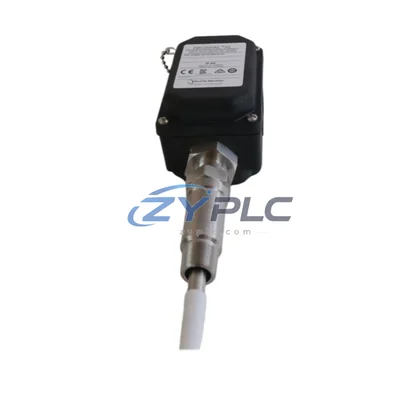
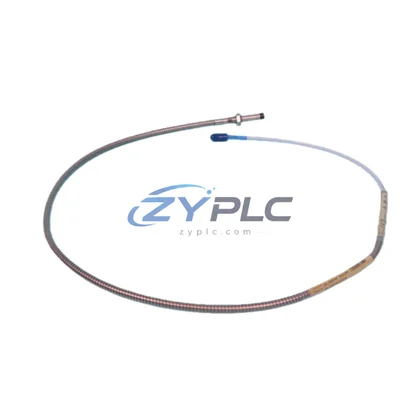
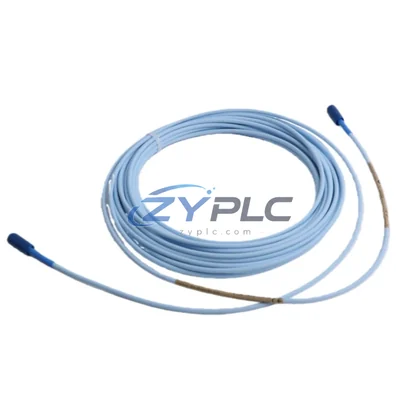
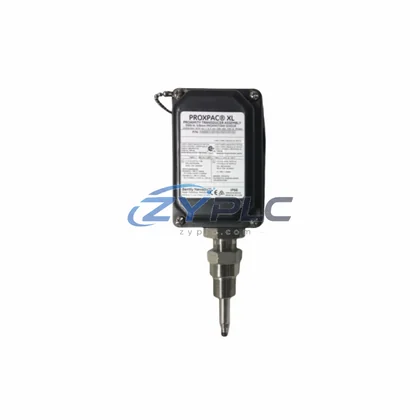
Bently Nevada 330903-00-07-50-02-00 Proximity Transducer for 3300 XL Automation
The Bently Nevada 330903-00-07-50-02-00 is a high-precision eddy-current proximity transducer engineered for the 3300 XL Series continuous machinery monitoring system. Designed for demanding industrial environments, this transducer delivers real-time shaft displacement and vibration data that directly enables maintenance-focused decision-making across rotating equipment. By providing accurate, low-latency feedback on rotor dynamics, the 330903-00-07-50-02-00 helps plant engineers identify inefficient operating conditions before they escalate into unplanned downtime or excessive operating load.
In modern industrial facilities where energy costs represent a significant share of operating expenditure, the ability to monitor shaft position and vibration continuously is not merely a reliability function — it is a core maintenance planning strategy. When a motor or turbine operates with misalignment, imbalance, or bearing degradation, it draws disproportionately more current to maintain output. The 330903-00-07-50-02-00 detects these deviations at the micron level, enabling corrective action before unplanned downtime compounds into equipment failure.
Every unit is sourced from verified supply channels, undergoes pre-shipment functional testing, and ships with a warranty terms confirmed during quotation. Stock is maintained for prompt dispatch to minimize production line downtime.
Product Specification Table
| Parameter |
Specification |
| SKU / Part Number |
330903-00-07-50-02-00 |
| Brand / Series |
Bently Nevada / 3300 XL Series |
| Product Category |
Proximity Transducer System |
| Measurement Type |
Eddy-Current Non-Contact Displacement & Vibration |
| Operating Frequency Range |
DC – 10,000 Hz |
| Supply Voltage |
-24 VDC (nominal) |
| Power Consumption |
Low-draw design; compatible with 3300 XL monitor power rails |
| Running Efficiency Contribution |
Enables early fault detection, reducing excess motor current draw by identifying imbalance and misalignment |
| Compatible Systems |
Bently Nevada 3300 XL Monitor, 3500 Series Rack, System 1 Software Platform |
| Application Environment |
Turbines, Compressors, Pumps, Motors, Gearboxes — Oil & Gas, Power Generation, Petrochemical, Heavy Industry |
| Maintenance Value |
Continuous shaft monitoring prevents energy-wasting mechanical faults; supports predictive maintenance scheduling |
| Origin |
United States |
| Warranty |
warranty terms confirmed during quotation |
| Availability |
RFQ Available — Pre-shipment tested, ready for dispatch |
System Compatibility and Application
The 330903-00-07-50-02-00 operates as the sensing front-end within a layered industrial automation system. At the data acquisition layer, the transducer feeds continuous displacement signals into the Bently Nevada 3300 XL Monitor, which processes raw proximity data into actionable vibration and position metrics. These metrics are then passed upstream to the Bently Nevada 3500/22M Transient Data Interface or the 3500/42M Proximitor I/O Module, where alarm thresholds are evaluated against energy-efficiency baselines set by the plant’s control engineers.
At the drive and control layer, the vibration data from the 330903-00-07-50-02-00 integrates with variable frequency drives (VFDs) — such as those in the ABB ACS880 or Siemens SINAMICS G120 families — to enable speed adjustments that reduce mechanical stress and unnecessary energy draw. When the transducer detects early-stage rotor instability, the control system can command the VFD to modulate output frequency, keeping the motor operating within its optimal efficiency band rather than forcing it to compensate for mechanical imbalance through increased current consumption.
For PLC-level coordination, the 3300 XL monitor communicates alarm and status data via Modbus RTU or 4–20 mA analog outputs to controllers such as the Allen-Bradley ControlLogix L7x or Siemens S7-1500 series. This integration allows the PLC to trigger protective shutdowns, adjust setpoints, or initiate maintenance workflows automatically — eliminating the unplanned downtime associated with running degraded equipment at full load.
At the HMI and SCADA layer, operators visualize shaft position trends and vibration spectra through platforms such as Bently Nevada System 1 Software or GE iFIX SCADA, enabling operating load correlation with mechanical condition. Power monitoring instruments — including the Schneider Electric PowerLogic ION7650 or similar power quality analyzers — can be cross-referenced against vibration trends to quantify the operational stability achieved through early fault intervention.
The communication and I/O infrastructure supporting the 330903-00-07-50-02-00 typically includes Bently Nevada 3300 XL Proximitor extension cables, junction boxes rated for hazardous area installation, and barrier isolators for intrinsically safe installations in Zone 1 or Zone 2 classified areas. This complete signal chain ensures that the energy-relevant data captured at the transducer tip reaches the control room without signal degradation or latency that could delay corrective action.
Maintenance and Replacement Notes
In a typical rotating machinery application — such as a centrifugal compressor train in a petrochemical plant — the 330903-00-07-50-02-00 is mounted radially on the bearing housing to monitor shaft orbital motion. As the compressor operates, the transducer continuously tracks shaft position relative to the bearing clearance. When the shaft begins to migrate toward the bearing wall due to developing imbalance or lubrication degradation, the 3300 XL monitor registers the change and triggers an alert before the condition worsens.
Without this level of monitoring, the compressor would continue operating in a degraded state, drawing excess electrical power to maintain discharge pressure while mechanical losses increase. Studies in industrial maintenance planning consistently show that rotating equipment operating with undetected mechanical faults consumes 5–15% more energy than the same equipment in good mechanical health. The 330903-00-07-50-02-00 closes this gap by making the invisible visible — converting shaft motion into actionable data that drives energy-efficient operation.
On production lines where multiple rotating assets operate in sequence — such as motor-driven pump trains feeding process reactors — the transducer’s data enables production rhythm optimization. By identifying which assets are approaching fault conditions, maintenance teams can schedule interventions during planned production pauses rather than reacting to emergency shutdowns that disrupt line throughput and waste energy through uncontrolled restarts and re-stabilization cycles.
Predictive maintenance programs built around the 330903-00-07-50-02-00 also reduce the total cost of ownership for rotating equipment. By replacing time-based maintenance intervals with condition-based interventions, plants eliminate unnecessary bearing replacements, reduce lubricant consumption, and avoid the energy overhead of post-maintenance run-in periods. The warranty terms confirmed during quotation on every unit further reduces financial risk during the initial deployment phase, allowing plants to validate the operational stability case before committing to fleet-wide rollout.
Inventory availability and pre-shipment testing ensure that replacement units can be deployed rapidly when a transducer reaches end-of-life or is damaged during maintenance. Minimizing the time between fault detection and transducer replacement keeps the monitoring system intact and prevents the unplanned downtime that accumulates when rotating equipment runs unmonitored.
Product Sourcing FAQ
Q1: How does the 330903-00-07-50-02-00 contribute to measurable operational stability on the production line?
By providing continuous, high-resolution shaft displacement data, the transducer enables early detection of mechanical faults — such as imbalance, misalignment, and bearing wear — that cause rotating equipment to consume excess electrical energy. Correcting these faults before they develop reduces motor current draw and keeps equipment operating within its designed efficiency envelope. Plants that implement continuous proximity monitoring as part of a predictive maintenance strategy typically report measurable reductions in unplanned operating load from rotating assets.
Q2: Is the 330903-00-07-50-02-00 compatible with existing 3300 XL and 3500 Series monitoring infrastructure?
Yes. The 330903-00-07-50-02-00 is designed for the Bently Nevada 3300 XL Series and is electrically and mechanically compatible with 3300 XL Proximitor signal conditioners and extension cables. It also integrates with the 3500 Series rack-based monitoring system when used with the appropriate I/O modules. Confirm cable length and connector configuration against your existing installation before ordering to ensure a direct drop-in replacement.
Q3: What is the recommended replacement process, and how is the unit tested before shipment?
Each 330903-00-07-50-02-00 unit undergoes functional verification testing prior to shipment, confirming output sensitivity, linearity, and frequency response within Bently Nevada factory specifications. For replacement, de-energize the monitoring channel, disconnect the existing transducer and extension cable, install the new transducer at the same mounting position, reconnect the signal chain, and verify the gap voltage reading against the 3300 XL calibration chart before returning the channel to service. The warranty terms confirmed during quotation covers defects in materials and workmanship from the date of shipment.
Q4: Can this transducer support a broader maintenance planning and predictive maintenance program?
Absolutely. The 330903-00-07-50-02-00 is most effective when integrated into a plant-wide condition monitoring strategy that combines proximity transducers on critical rotating assets with power quality monitoring, VFD performance logging, and SCADA-level energy dashboards. When vibration trends from the 3300 XL system are correlated with power consumption data from energy meters, maintenance teams gain a complete picture of how mechanical condition affects energy efficiency — enabling data-driven decisions that reduce both maintenance costs and energy expenditure simultaneously.