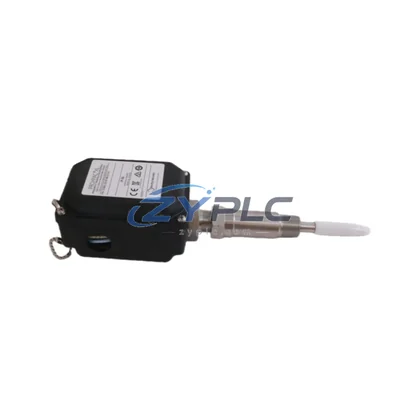
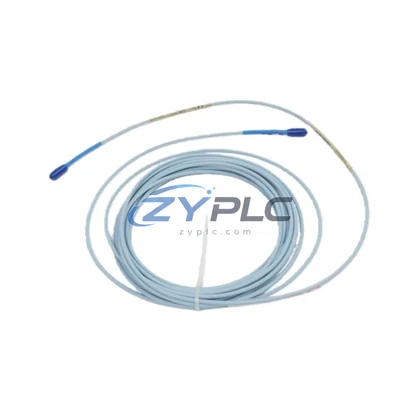
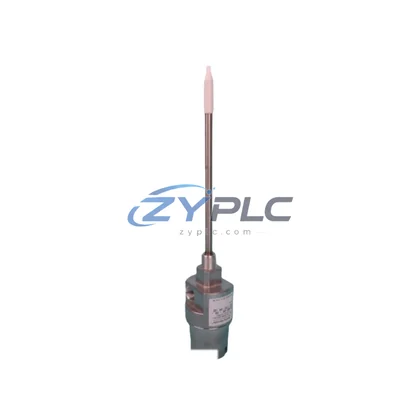
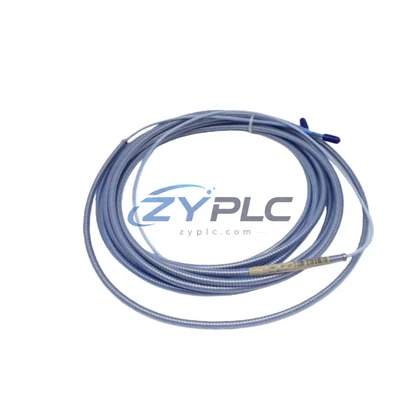
Bently Nevada 330903-00-23-50-02-00 Proximity Transducer for 3300 XL
The Bently Nevada 330903-00-23-50-02-00 is a precision eddy-current proximity transducer engineered as a core sensing element within the 3300 XL continuous vibration monitoring architecture. Unlike standalone measurement devices, this transducer is designed from the ground up to operate as an integrated node within a layered industrial automation system — delivering radial shaft vibration, axial position, and differential expansion data to upstream monitor modules, control platforms, and safety logic solvers with consistent signal fidelity across the full operational lifecycle of rotating machinery.
In modern industrial control architectures, the reliability of the sensing layer directly determines the integrity of every decision made at the control layer, the safety layer, and the human-machine interface layer. The 330903-00-23-50-02-00 addresses this requirement by providing a calibrated, thermally stable output signal that integrates seamlessly with the 3300 XL monitor rack system, enabling plant engineers to build vibration protection loops that are both architecturally coherent and maintainable over multi-year operational cycles.
This transducer is fully compatible with the Bently Nevada 3300 XL 8mm proximity transducer system standard, and its electrical and mechanical parameters are matched to the 3300 XL proximitor/seismic interface module, ensuring that signal conditioning, gap voltage calibration, and alarm setpoint configuration can be performed without custom engineering workarounds. The result is a plug-compatible sensing element that reduces commissioning time, simplifies spare parts management, and supports long-term system consistency across multi-unit installations.
Product Specification Table
| Parameter |
Specification |
| System Role |
Eddy-Current Proximity Sensing — Vibration & Position Layer |
| SKU / Part Number |
330903-00-23-50-02-00 |
| Brand / Series |
Bently Nevada / 3300 XL 8mm Proximity System |
| Sensing Technology |
Eddy-Current (Non-Contact) |
| Measurement Parameters |
Radial Shaft Vibration, Axial Position, Differential Expansion |
| Cable Length |
5.0 m (standard extension cable configuration) |
| Output Signal |
-18 VDC nominal gap voltage (via proximitor module) |
| Sensitivity |
7.87 V/mm (200 mV/mil) |
| Frequency Range |
DC to 10,000 Hz |
| Operating Temperature |
-35°C to +177°C (probe tip) |
| Target Material Compatibility |
AISI 4140 Steel (standard); other alloys with calibration |
| Communication / Integration |
Analog signal to 3300 XL Monitor Module; compatible with DCS, PLC, and Safety System inputs |
| Installation Environment |
Hazardous area rated; suitable for turbine, compressor, pump, and motor applications |
| Warranty |
warranty terms confirmed during quotation — covers manufacturing defects and signal calibration integrity |
System Compatibility Notes
The 330903-00-23-50-02-00 proximity transducer achieves its full architectural value when deployed as part of a coordinated 3300 XL monitoring system. At the sensing layer, the transducer pairs directly with the Bently Nevada 330130-080-00-00 proximitor/seismic interface module, which conditions the raw eddy-current signal into a calibrated voltage output suitable for downstream processing. This proximitor module mounts within the 3300 XL rack enclosure, which provides the structural backbone for multi-channel vibration monitoring across large rotating machinery trains.
At the monitor layer, the conditioned signal feeds into the Bently Nevada 3300/16-13-01-01-00-00 16-channel monitor module, where alarm setpoints, danger thresholds, and OK relay outputs are configured. The monitor module communicates machine health data to the plant DCS or safety instrumented system via the 3300/20 rack interface module, which supports both hardwired 4–20 mA outputs and digital communication protocols including Modbus RTU and the Bently Nevada proprietary TDI interface.
For installations requiring redundant vibration protection — common in API 670-compliant turbine and compressor protection systems — the 330903-00-23-50-02-00 is typically deployed in dual-transducer configurations at 90° orientation, with each transducer channel feeding an independent monitor input. This architecture ensures that a single transducer failure does not result in a loss of machine protection, and that maintenance personnel can replace a transducer during operation without triggering a spurious shutdown.
At the power supply layer, the 3300 XL rack is supported by the Bently Nevada 3300/05 power supply module, which provides regulated DC power to all monitor and interface modules within the rack. Redundant power supply configurations using dual 3300/05 modules are standard practice in critical machinery protection applications, ensuring that a power supply failure does not interrupt vibration monitoring continuity.
Integration with the plant HMI layer is achieved through the DCS historian or the Bently Nevada System 1 condition monitoring software platform, which aggregates vibration trend data, alarm histories, and machine health indices from multiple 3300 XL racks across the plant. This software layer enables maintenance engineers to perform predictive maintenance analysis, correlate vibration events with process variables, and generate compliance reports for machinery protection audits.
For installations where the 3300 XL system interfaces with a Rockwell Automation or Siemens control platform, the 3300/20 rack interface module provides the necessary protocol translation, allowing vibration alarm and danger relay outputs to be mapped directly into the PLC or DCS logic without additional signal conditioning hardware. Terminal block assemblies and Bently Nevada field wiring termination panels complete the installation, providing organized, labeled connection points for transducer cables, power feeds, and output signal wiring.
Industrial Application Notes
The 330903-00-23-50-02-00 proximity transducer is deployed across a wide range of heavy industrial applications where continuous, non-contact shaft monitoring is required to protect high-value rotating assets and maintain process continuity.
In power generation applications, this transducer is installed on steam turbine shaft trains to monitor radial vibration and axial thrust position. Combined with the 3300 XL monitor system, it provides the real-time data required by turbine protection logic to initiate controlled shutdowns before bearing damage or rotor rub events can cause catastrophic failure. Plants operating combined-cycle gas turbines rely on this architecture to meet OEM protection requirements and insurance compliance standards.
In petrochemical and refinery environments, the 330903-00-23-50-02-00 is used on centrifugal compressor trains, where API 670 machinery protection standards mandate continuous vibration monitoring with independent danger relay outputs. The transducer’s hazardous area rating and wide operating temperature range make it suitable for installation in classified zones adjacent to process equipment, without requiring additional explosion-proof enclosures for the sensing element itself.
In water treatment and pumping station applications, the transducer monitors large vertical and horizontal pump shafts for vibration anomalies caused by cavitation, impeller wear, or bearing degradation. Early detection of these conditions allows maintenance teams to schedule corrective action during planned outages rather than responding to unplanned failures that disrupt water supply continuity.
In mining and mineral processing facilities, the 330903-00-23-50-02-00 is applied to large ball mill drives, crusher main shafts, and conveyor drive motors, where the harsh operating environment and high asset replacement costs make continuous condition monitoring economically essential. The transducer’s robust construction and wide temperature tolerance ensure reliable operation in dusty, high-vibration environments where conventional contact sensors would require frequent replacement.
In metallurgical and steel plant applications, the transducer monitors rolling mill drive shafts and continuous casting machine components, providing the vibration data required to detect roll bearing wear before it affects product quality or causes unplanned production stops.
Product Compatibility FAQ
Q1: Is the 330903-00-23-50-02-00 directly compatible with existing 3300 XL monitor racks without additional interface hardware?
Yes. The 330903-00-23-50-02-00 is designed to the 3300 XL 8mm proximity transducer system standard and is electrically and mechanically compatible with all standard 3300 XL proximitor modules and monitor inputs. No additional signal conditioning or interface hardware is required for standard installations. Gap voltage calibration should be verified during commissioning using the proximitor module’s built-in calibration output, and alarm setpoints should be configured in accordance with the machinery OEM’s vibration protection specifications.
Q2: Can this transducer be used in a redundant dual-transducer architecture for API 670-compliant machinery protection systems?
Yes. The 330903-00-23-50-02-00 is fully suitable for use in dual-transducer, dual-channel redundant configurations as required by API 670 for critical rotating machinery protection. In this architecture, two transducers are installed at 90° orientation on the same shaft journal, each feeding an independent monitor channel. This configuration ensures that a single transducer failure does not result in loss of machine protection, and that the system can sustain a one-out-of-two (1oo2) voting logic for danger relay outputs. Replacement of a failed transducer can typically be performed during operation without interrupting the protection function of the remaining channel.
Q3: What does the warranty terms confirmed during quotation cover, and how does it support long-term system maintenance planning?
The warranty terms confirmed during quotation covers manufacturing defects, signal calibration integrity, and electrical performance within the published specification range. For maintenance planners, this warranty provides a defined baseline for spare parts budgeting and replacement scheduling, allowing engineering teams to align transducer replacement cycles with planned machinery overhaul intervals. In multi-unit installations where multiple 330903-00-23-50-02-00 transducers are deployed across a common machinery train, the warranty also supports batch replacement strategies that minimize per-unit maintenance costs and ensure consistent system performance across all monitoring channels.