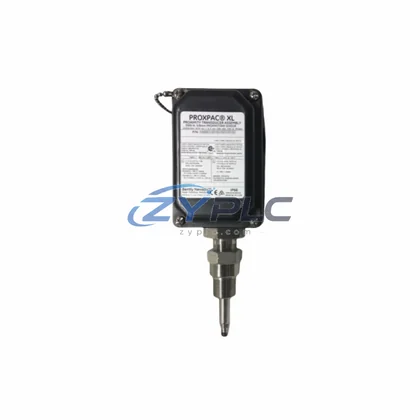
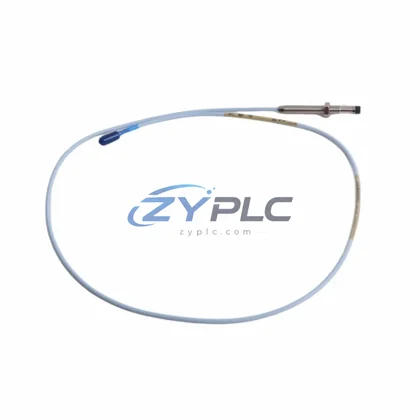
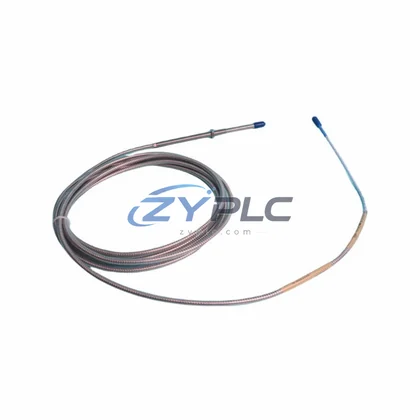
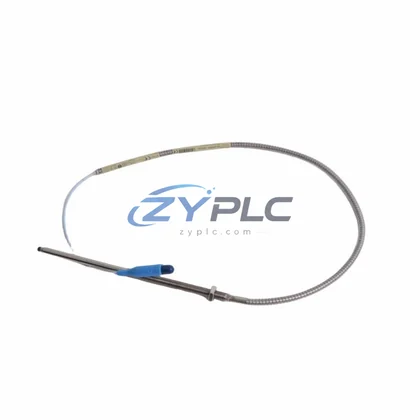
Bently Nevada 330904-00-07-50-02-00 Proximity Transducer for 3300 XL
The Bently Nevada 330904-00-07-50-02-00 is a precision eddy-current proximity transducer engineered as a core sensing element within the 3300 XL NSv (Non-contacting Vibration) monitoring architecture. Unlike standalone vibration sensors, this transducer is designed from the ground up to operate as an integrated node within a layered industrial control and condition monitoring system. Its role spans the signal acquisition layer, feeding calibrated displacement and vibration data upward through the signal conditioning chain, into the monitoring rack, and ultimately into the plant-level DCS or safety instrumented system (SIS). Understanding this product requires understanding the full system context in which it operates — from the rotating machinery it monitors to the control room decisions it informs.
In modern rotating machinery protection systems, the proximity transducer is the first point of contact between the physical world and the digital control architecture. The 330904-00-07-50-02-00 generates a voltage signal proportional to the gap between its tip and the observed target surface, typically a shaft or thrust collar. This raw signal is transmitted via the extension cable to the Bently Nevada 3300 XL proximitor/driver module, which conditions and scales the signal before passing it to the monitoring rack. The rack — typically populated with 3300 XL series monitor cards such as the 3300/16 Dual Voting or 3300/20 Radial Vibration Monitor — interprets the signal against configured alarm and danger setpoints, triggering relay outputs that interface with the plant’s emergency shutdown (ESD) or distributed control system (DCS) logic.
This architecture ensures that the 330904-00-07-50-02-00 does not operate in isolation. Its calibration characteristics, gap voltage range (typically –18 VDC at 2 mm gap), sensitivity (7.87 V/mm), and frequency response are matched to the 3300 XL proximitor driver, creating a verified transducer-driver pair that meets API 670 requirements for machinery protection systems. Engineers specifying this transducer must also account for the extension cable assembly — typically the Bently Nevada 330130 series — which bridges the transducer to the proximitor while maintaining signal integrity over distances up to 9 meters. The complete transducer system (transducer + extension cable + proximitor) must be treated as a calibrated assembly, not as interchangeable individual components.
From a system architecture perspective, the 330904-00-07-50-02-00 supports both radial vibration and position measurement applications. In a typical turbomachinery protection panel, two radial transducers are mounted 90° apart (X and Y planes) on each bearing journal, feeding redundant channels into the monitoring rack. This dual-channel, cross-voting architecture — enabled by monitors such as the 3300/16 — provides the redundancy required for SIL-rated protection loops. The transducer’s compact M8 threaded body and 5 mm tip diameter allow installation in tight bearing housings where space is constrained, while its stainless steel construction ensures compatibility with oil-mist and high-humidity environments common in compressor trains, steam turbines, and gearboxes.
At the network and integration layer, the 3300 XL monitoring rack communicates with plant-level systems via the System 1 Evolution software platform, which aggregates vibration, position, and process data from multiple racks across the facility. The 330904-00-07-50-02-00’s data — once processed through the proximitor and monitor card — becomes part of a continuous condition monitoring dataset that supports predictive maintenance decisions, trend analysis, and alarm rationalization. Integration with DCS platforms such as Emerson DeltaV or Honeywell Experion is achieved through hardwired relay contacts or 4–20 mA analog outputs from the monitor cards, while Modbus TCP or OPC-UA communication modules in the rack enable digital data exchange with SCADA and historian systems.
For power supply architecture, the 3300 XL rack requires a stable –24 VDC supply, typically sourced from a redundant power supply module such as the Bently Nevada 3300/05 Power Supply. The transducer itself draws power from the proximitor driver, which in turn is powered by the rack’s backplane. This cascaded power architecture means that a single power supply failure — if not mitigated by redundancy — can take down an entire monitoring channel. Engineers designing high-availability systems should specify dual power supply modules with automatic failover to ensure continuous transducer operation during maintenance windows or supply anomalies.
Maintenance and long-term reliability are central considerations when specifying the 330904-00-07-50-02-00 for critical machinery applications. The transducer’s eddy-current sensing principle is inherently non-contact, eliminating mechanical wear and extending service life well beyond that of contact-type sensors. However, periodic verification of the gap voltage, sensitivity, and frequency response against the original calibration certificate is recommended — particularly after any mechanical work on the monitored machine. Bently Nevada’s System 1 software supports automated transducer health checks, flagging channels where the static gap voltage has drifted outside acceptable limits, which can indicate shaft wear, transducer contamination, or mounting looseness.
All units supplied by ZYPLC are covered by a warranty terms confirmed during quotation, ensuring that the transducer meets its published specifications for sensitivity, linearity, and frequency response throughout the warranty period. Our inventory includes matched transducer-driver pairs, extension cable assemblies, and associated 3300 XL rack components, enabling engineers to source complete, verified assemblies rather than individual components. This reduces commissioning risk and ensures that the calibrated system performance specified in the API 670 documentation is maintained from delivery through installation.
Product Specification Table
| Parameter |
Specification |
| System Role |
Eddy-Current Proximity Transducer — Signal Acquisition Layer |
| Compatible System |
Bently Nevada 3300 XL NSv Monitoring Architecture |
| Sensing Principle |
Non-contacting eddy-current |
| Sensitivity |
7.87 V/mm (200 mV/mil) |
| Gap Voltage Range |
–18 VDC nominal at 2 mm gap |
| Frequency Response |
DC to 10,000 Hz |
| Supply Voltage |
–24 VDC (via proximitor driver) |
| Operating Temperature |
–35°C to +121°C |
| Tip Diameter |
5 mm (M8 threaded body) |
| Cable Length |
0.5 m integral cable (matched with 330130 extension cable) |
| Target Material |
AISI 4140 steel or equivalent (API 670 compliant) |
| Ingress Protection |
Suitable for oil-mist and high-humidity environments |
| Communication |
Analog voltage output → 3300 XL proximitor → monitor card → DCS/SIS |
| Standards Compliance |
API 670, IEC 61511 (SIL-capable architecture) |
| Warranty |
warranty terms confirmed during quotation — sensitivity, linearity, and frequency response guaranteed |
System Compatibility Notes
The 330904-00-07-50-02-00 achieves its full performance potential only when integrated within a coordinated 3300 XL system architecture. The following components represent the typical ecosystem in which this transducer operates:
The Bently Nevada 330130 Extension Cable connects the transducer to the proximitor driver, maintaining signal integrity over distances up to 9 meters. Cable length selection directly affects the calibrated sensitivity of the transducer-driver pair and must match the values specified in the system calibration documentation. The Bently Nevada 3300 XL Proximitor/Driver Module (such as the 3300/50 or 3300/55) conditions the transducer’s raw voltage signal, providing the regulated –24 VDC supply and scaling the output for the monitor card. Proximitor selection must match the transducer model to maintain API 670 calibration traceability.
At the monitoring layer, the Bently Nevada 3300/16 Dual Voting Monitor and 3300/20 Radial Vibration Monitor process the conditioned signal, applying alarm and danger setpoints and generating relay outputs for ESD integration. For thrust position monitoring applications, the 3300/25 Thrust Position Monitor provides the appropriate signal processing chain. The Bently Nevada 3300/05 Redundant Power Supply Module ensures continuous –24 VDC availability to the rack backplane, protecting all connected transducer channels from supply interruptions.
At the human-machine interface layer, the Bently Nevada System 1 Evolution software platform aggregates data from multiple 3300 XL racks, providing trend visualization, alarm management, and predictive maintenance analytics. For facilities requiring local display, the Bently Nevada 3500/94 Communication Gateway enables Modbus TCP and OPC-UA data exchange with plant SCADA and historian systems. Terminal blocks and marshalling panels — such as those from Phoenix Contact or Weidmüller — provide the field wiring interface between the transducer cable and the rack input terminals, completing the signal path from rotating shaft to control room display.
Industrial Application Notes
The 330904-00-07-50-02-00 is deployed across a wide range of heavy industrial applications where rotating machinery protection is critical to process continuity and personnel safety. In oil and gas processing facilities, this transducer monitors the radial vibration of centrifugal compressor shafts, feeding the 3300 XL protection system that interfaces with the plant’s emergency shutdown system (ESD). A vibration exceedance triggers an automatic compressor trip, preventing catastrophic bearing failure and unplanned production loss.
In power generation plants — including gas turbines, steam turbines, and hydro generators — the transducer provides the continuous shaft displacement data required by API 670-compliant protection systems. The dual-channel, cross-voting architecture enabled by the 3300/16 monitor ensures that a single transducer failure does not cause a spurious trip, maintaining plant availability while preserving protection integrity. For petrochemical and refinery applications, the transducer’s compatibility with oil-mist environments and its non-contact sensing principle make it suitable for monitoring pumps, fans, and agitators in hazardous area installations.
In water and wastewater treatment facilities, the 330904-00-07-50-02-00 monitors large vertical pump shafts and blower bearings, where early detection of vibration anomalies prevents costly pump failures and unplanned maintenance shutdowns. Mining and mineral processing applications include monitoring of SAG mill pinion bearings, conveyor drive gearboxes, and crusher main shafts, where the harsh environment and high replacement costs make predictive maintenance essential. In metallurgical and steel mill environments, the transducer monitors rolling mill drive shafts and continuous caster pinch roll bearings, where vibration-induced product quality defects can be detected and corrected before they affect downstream processes.
Product Compatibility FAQ
Q1: Is the 330904-00-07-50-02-00 directly interchangeable with other Bently Nevada 3300 XL proximity transducers, or does it require recalibration?
The 330904-00-07-50-02-00 is part of the Bently Nevada 3300 XL transducer family and is designed to operate with compatible 3300 XL proximitor drivers. However, the complete transducer system — transducer, extension cable, and proximitor — must be treated as a calibrated assembly. Substituting any individual component without recalibrating the assembly against the proximitor’s calibration curve may introduce sensitivity errors that compromise API 670 compliance. Always verify the calibration certificate for the specific transducer-driver-cable combination before installation.
Q2: Can the 330904-00-07-50-02-00 be integrated into a Bently Nevada 3500 series rack architecture, or is it limited to 3300 XL systems?
The 330904-00-07-50-02-00 is calibrated for use with 3300 XL proximitor drivers and is not directly compatible with 3500 series rack architectures without appropriate signal conditioning. The 3500 series uses its own transducer qualification process, and mixing transducer families across rack architectures requires engineering review to ensure that sensitivity, gap voltage, and frequency response specifications are maintained. For 3500 series applications, consult the Bently Nevada transducer compatibility matrix or contact ZYPLC for guidance on selecting the appropriate transducer model.
Q3: What does the warranty terms confirmed during quotation cover, and what support is available for long-term maintenance planning?
The warranty terms confirmed during quotation provided by ZYPLC covers manufacturing defects and verifiable deviations from the published specifications for sensitivity (7.87 V/mm), linearity, and frequency response (DC to 10,000 Hz). Warranty claims require the transducer to be returned with its original calibration documentation and evidence that it has been installed and operated within the specified environmental and electrical limits. For long-term maintenance planning, ZYPLC maintains inventory of matched transducer-driver pairs and extension cable assemblies, enabling rapid like-for-like replacement during planned maintenance outages. Our technical team can assist with calibration verification, system compatibility assessment, and spare parts planning for 3300 XL architecture installations.