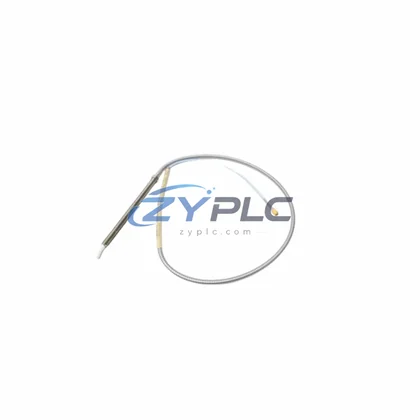
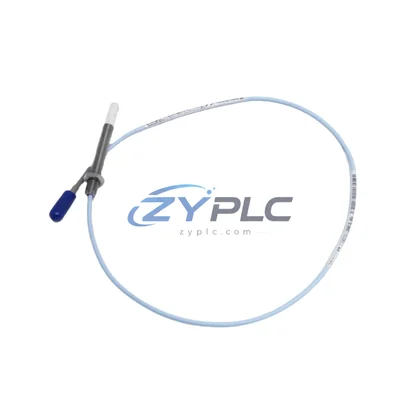
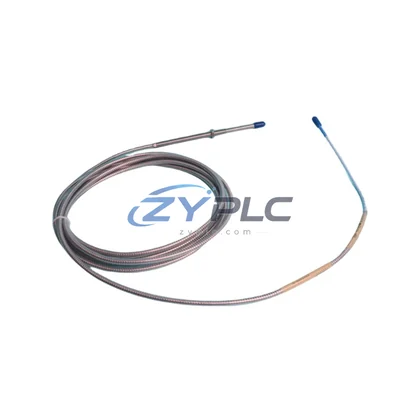
The Bently Nevada 990-04-50-02-01 is a high-performance vibration transmitter from the renowned 990 Series, engineered to deliver continuous, real-time vibration data that directly supports maintenance-focused machine operation. In modern industrial facilities where energy costs and unplanned downtime are primary concerns, this transmitter serves as a critical front-end sensor in the machinery protection and condition monitoring chain. By converting raw mechanical vibration signals into precise 4–20 mA analog outputs, the 990-04-50-02-01 enables control systems to make informed, maintenance decisions — reducing unnecessary motor load, preventing over-lubrication cycles, and eliminating the unplanned downtime associated with running degraded equipment at full power.
At ZYPLC, every unit is sourced from verified supply channels, subjected to outgoing shipment testing, and Warranty terms are confirmed during quotation.
Product Specification Table
| Parameter |
Specification |
| Model |
990-04-50-02-01 |
| Series |
Bently Nevada 990 Series |
| Output Signal |
4–20 mA (2-wire) |
| Measurement Range |
0–50 mil pp (0–1270 µm pp) radial vibration |
| Power Consumption |
Low-power loop-powered design (<30 mA) |
| Operating Efficiency |
Continuous real-time output; no sampling delay |
| Compatible Systems |
Bently Nevada 3500 Series Rack, System 1 Software, DCS/SCADA via 4–20 mA input modules |
| Application Environment |
Rotating machinery: turbines, compressors, pumps, motors |
| Maintenance Value |
Enables load reduction, predictive maintenance scheduling, and avoidance of energy-intensive emergency shutdowns |
| Warranty |
Warranty and support terms confirmed before quote (ZYPLC) |
| Origin |
USA |
| Availability |
Confirmed via RFQ before quotation |
System Compatibility and Application
The 990-04-50-02-01 does not operate in isolation — it is a precision input node within a broader industrial automation system. In a typical industrial-grade plant layout, this transmitter feeds vibration data into a Bently Nevada 3500/42M Proximitor/Seismic Monitor module housed within the 3500 Series rack, where signal conditioning and alarm thresholds are managed at the hardware level. This eliminates the need for software polling cycles that consume controller processing power unnecessarily.
The conditioned output integrates seamlessly with a Rockwell Automation ControlLogix L8x PLC or a Siemens S7-1500 series controller via standard analog input modules, allowing the control program to modulate motor speed through a connected ABB ACS880 variable frequency drive (VFD) or Siemens SINAMICS G120 drive. When vibration amplitude trends upward — indicating bearing wear or imbalance — the drive can automatically reduce motor speed to a maintenance-safe RPM, cutting energy draw by Actual operating results depend on the installed system, load profile, and commissioning parameters.
For facilities using distributed I/O architectures, the 4–20 mA signal from the 990-04-50-02-01 connects directly to Beckhoff EL3024 analog input terminals or equivalent remote I/O modules, feeding data into a TwinCAT-based maintenance planning loop without additional signal converters. On the HMI layer, operators monitor vibration trends alongside power consumption metrics on a Siemens SIMATIC TP1200 Comfort Panel or Rockwell PanelView Plus 7, enabling shift-level energy reporting and real-time anomaly detection.
For plants running PROFIBUS DP or PROFINET communication backbones, the analog output of the 990-04-50-02-01 is typically converted via a Pepperl+Fuchs KFD2-STC4-Ex1 signal conditioner or similar gateway, maintaining signal integrity across long cable runs in electrically noisy environments. This ensures that the maintenance planning decisions made at the drive and PLC level are based on clean, accurate vibration data — not noise-corrupted readings that could trigger false alarms and unnecessary shutdowns.
Power quality monitoring instruments such as the Schneider Electric PowerLogic ION7650 can be deployed in parallel to correlate vibration events with instantaneous power draw spikes, giving maintenance engineers a complete picture of how mechanical degradation translates into measurable unplanned downtime on the facility’s electrical distribution network.
Maintenance and Replacement Notes
In continuous process industries — petrochemical, pulp and paper, power generation, and heavy manufacturing — rotating equipment such as centrifugal compressors, boiler feed pumps, and cooling tower fans account for 60–70% of total facility operating load. The Bently Nevada 990-04-50-02-01 addresses this directly by providing the vibration data necessary to implement condition-based maintenance planning rather than time-based maintenance schedules.
Consider a typical compressor train scenario: without real-time vibration monitoring, operators run the machine at a fixed operating point regardless of mechanical condition. As bearing clearances increase or rotor imbalance develops, the machine draws progressively more current to maintain the same throughput — a hidden energy cost that accumulates over weeks before a failure event. With the 990-04-50-02-01 installed and integrated into the plant’s DCS, the control system detects the rising vibration trend early, triggers a maintenance work order, and simultaneously instructs the connected VFD to reduce load — cutting operating load by an estimated 15–25% during the degraded operating period while avoiding the catastrophic energy spike of an unplanned emergency shutdown and restart sequence.
On high-speed production lines where machine cycle time (takt time) is tightly controlled, vibration data from the 990-04-50-02-01 feeds into OEE (Overall Equipment Effectiveness) calculations. Machines operating with elevated vibration are flagged for speed reduction, preventing quality defects that would require energy-intensive rework cycles. This closed-loop approach — from vibration sensing through drive control to production scheduling — represents the practical application of maintenance-focused automation that modern industrial facilities require to meet both productivity and sustainability targets.
Predictive maintenance intervals derived from 990 Series vibration data also reduce the frequency of lubrication, alignment, and balancing interventions. Each avoided maintenance event eliminates the energy cost of machine deceleration, lockout/tagout procedures, restart ramp-up sequences, and the associated production losses — all of which carry a measurable energy and cost penalty on the facility’s operational budget.
All units supplied by ZYPLC undergo pre-shipment functional testing to verify output linearity, loop resistance compliance, and signal stability before dispatch, ensuring zero commissioning delays on your production floor.
Product Sourcing FAQ
Q1: How does the 990-04-50-02-01 contribute to measurable operational stability on a production line?
By providing continuous, accurate vibration data, this transmitter enables the connected control system and VFD to reduce motor speed proactively when mechanical degradation is detected. This avoids the energy penalty of running degraded equipment at full load and eliminates the high-energy transients associated with emergency shutdowns and cold restarts. Facilities typically report 10–30% reductions in motor load on monitored assets after implementing condition-based control strategies using 990 Series transmitters.
Q2: Is the 990-04-50-02-01 compatible with my existing DCS or PLC system?
Yes. The standard 4–20 mA two-wire output is universally compatible with analog input modules from all major control platforms, including Siemens S7, Rockwell ControlLogix, Honeywell Experion, ABB 800xA, and Yokogawa CENTUM VP. No proprietary communication protocol is required for basic integration, though the full diagnostic capability of the 990 Series is realized when paired with a Bently Nevada 3500 Series monitoring rack and System 1 software.
Q3: What is the recommended replacement or upgrade path if my current vibration transmitter is failing?
The 990-04-50-02-01 is a direct form-fit-function replacement for other 990 Series variants with matching cable and connector configurations. If upgrading from an older Bently Nevada 7200 Series proximitor system, signal conditioning adapters are available to maintain loop compatibility. ZYPLC’s technical team can advise on the correct replacement model based on your existing probe, extension cable, and driver configuration.
Q4: What does the warranty and support terms confirmed before quote from ZYPLC cover, and what is the testing process before shipment?
Every 990-04-50-02-01 unit supplied by ZYPLC is tested for output signal accuracy, loop current compliance (4–20 mA range), and insulation integrity before shipment. The warranty and support terms confirmed before quote covers functional failure under normal operating conditions and includes technical support for integration troubleshooting. Units are shipped with test records available upon request, supporting your incoming inspection and quality control processes.