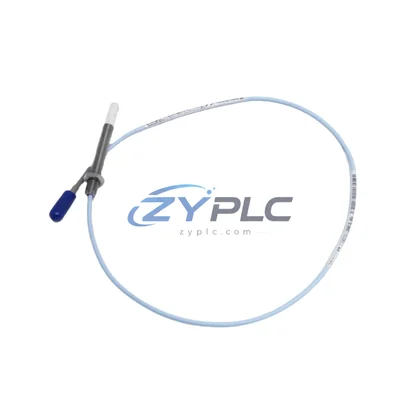
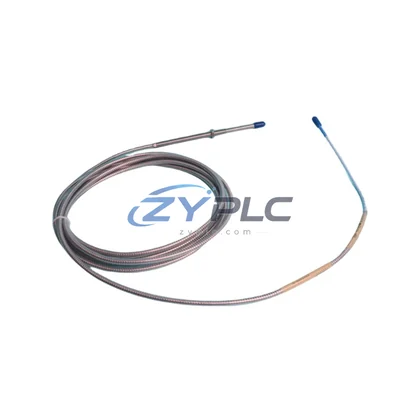
Bently Nevada 990-05-XX-03-01 MOD:168251-01: Industrial Data Link for Machinery Protection and Smart Factory Connectivity
The Bently Nevada 990-05-XX-03-01 MOD:168251-01 is a high-precision vibration transmitter engineered for the Bently Nevada 3500 Series machinery protection platform. Designed to operate at the intersection of field-level sensing and plant-wide data infrastructure, this transmitter converts raw mechanical vibration signals from rotating equipment into standardized analog and digital outputs that feed directly into DCS, SCADA, and condition monitoring networks. In smart factory environments where real-time machine health data is non-negotiable, the 990-05-XX-03-01 MOD:168251-01 serves as a critical node in the industrial data chain — from signal acquisition at the sensor to alarm management at the control room.
Compatibility & Integration Notes
| Parameter |
Specification |
| SKU |
990-05-XX-03-01 MOD:168251-01 |
| Brand |
Bently Nevada |
| Series |
3500 Series Machinery Protection System |
| Product Type |
Vibration Transmitter |
| Output Protocol |
4–20 mA Analog / Keyphasor Signal / Digital Communication |
| Interface Type |
Terminal Block / Rack-Mount Module Interface |
| Transmission Capability |
Continuous real-time vibration amplitude and phase data |
| Network Compatibility |
DCS, SCADA, PLC, Condition Monitoring Systems, Historian |
| System Application |
Rotating Machinery Protection, Predictive Maintenance, Plant Asset Management |
| Origin |
USA |
| Warranty |
Warranty and support terms confirmed before quote |
Connected Automation Data Flow
In a fully integrated machinery protection architecture, the 990-05-XX-03-01 MOD:168251-01 operates as the signal conditioning and transmission backbone for rotating equipment monitoring. Vibration data originates at proximity probes or accelerometers mounted on turbines, compressors, pumps, and motors. The transmitter conditions these raw signals and delivers calibrated 4–20 mA outputs to the Bently Nevada 3500/42M proximitor monitor or the 3500/40M proximitor I/O module housed within the 3500 Series rack system.
From the 3500 rack, conditioned data flows upstream via the Bently Nevada 3500/22M transient data interface module, which bridges the machinery protection system to plant-level networks. Integration with GE Vernova System 1 software — the industry-standard condition monitoring and asset performance management platform — enables continuous vibration trending, orbit plot analysis, and predictive maintenance scheduling. The System 1 historian aggregates data from multiple 3500 racks across the plant, feeding dashboards accessible through AspenTech Mtell or third-party SCADA platforms such as Wonderware AVEVA System Platform and Honeywell Experion PKS.
For facilities running hybrid architectures, the 990-05-XX-03-01 analog output integrates seamlessly with Rockwell Automation ControlLogix PLCs via analog input modules, enabling vibration alarm logic to be embedded directly in the PLC ladder program. Similarly, Siemens S7-400 or S7-1500 series controllers can receive the 4–20 mA signal through standard AI modules, allowing vibration thresholds to trigger automated shutdown sequences or maintenance alerts on Siemens WinCC SCADA or TIA Portal HMI panels. Remote I/O solutions such as the Phoenix Contact Axioline F or Pepperl+Fuchs Remote I/O systems can extend the signal path to distributed control nodes without signal degradation, ensuring data integrity across long cable runs in large petrochemical or power generation facilities.
Edge computing gateways — including the Moxa UC-8100 or Advantech WISE-5000 series — can be deployed to pre-process vibration data locally, applying FFT analysis and anomaly detection algorithms before forwarding structured data packets to cloud-based asset management platforms via MQTT or OPC-UA protocols. This edge-to-cloud architecture reduces network bandwidth consumption while maintaining sub-second alarm response times at the field level.
Solving Data Isolation in Industrial Sites
One of the most persistent challenges in industrial facilities is the fragmentation of machinery health data across incompatible systems. Legacy vibration monitoring equipment often operates in isolation — generating local alarms without transmitting structured data to plant-wide SCADA or ERP systems. The Bently Nevada 990-05-XX-03-01 MOD:168251-01, as part of the 3500 Series platform, directly addresses this data isolation problem through its standardized analog output and compatibility with the 3500 rack’s digital communication backplane.
By delivering a continuous 4–20 mA signal that any DCS or PLC analog input card can read, this transmitter eliminates the protocol barrier between the machinery protection layer and the process control layer. Plants that previously relied on manual vibration readings or standalone portable analyzers can now integrate real-time vibration data into their existing Honeywell DeltaV, ABB 800xA, or Emerson DeltaV distributed control systems without additional protocol converters or gateways.
For remote monitoring applications — particularly in offshore platforms, pipeline compressor stations, or unmanned substations — the 990-05-XX-03-01 supports continuous data streaming to remote operations centers via the 3500 system’s network interface. Operators can monitor vibration trends, acknowledge alarms, and initiate remote diagnostics without dispatching field technicians, significantly reducing maintenance costs and unplanned downtime. Production line transparency is further enhanced when vibration data is correlated with process variables such as flow rate, temperature, and pressure within the SCADA historian, enabling root-cause analysis and condition-based maintenance scheduling across the entire asset lifecycle.
System scalability is another key advantage. The modular architecture of the 3500 Series allows additional monitor modules — such as the 3500/64M dynamic pressure monitor or the 3500/72M temperature monitor — to be added to the same rack without disrupting existing wiring or network configurations. This plug-and-expand design ensures that as production capacity grows or new machinery is commissioned, the monitoring infrastructure scales proportionally with minimal engineering overhead.
Industrial Connectivity FAQ
Q1: What communication protocols does the 990-05-XX-03-01 MOD:168251-01 support for SCADA integration?
The transmitter provides a standard 4–20 mA analog output compatible with virtually all DCS and PLC analog input modules. When installed within the Bently Nevada 3500 rack, the system additionally supports Modbus TCP/IP and OPC-DA/UA communication via the 3500/22M transient data interface, enabling direct integration with SCADA platforms including Wonderware, Ignition, and Honeywell Experion without additional protocol converters.
Q2: How does the system ensure network stability and data continuity in high-vibration environments?
The 990-05-XX-03-01 is designed to operate in harsh industrial environments with high electromagnetic interference, temperature fluctuations, and mechanical shock. The 3500 Series rack employs redundant power supply modules and isolated signal paths to ensure continuous data transmission even during electrical disturbances. The analog 4–20 mA output is inherently noise-resistant over long cable runs, and the system supports watchdog timers and self-diagnostic routines that flag sensor faults or cable breaks to the SCADA alarm management system in real time.
Q3: Can this transmitter be integrated into an existing PLC-based control system without replacing the current infrastructure?
Yes. The 4–20 mA output of the 990-05-XX-03-01 is a universal industrial standard that connects directly to any PLC analog input module — including Rockwell ControlLogix, Siemens S7, Mitsubishi MELSEC, and Omron NJ/NX series controllers — without requiring additional signal conditioning hardware. The transmitter can coexist with existing field instruments on the same analog bus, making it straightforward to add vibration monitoring capability to legacy control systems during planned maintenance windows.
Q4: What does the Warranty and support terms confirmed before quote cover, and how is pre-shipment testing conducted?
Every 990-05-XX-03-01 MOD:168251-01 unit undergoes full functional testing prior to shipment, including output signal calibration verification, insulation resistance testing, and loop integrity checks. The Warranty and support terms confirmed before quote covers manufacturing defects, component failures under normal operating conditions, and calibration drift beyond specified tolerances. Warranty claims are supported with full technical documentation and expedited replacement logistics to minimize production downtime. Units are shipped with individual test reports upon request.