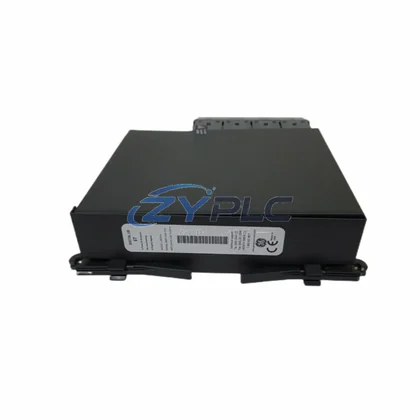
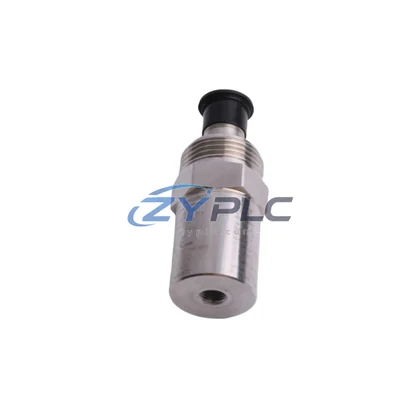
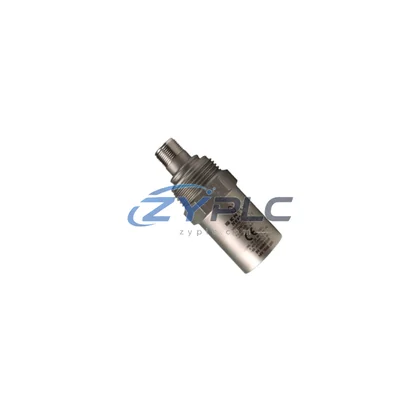
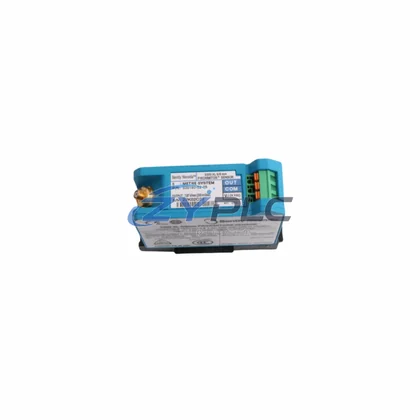
Bently Nevada 991-25-XX-01-CN Probe for 990/991 Automation
The Bently Nevada 991-25-XX-01-CN is a high-precision eddy current probe engineered for the 990/991 Series proximity monitoring system. Designed for continuous, non-contact shaft displacement measurement, this probe plays a critical role in reducing unplanned downtime, minimizing unplanned downtime, and optimizing rotating machinery performance across heavy industrial environments. Whether deployed in turbine halls, compressor trains, or high-speed motor-driven production lines, the 991-25-XX-01-CN delivers the real-time positional data that modern industrial automation systems depend on.
In today’s industrial landscape, energy efficiency is not merely a compliance target — it is a competitive advantage. Vibration-induced mechanical losses, bearing wear, and rotor imbalance silently consume excess electrical energy and accelerate equipment degradation. The 991-25-XX-01-CN addresses this challenge at the source by providing continuous, high-resolution shaft gap and eccentricity data that enables control systems to respond before unplanned downtime escalates into mechanical failure. When integrated with the Bently Nevada 3500 Series machinery protection system, this probe enables predictive maintenance strategies that reduce motor load by eliminating the inefficiencies caused by misalignment and unbalanced rotor dynamics.
From an condition monitoring perspective, the 991-25-XX-01-CN functions as the primary sensing element in a closed-loop feedback architecture. The probe’s output signal — a DC voltage proportional to the gap between probe tip and target — feeds directly into the 990-05-XX-01-CN signal conditioner, which processes and transmits the displacement data to the plant’s distributed control system (DCS) or SCADA platform. This integration allows maintenance planning software to correlate vibration anomalies with real-time power draw data, enabling operators to identify when a motor or pump is consuming more energy than its mechanical output justifies.
Product Specification Table
| Parameter |
Specification / Value |
| SKU / Part Number |
991-25-XX-01-CN |
| Series |
Bently Nevada 990/991 |
| Probe Type |
Eddy Current (Non-Contact Proximity) |
| Measurement Range |
0–2.5 mm (standard gap range) |
| Operating Frequency |
DC to 10 kHz |
| Power Consumption |
Low-draw passive sensing; powered via 990-05-XX-01-CN driver |
| Operating Temperature |
-35°C to +120°C |
| Compatible Systems |
Bently Nevada 3500, 3300, 990/991 Series |
| Application Environment |
Turbines, compressors, pumps, motors, gearboxes |
| Maintenance Value |
Enables predictive maintenance; reduces unplanned downtime energy spikes |
| Output Signal |
-24 VDC nominal (via driver/oscillator) |
| Ingress Protection |
IP67 (probe body) |
| Warranty |
| Tested before shipment |
System Compatibility and Application
The 991-25-XX-01-CN is rarely deployed in isolation. In a fully industrial Automation architecture, it operates as part of a layered sensing and control ecosystem. At the drive level, variable frequency drives (VFDs) such as the ABB ACS880 or Siemens SINAMICS G120 regulate motor speed based on process demand — but their efficiency gains are only fully realized when the mechanical condition of the driven equipment is continuously verified. The 991-25-XX-01-CN provides that verification by detecting shaft displacement anomalies that indicate bearing degradation, rotor rub, or coupling misalignment — all of which force VFDs to compensate with abnormal load draw.
At the control layer, the probe’s signal is processed by the Bently Nevada 990-05-XX-01-CN proximitor/oscillator, which conditions the raw eddy current signal into a clean analog output compatible with the 3500/40M proximitor monitor module. This monitor module interfaces with the plant’s PLC — commonly a Rockwell Automation ControlLogix L8x or Siemens S7-1500 — via hardwired relay outputs or PROFIBUS/Modbus TCP communication, enabling automated shutdown or load-shedding responses when vibration thresholds are exceeded.
For energy data aggregation, the 3500 Series rack integrates with power quality analyzers and energy metering modules such as the Schneider Electric PowerLogic ION9000 or the Siemens SENTRON PAC4200, allowing plant engineers to correlate mechanical vibration events with instantaneous power consumption spikes. This correlation is the foundation of maintenance-focused predictive maintenance: instead of scheduling maintenance on fixed intervals — which wastes both labor and energy — the system triggers maintenance actions only when the vibration signature indicates actual mechanical degradation.
At the I/O and communication layer, the 991-25-XX-01-CN’s data path typically passes through remote I/O modules such as the Bently Nevada 3500/92 communication gateway or a dedicated EtherNet/IP adapter, enabling seamless integration with plant-wide MES (Manufacturing Execution Systems) and maintenance planning platforms. HMI terminals — such as the Rockwell PanelView Plus 7 or Siemens SIMATIC TP1200 Comfort — display real-time vibration trends alongside operating load dashboards, giving operators a unified view of mechanical health and power efficiency.
Power supply integrity is equally critical. The 991-25-XX-01-CN system requires a stable -24 VDC supply, typically sourced from a Bently Nevada 3500/15 power supply module or an equivalent DIN-rail mounted industrial SMPS. Voltage fluctuations at the supply level directly affect probe sensitivity and gap measurement accuracy, which is why many installations include a dedicated UPS or power conditioner to isolate the monitoring system from line noise generated by VFD switching transients.
Maintenance and Replacement Notes
In rotating machinery applications — including centrifugal compressors, steam turbines, boiler feed pumps, and high-speed spindle motors — the 991-25-XX-01-CN directly contributes to production line maintenance planning through several mechanisms.
First, by detecting shaft eccentricity and orbital motion in real time, the probe enables operators to identify and correct rotor imbalance before it progresses to a level that forces the drive system to compensate with excess torque and current. A rotor running with even 50 microns of excess vibration amplitude can increase motor load by 3–8% due to the additional bearing friction and structural resonance losses involved. Early detection and correction of this condition — enabled by the 991-25-XX-01-CN — directly reduces the energy cost per unit of mechanical output.
Second, the probe supports optimized production line pacing (takt time optimization) by ensuring that machinery operates within its designed mechanical envelope. When vibration levels are within specification, production speeds can be maintained at their designed maximum without risk of mechanical failure. Conversely, when the probe detects developing faults, the control system can reduce line speed proactively — avoiding the catastrophic energy and production losses associated with unexpected shutdowns.
Third, the 991-25-XX-01-CN reduces maintenance-related unplanned downtime. Unplanned maintenance events — particularly those involving bearing replacement or shaft realignment — require full production line shutdowns, restart sequences, and warm-up periods that consume significant energy without producing output. By enabling condition-based maintenance scheduling, the probe minimizes the frequency and duration of these energy-intensive restart cycles.
All units supplied by ZYPLC are tested prior to shipment and covered by a Stock is maintained for RFQ-confirmed dispatch, supporting both planned maintenance schedules and emergency replacement requirements. Our inventory includes both new and reconditioned 991-25-XX-01-CN units, with full traceability documentation available on request.
Product Sourcing FAQ
Q1: How does the 991-25-XX-01-CN contribute to measurable operational stability in a production environment?
The probe enables condition-based maintenance by detecting mechanical anomalies — such as shaft misalignment, bearing wear, and rotor imbalance — before they escalate. These conditions, if undetected, force drive systems to consume excess energy compensating for mechanical inefficiency. Early detection and correction typically reduces motor load by 3–10% in affected equipment.
Q2: Is the 991-25-XX-01-CN compatible with third-party monitoring systems beyond the Bently Nevada 3500 platform?
Yes. While optimized for the Bently Nevada 990/991 and 3500 Series ecosystem, the probe’s analog output (via the 990-05-XX-01-CN driver) is compatible with any monitoring system that accepts a standard -24 VDC proximity signal. Integration with Emerson, Honeywell, and Rockwell-based DCS platforms is well-documented in industrial practice.
Q3: What is the recommended replacement interval, and how does ZYPLC support the replacement process?
Replacement is condition-based rather than interval-based. ZYPLC maintains RFQ-based sourcing support of the 991-25-XX-01-CN for RFQ-confirmed dispatch. All units are tested before shipment and include a For planned turnarounds, we recommend ordering replacement units 2–4 weeks in advance to ensure availability.
Q4: What testing and quality assurance processes does ZYPLC apply to the 991-25-XX-01-CN before shipment?
Each unit undergoes functional output verification, gap sensitivity calibration check, and insulation resistance testing prior to dispatch. Units are packaged to OEM standards to prevent transit damage. A covers all units against manufacturing defects and performance deviations from published specifications.