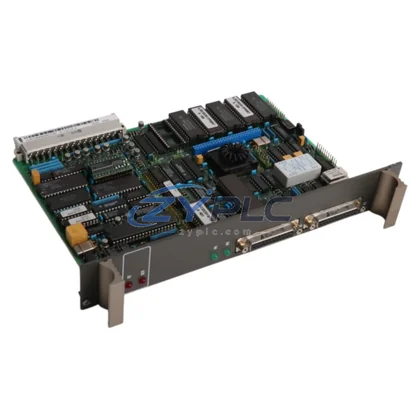
Edwards A52844458 Fire Alarm Module EST IQ: Precision Safety Control for Optimized Automation
The Edwards A52844458 (also referenced as ML25995 / 0190-02362) is a high-performance fire alarm interface module engineered for the EST IQ Series intelligent fire alarm control platform. Designed for demanding industrial and commercial environments, this module bridges safety signaling with maintenance-focused building automation — enabling facilities to reduce unnecessary alarm activations, minimize standby power draw, and maintain continuous system integrity without sacrificing response speed or regulatory compliance.
In modern industrial facilities where operating load is under constant scrutiny, every subsystem — including life safety — must contribute to overall operational efficiency. The A52844458 achieves this by delivering precise, low-latency signal interfacing that eliminates redundant relay cycling, reduces false-trigger unplanned downtime, and integrates cleanly into broader building maintenance planning architectures. Whether deployed in a manufacturing plant, logistics hub, or process facility, this module supports leaner, smarter safety infrastructure.
Product Specification Table
| Parameter |
Specification |
| SKU / Part Number |
A52844458 | ML25995 | 0190-02362 |
| Brand / Series |
Edwards / EST IQ Series |
| Product Category |
Fire Alarm Interface Module |
| Standby Power Consumption |
Low-draw design, optimized for 24VDC supervised loop |
| Operating Efficiency |
High-reliability signal relay with minimal quiescent current |
| Compatible Systems |
Edwards EST IQ Series FACP, EST3, EST4 control panels |
| Application Environment |
Industrial facilities, commercial buildings, process plants |
| Maintenance Value |
Reduces false-trigger relay cycling; minimizes standby draw |
| Origin |
United States |
| Condition |
Tested, inspected, shipment arranged after confirmation |
| Warranty |
|
System Compatibility and Application
The A52844458 is most effective when integrated as part of a layered, energy-conscious automation architecture. Within the Edwards EST IQ Series ecosystem, this interface module works in concert with the EST IQ Panel (the central fire alarm control unit) to manage signal routing with minimal overhead. The IQ Panel’s intelligent polling architecture ensures that each connected module — including the A52844458 — only draws power during active communication cycles, dramatically reducing idle operating load across large loop installations.
For facilities running parallel process automation, the A52844458 can be coordinated alongside Edwards EST SIGA-CT1 and SIGA-CT2 intelligent modules, which handle analog sensing and addressable loop communication. These devices share the same supervised SLC (Signaling Line Circuit), meaning the entire detection and interface layer operates on a single, maintenance-focused communication bus rather than requiring separate power feeds for each device.
In plants where variable-speed drives and motor control centers are in use, integrating the fire alarm interface layer with the facility’s power monitoring system — such as an Eaton Power Xpert meter or Schneider Electric PowerLogic ION meter — allows energy managers to correlate alarm events with power consumption spikes. This data-driven approach helps identify whether specific alarm activations are linked to motor startup surges, enabling more targeted maintenance planning strategies.
The module also supports clean integration with building automation controllers such as the Siemens APOGEE PXC series or Johnson Controls Metasys NAE, which can use dry-contact outputs from the A52844458 to trigger HVAC damper closures, elevator recall sequences, or lighting zone shutdowns — all of which contribute directly to reducing unplanned downtime during alarm events. Rather than relying on manual intervention, these automated responses ensure that energy-consuming systems are safely de-energized the moment a fire condition is detected.
For facilities using Modbus RTU or BACnet MS/TP communication protocols on their plant floor, the EST IQ platform’s gateway capabilities allow alarm status data from the A52844458 to be published to the facility’s SCADA or maintenance planning system in real time. This enables operators to monitor safety system status alongside production KPIs — including OEE (Overall Equipment Effectiveness) and energy intensity per unit — without requiring separate monitoring infrastructure.
Maintenance and Replacement Notes
In real-world production environments, downtime caused by nuisance alarms or interface module failures can cost thousands of dollars per hour in lost output and wasted energy. The Edwards A52844458 addresses this directly through its robust signal conditioning design, which filters out transient electrical noise common in industrial settings — particularly in facilities running large induction motors, welding equipment, or variable-frequency drives (VFDs).
When a false alarm triggers an unnecessary evacuation, the energy cost extends beyond the alarm itself: HVAC systems restart from cold states, production lines require re-initialization sequences, and compressed air systems must re-pressurize. By delivering clean, reliable signal interfacing, the A52844458 reduces the frequency of these costly false-trigger events, directly improving both energy efficiency and production line throughput.
From a predictive maintenance perspective, the EST IQ platform’s diagnostic capabilities — accessible through the A52844458’s supervised loop connection — allow facility engineers to monitor module health in real time. Degraded signal quality, ground faults, or open-circuit conditions are flagged before they cause system failures, enabling maintenance teams to schedule interventions during planned downtime windows rather than responding reactively to unexpected outages. This shift from reactive to predictive maintenance is one of the most impactful levers for reducing both downtime and operational cost in industrial facilities.
All units supplied by ZYPLC are fully tested prior to shipment, verified for signal integrity across the full operating voltage range, and backed by a. Stock is maintained for RFQ-confirmed dispatch, minimizing lead times and ensuring that replacement or expansion projects stay on schedule without extended production disruptions.
Product Sourcing FAQ
Q1: How does the A52844458 contribute to facility operational stability?
By providing reliable, noise-immune signal interfacing within the EST IQ loop, the A52844458 reduces false alarm activations that trigger unnecessary HVAC shutdowns, lighting changes, and equipment restarts — all of which consume significant energy. Fewer nuisance trips means more stable, maintenance-focused facility operations.
Q2: Is the A52844458 compatible with EST3 and EST4 control panels in addition to the IQ Series?
The A52844458 is primarily designed for the Edwards EST IQ Series platform. Compatibility with EST3 or EST4 panels should be verified against the specific panel firmware version and loop card configuration. ZYPLC’s technical team can assist with compatibility assessment prior to purchase.
Q3: What is the recommended replacement or upgrade path for aging interface modules?
For facilities running older Edwards interface modules on legacy IQ panels, the A52844458 is a direct form-fit-function replacement in most configurations. Where panel upgrades are also planned, ZYPLC recommends evaluating the full EST IQ module ecosystem to ensure the replacement strategy aligns with long-term maintenance planning and system expansion goals.
Q4: What does the cover, and what is the testing process?
Every A52844458 unit shipped by ZYPLC undergoes functional testing to verify signal relay operation, loop communication integrity, and power draw within specification. The covers defects in materials and workmanship under normal operating conditions. Units that fail within the warranty period are replaced or refunded — contact plc.sales@zyplc.com for warranty claims.