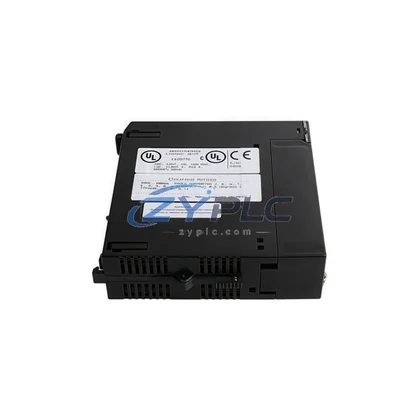
GE 239-RTD-AN Motor Protection Relay for Multilin 239 Systems: availability, compatibility, and sourcing support
The GE 239-RTD-AN is a high-performance motor protection relay from GE’s renowned Multilin 239 series, engineered to deliver comprehensive thermal and electrical protection for medium-voltage motors in demanding industrial environments. With integrated RTD (Resistance Temperature Detector) monitoring and a dedicated analog output channel, the 239-RTD-AN serves as a critical node in the industrial data chain — bridging field-level motor assets with supervisory control systems, SCADA platforms, and plant-wide communication networks.
In modern smart factory architectures, motor protection is no longer a standalone function. The GE 239-RTD-AN is designed to participate actively in the industrial data flow: from real-time thermal signal acquisition at the motor windings and bearings, through protocol-level communication to the control layer, and ultimately to centralized monitoring dashboards and remote diagnostic platforms. This relay does not simply protect — it communicates, reports, and integrates.
Compatibility & Integration Notes
| Parameter |
Specification |
| SKU |
239-RTD-AN |
| Brand / Series |
GE Multilin 239 |
| Product Type |
Motor Protection Relay |
| Communication Protocol |
Modbus RTU / RS-485; Analog Output (4–20 mA) |
| Interface Type |
RS-485 Serial, Analog Output Terminal |
| RTD Inputs |
Up to 12 RTD channels (motor windings, bearings, ambient) |
| Analog Output |
4–20 mA configurable (temperature, current, or load) |
| Network Compatibility |
Modbus RTU over RS-485; compatible with Modbus TCP gateways |
| System Application |
SCADA, DCS, PLC-based motor control centers, HMI integration |
| Protection Functions |
Thermal overload, RTD bias, stall, jam, unbalance, undercurrent, ground fault |
| Power Supply |
100–240 VAC / 125–250 VDC |
| Origin |
United States |
| Warranty |
Warranty and support terms confirmed before quote |
Connected Automation Data Flow
The GE 239-RTD-AN occupies a pivotal position in the industrial automation hierarchy. At the field level, it continuously acquires thermal data from up to 12 RTD sensors embedded in motor windings and bearings — providing granular temperature visibility that no simple overload relay can match. This data is processed internally and made available via the relay’s Modbus RTU / RS-485 communication port, enabling seamless upstream integration.
In a typical motor control center (MCC) deployment, the 239-RTD-AN communicates directly with a GE PACSystems RX3i PLC or a GE Multilin SR750 feeder protection relay over a shared RS-485 bus. The PLC aggregates protection status, thermal readings, and fault logs from multiple 239-RTD-AN units across the MCC lineup, forwarding consolidated data to the plant SCADA system via Ethernet. For sites using legacy serial infrastructure, a Moxa NPort 5150A serial-to-Ethernet device server or a Westermo EDW-100 RS-485 to Modbus TCP gateway can transparently bridge the 239-RTD-AN’s serial output to the plant LAN, enabling full SCADA visibility without rewiring.
The relay’s 4–20 mA analog output provides a direct, noise-immune signal path to Yokogawa CENTUM VP DCS analog input cards or to standalone Endress+Hauser RMA42 panel meters for local display. This analog channel can be configured to represent motor winding temperature, load current percentage, or thermal capacity used — giving operators at the HMI level an immediate, continuous readout of motor health without polling the Modbus network.
For HMI integration, the 239-RTD-AN’s Modbus register map is fully compatible with Weintek cMT Series HMI panels and Siemens SIMATIC HMI TP900 terminals. Operators can view real-time RTD temperatures, protection pickup status, and event logs directly on the HMI touchscreen. When connected to a Kepware KEPServerEX OPC-UA server, the relay’s data becomes available to any SCADA platform — including Ignition by Inductive Automation or Wonderware System Platform — enabling plant-wide motor health dashboards, trend logging, and alarm management.
In variable-speed drive applications, the 239-RTD-AN works alongside ABB ACS880 variable frequency drives to provide independent thermal protection that the drive’s internal model cannot replicate. The relay monitors actual winding temperatures via RTD, while the drive manages speed and torque — together forming a complete motor management solution. The analog output from the 239-RTD-AN can feed directly into the drive’s analog input for coordinated thermal derating strategies.
For remote diagnostic scenarios, the 239-RTD-AN’s event log and fault records — accessible via Modbus — can be polled by an Advantech WISE-4012 edge I/O module or a Moxa UC-8112 industrial computer acting as an edge gateway. These edge devices pre-process the relay data and push structured JSON payloads to cloud-based asset management platforms, enabling predictive maintenance workflows and remote fault analysis without on-site intervention.
Solving Data Isolation in Industrial Sites
Many industrial facilities still operate with fragmented protection systems where motor relays function as isolated islands — tripping breakers but contributing nothing to the plant’s data ecosystem. The GE 239-RTD-AN directly addresses this challenge. Its Modbus RTU interface eliminates the protocol barrier between legacy motor protection hardware and modern Ethernet-based control networks. By deploying a Modbus TCP gateway alongside the 239-RTD-AN, plant engineers can integrate decades-old motor protection infrastructure into contemporary SCADA and MES platforms without replacing field hardware.
The relay’s comprehensive protection suite — covering thermal overload with RTD bias, stall detection, jam protection, phase unbalance, undercurrent, and ground fault — means that a single device replaces multiple discrete protection components, reducing panel complexity and simplifying the communication architecture. Fewer devices on the RS-485 bus means lower polling latency and more deterministic data delivery to the SCADA system.
For production line transparency, the 239-RTD-AN’s continuous RTD monitoring enables condition-based maintenance strategies. Instead of scheduling motor inspections on fixed intervals, maintenance teams can set SCADA alarms on specific RTD temperature thresholds — receiving early warning of insulation degradation, bearing wear, or cooling system failures before they cause unplanned downtime. This shift from reactive to predictive maintenance is a cornerstone of smart factory operations, and the 239-RTD-AN provides the foundational data layer that makes it possible.
System expansion is equally straightforward. The RS-485 bus supports up to 32 devices per segment, and with RS-485 repeaters, networks of hundreds of 239-RTD-AN relays can be managed from a single Modbus master. As production lines grow or new motor assets are commissioned, additional relays are simply added to the bus and mapped in the SCADA configuration — no new wiring infrastructure required.
All units supplied by ZYPLC are sourced through verified industrial supply channels, subjected to pre-shipment functional testing, and covered by a warranty and support terms confirmed before quote. Stock is maintained for prompt dispatch via DHL Express or FedEx International Priority, with typical lead times of 3–7 business days to major industrial hubs worldwide.
Industrial Connectivity FAQ
Q1: What communication protocols does the GE 239-RTD-AN support, and how does it integrate with modern SCADA systems?
The 239-RTD-AN communicates via Modbus RTU over RS-485, which is the dominant serial protocol in industrial motor protection applications. Integration with Ethernet-based SCADA systems is achieved through a Modbus RTU-to-TCP gateway (such as the Moxa MGate MB3170 or equivalent), which transparently converts the relay’s serial Modbus frames to Modbus TCP packets readable by any modern SCADA platform. OPC-UA connectivity is available via Kepware or similar OPC servers that support Modbus drivers.
Q2: How does the analog output (4–20 mA) reduce communication latency in time-critical monitoring applications?
The 4–20 mA analog output provides a continuous, real-time signal that requires no polling cycle — unlike Modbus, which depends on the master’s scan rate. For applications where immediate response to thermal excursions is critical (such as high-inertia compressor motors or submersible pump applications), the analog output can drive a hardwired alarm input on a DCS or safety PLC, ensuring sub-100ms response times independent of network load or Modbus bus traffic.
Q3: Can the GE 239-RTD-AN operate reliably on a shared RS-485 bus with other Modbus devices, and what is the maximum network size?
Yes. The 239-RTD-AN is fully compliant with the RS-485 electrical standard, supporting bus lengths up to 1,200 meters at 9,600 baud and up to 32 unit loads per segment without repeaters. In practice, ZYPLC recommends limiting each RS-485 segment to 20–25 devices for optimal polling performance. For larger networks, RS-485 repeaters or Modbus TCP gateways with multiple serial ports (such as the Moxa NPort 5650-16) allow hundreds of relays to be managed from a single SCADA Modbus master.
Q4: What does the warranty and support terms confirmed before quote cover, and what is the pre-shipment testing process?
ZYPLC’s warranty and support terms confirmed before quote covers manufacturing defects, component failures, and communication port malfunctions under normal operating conditions. Prior to shipment, each GE 239-RTD-AN unit undergoes functional verification including power-up self-test confirmation, RTD input channel continuity check, analog output calibration verification, and Modbus communication response testing. Units that do not pass all test criteria are quarantined and not shipped. Warranty claims are processed within 5 business days of receipt of the returned unit.
—