GE DS200SDCCG4RGD Industrial Network Interface for Mark V Systems: Powering the Smart Factory Data Link
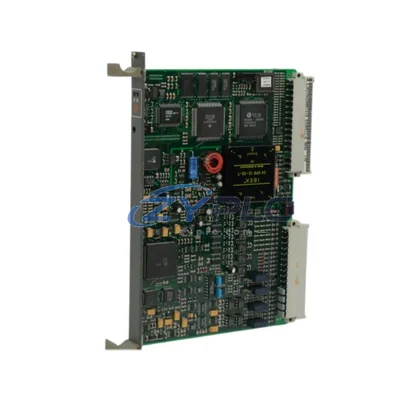
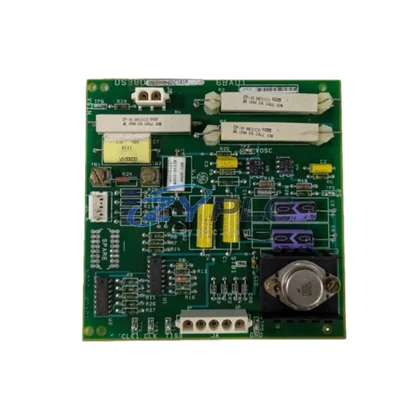
The GE DS200SDCCG4RGD is a high-performance Speedtronic Mark V turbine control board engineered to serve as a critical industrial network interface within complex power generation and process automation environments. Designed for seamless integration across field devices, PLC controllers, remote I/O modules, HMI panels, SCADA platforms, variable frequency drives, sensors, and supervisory systems, the DS200SDCCG4RGD delivers the real-time data throughput and protocol compatibility that modern smart factories demand. From signal acquisition at the turbine skid level to upstream data aggregation in distributed control architectures, this board anchors the communication backbone of mission-critical industrial sites.
Compatibility & Integration Notes
| Specification |
Details |
| SKU / Part Number |
DS200SDCCG4RGD |
| Brand / Series |
GE Speedtronic Mark V |
| Product Type |
Turbine Control Board / Industrial Network Interface |
| Protocol Support |
Modbus RTU/TCP, PROFIBUS DP, Ethernet/IP, Serial RS-232/RS-485, proprietary GE ARCNET |
| Interface Types |
Multi-channel serial, digital I/O, analog signal conditioning, network gateway ports |
| Transmission Capability |
Real-time turbine state data, alarm relay, trip signal, speed/load feedback |
| Network Compatibility |
GE Mark V / Mark VI control panels, DCS, SCADA, HMI, remote I/O racks |
| System Applications |
Gas turbine control, steam turbine control, combined cycle plants, power generation |
| Origin |
USA |
| Warranty |
Warranty and support terms confirmed before quote — Tested & Verified Before Shipment |
Connected Automation Data Flow
In a typical smart factory or power plant deployment, the DS200SDCCG4RGD sits at the heart of the turbine control panel, orchestrating data exchange across every layer of the automation hierarchy. At the field level, thermocouples, vibration sensors, pressure transmitters, and speed pickups feed raw process signals into the board’s analog and digital input channels. These signals are conditioned, digitized, and processed locally before being transmitted upstream through the GE Mark V’s proprietary ARCNET communication bus — a deterministic, high-speed network protocol purpose-built for turbine protection and control.
Within the Mark V panel, the DS200SDCCG4RGD works in concert with companion boards such as the DS200TCQCG1A (Turbine Control Quad Core Board), the DS200SDCIG1AFB (Signal Distribution and Control Interface), and the DS200TCDAG1A (Turbine Control Diagnostic Board) to form a redundant, fault-tolerant control architecture. Processed control outputs are then routed to servo valve drivers, fuel control actuators, and inlet guide vane positioners — ensuring precise turbine speed and load regulation under all operating conditions.
For plant-level integration, the DS200SDCCG4RGD interfaces with Modbus TCP/RTU gateways and PROFIBUS DP communication modules, enabling seamless data exchange with third-party DCS platforms such as Honeywell Experion, ABB System 800xA, and Emerson DeltaV. SCADA systems — including GE iFIX, Wonderware InTouch, and Ignition by Inductive Automation — connect via OPC-DA/UA bridges to pull real-time turbine parameters: exhaust temperature spreads, compressor discharge pressure, rotor speed, megawatt output, and trip history logs. HMI panels mounted at the local control station display this live data, while remote operators monitor the same streams from the control room or via secure WAN connections.
Variable frequency drives (VFDs) controlling auxiliary equipment — cooling fans, lube oil pumps, fuel gas compressors — receive start/stop commands and speed references from the Mark V system through hardwired relay outputs and serial communication links managed by the DS200SDCCG4RGD. Remote I/O racks, such as GE Series 90 RX3i or equivalent Ethernet-based I/O modules, extend the control reach to field junction boxes hundreds of meters from the main panel, with all data flowing back through the board’s communication stack. Edge gateways installed at the turbine skid aggregate this multi-protocol data stream and forward it to cloud-based asset performance management (APM) platforms, closing the loop between physical machine behavior and digital analytics.
Solving Data Isolation in Industrial Sites
One of the most persistent challenges in aging power plants and process facilities is protocol fragmentation — legacy turbine control systems speaking proprietary languages that cannot natively communicate with modern DCS, SCADA, or cloud platforms. The GE DS200SDCCG4RGD directly addresses this by acting as a multi-protocol gateway node within the Mark V architecture, bridging the gap between GE’s ARCNET-based turbine bus and standard industrial Ethernet or serial fieldbus networks.
Data silos are eliminated when the DS200SDCCG4RGD enables continuous, bidirectional data flow between the turbine control panel and plant-wide information systems. Operators gain full visibility into turbine health metrics — bearing temperatures, vibration amplitudes, fuel flow rates, and combustion dynamics — without manual data extraction or proprietary engineering workstations. This transparency is the foundation of predictive maintenance programs and production line optimization initiatives.
Remote monitoring and diagnostics become practical and reliable when the DS200SDCCG4RGD’s communication stack is properly integrated. Maintenance engineers can interrogate turbine fault logs, review historical alarm sequences, and perform remote parameter adjustments from any networked workstation — reducing downtime and eliminating costly on-site service calls for routine diagnostics. Alarm relay outputs and trip signal transmission are handled with deterministic latency, ensuring that protective actions are executed within the turbine’s safety response time requirements.
System scalability is another key advantage. As plants expand — adding new turbine units, upgrading to Mark VI or Mark VIe control platforms, or integrating renewable energy assets — the DS200SDCCG4RGD’s standardized communication interfaces allow the existing control architecture to grow without wholesale replacement. Protocol converters and communication bridges can be added incrementally, preserving the investment in proven GE Speedtronic hardware while extending its connectivity to next-generation automation ecosystems.
Every DS200SDCCG4RGD unit supplied by ZYPLC undergoes comprehensive pre-shipment functional testing, including communication port verification, I/O channel calibration, and network protocol handshake validation. Stock is maintained for RFQ-confirmed dispatch, and Warranty terms are confirmed during quotation.
Industrial Connectivity FAQ
Q1: What communication protocols does the GE DS200SDCCG4RGD support for SCADA integration?
The DS200SDCCG4RGD supports GE’s proprietary ARCNET turbine bus natively, and interfaces with Modbus RTU/TCP, PROFIBUS DP, and serial RS-232/RS-485 networks through the Mark V panel’s gateway architecture. This enables direct integration with major SCADA platforms including GE iFIX, Wonderware, and Ignition via OPC-DA/UA bridges, providing real-time turbine data to plant-wide monitoring systems without additional protocol converters in most configurations.
Q2: How does the DS200SDCCG4RGD ensure network stability and low communication latency in turbine protection applications?
The board operates on GE’s deterministic ARCNET communication bus, which guarantees bounded message delivery times critical for turbine trip and protection functions. Unlike Ethernet-based networks subject to collision and congestion, ARCNET’s token-passing protocol ensures that time-critical alarm and trip signals are transmitted within defined latency windows — typically under 5 milliseconds for protection-class messages — maintaining turbine safety integrity even under high network load conditions.
Q3: Is the GE DS200SDCCG4RGD compatible with Mark VI and Mark VIe upgrades, and can it coexist with newer control platforms?
The DS200SDCCG4RGD is a Mark V-series board and is not directly plug-compatible with Mark VI or Mark VIe hardware. However, in mixed-fleet environments where Mark V panels operate alongside newer GE control systems, communication gateways and protocol bridges can be deployed to enable data sharing between platforms. ZYPLC’s technical team can advise on integration strategies for hybrid control architectures, including OPC server configurations and serial-to-Ethernet conversion solutions.
Q4: What does the warranty and support terms confirmed before quote cover, and how is pre-shipment testing conducted?
Every DS200SDCCG4RGD unit is tested prior to shipment for communication port functionality, I/O channel integrity, power supply compatibility, and network protocol response. The warranty and support terms confirmed before quote covers hardware defects and functional failures under normal operating conditions, with replacement or repair support provided throughout the warranty period. ZYPLC maintains RFQ-based sourcing support of DS200SDCCG4RGD boards for rapid global dispatch via DHL or FedEx, with full export documentation included for international shipments.