GE DS200SDCIG2ABA: Industrial Data Link for Mark VI Smart Factory Connectivity
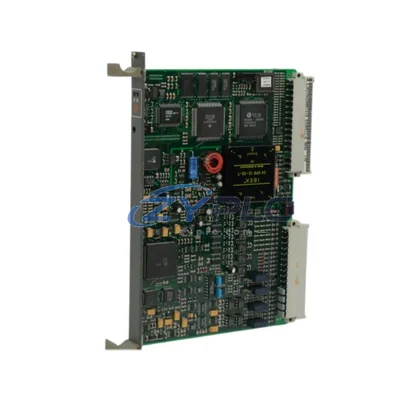
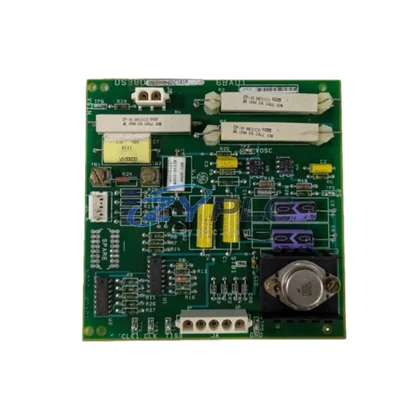
The GE DS200SDCIG2ABA is a high-performance signal conditioning board engineered for the GE Mark VI turbine control platform. Designed to bridge field-level instrumentation with upper-layer control and monitoring systems, this module plays a critical role in the industrial data chain — from raw signal acquisition at the sensor level all the way through protocol conversion, real-time network transmission, SCADA integration, and remote diagnostics. In smart factory and power generation environments where data integrity and communication continuity are non-negotiable, the DS200SDCIG2ABA delivers the reliability and interoperability that modern industrial networks demand.
Compatibility & Integration Notes
| Parameter |
Specification |
| SKU / Part Number |
DS200SDCIG2ABA |
| Brand / Manufacturer |
General Electric (GE) |
| Series / Platform |
Mark VI Turbine Control System |
| Module Type |
Signal Conditioning Board |
| Communication Protocol |
IONet (GE Proprietary), Modbus RTU/TCP |
| Interface Type |
Analog Input / Digital I/O Signal Conditioning |
| Network Compatibility |
Mark VI VCMI, VSVO, VTUR, VGEN controller racks |
| SCADA / HMI Integration |
Compatible via IONet gateway and OPC-DA/UA bridges |
| System Application |
Gas Turbine, Steam Turbine, Combined Cycle Power Plants |
| Origin |
USA |
| Warranty |
Warranty and support terms confirmed before quote |
| Availability |
Confirmed via RFQ before quotation |
Connected Automation Data Flow
In a typical Mark VI-based turbine control architecture, the DS200SDCIG2ABA sits at the heart of the signal acquisition layer. Thermocouples, RTDs, pressure transmitters, and vibration sensors feed raw analog signals into the conditioning board, where they are filtered, scaled, and converted into digital values suitable for transmission across the IONet communication backbone. These conditioned signals are then passed upstream to the GE Mark VI VCMI (VME Communication and Memory Interface) controller, which coordinates real-time control logic across the turbine system.
Within the same rack, companion modules such as the DS200TCQAG1BHF (Analog I/O Terminal Board) and DS200IOCAG1B (I/O Controller Board) work in tandem with the DS200SDCIG2ABA to ensure complete signal coverage across all turbine subsystems. The conditioned data flows through the IONet ring network — a deterministic, high-speed Ethernet-based protocol proprietary to GE — connecting the Mark VI controller rack to the HMI workstations running GE Cimplicity or ToolboxST configuration software.
For facilities integrating the Mark VI into a broader plant-wide SCADA system, the IONet data is typically bridged via an OPC-DA or OPC-UA gateway — such as the GE OPCDA Server or third-party gateways like the Moxa MGate MB3480 — enabling Modbus TCP communication with DCS platforms, historian servers, and MES layers. Remote I/O expansion is supported through DS200SLCCG1A serial link communication boards, extending the data reach to distributed field panels without sacrificing network latency performance.
Variable frequency drives (VFDs) controlling auxiliary pumps and fans within the turbine balance-of-plant system communicate their operational status back through Modbus RTU links, which are aggregated and forwarded by the Mark VI network layer. Edge computing nodes — such as the GE Predix Edge gateway — can subscribe to real-time IONet data streams for local analytics, anomaly detection, and predictive maintenance workflows, all without interrupting the primary control loop. This end-to-end data flow, anchored by the DS200SDCIG2ABA’s precise signal conditioning, ensures that every layer of the smart factory stack — from field sensor to cloud historian — operates on clean, reliable, and time-stamped process data.
Solving Data Isolation in Industrial Sites
One of the most persistent challenges in legacy power generation and industrial automation facilities is data isolation — the inability to move process data seamlessly between field devices, controllers, and upper-layer systems due to protocol fragmentation and aging hardware. The GE DS200SDCIG2ABA directly addresses this challenge within the Mark VI ecosystem.
When turbine control systems operate in isolation from plant SCADA or MES platforms, operators lose visibility into real-time performance metrics, alarm states, and predictive maintenance indicators. The DS200SDCIG2ABA, by providing accurate and stable signal conditioning at the I/O layer, ensures that the data entering the IONet network is trustworthy — eliminating the garbage-in, garbage-out problem that plagues poorly conditioned analog inputs. This foundational data quality is what makes downstream protocol conversion to Modbus TCP, OPC-UA, or DNP3 reliable and auditable.
For sites undergoing digital transformation, replacing a faulty or end-of-life DS200SDCIG2ABA with a tested, warranty-backed unit from stock restores full network transparency across the turbine control loop. Operators regain the ability to monitor exhaust temperatures, shaft vibration, fuel flow, and generator output in real time through their SCADA dashboards — without the data gaps and alarm floods that accompany degraded signal conditioning hardware. System integrators can also leverage the restored I/O integrity to implement remote diagnostics sessions via ToolboxST, reducing the need for on-site intervention and cutting mean time to repair (MTTR) significantly.
As plant operators look to expand their monitoring footprint — adding new measurement points, integrating additional turbine units, or connecting to cloud-based analytics platforms — the Mark VI’s modular architecture, anchored by reliable signal conditioning boards like the DS200SDCIG2ABA, provides a scalable foundation. Each additional I/O board added to the rack extends the network’s data reach without requiring changes to the core communication infrastructure, making system expansion both cost-effective and low-risk.
Industrial Connectivity FAQ
Q1: What communication protocols does the GE DS200SDCIG2ABA support?
The DS200SDCIG2ABA operates within the GE Mark VI platform, which uses IONet as its primary controller-level communication protocol. For integration with external SCADA, DCS, or MES systems, the Mark VI supports Modbus RTU/TCP and OPC-DA/OPC-UA via gateway modules. This makes the DS200SDCIG2ABA compatible with a wide range of industrial network architectures without requiring proprietary middleware.
Q2: How does the DS200SDCIG2ABA affect network latency and control loop stability?
Signal conditioning quality directly impacts the accuracy and timing of data entering the IONet network. A properly functioning DS200SDCIG2ABA ensures that analog signals are filtered and scaled within specification, preventing noise-induced jitter from propagating into the control loop. GE’s IONet protocol is designed for deterministic, low-latency communication, and clean signal inputs from the conditioning board are essential to maintaining that performance guarantee across the entire Mark VI rack.
Q3: Is the DS200SDCIG2ABA tested before shipment, and what warranty is provided?
Yes. Every DS200SDCIG2ABA unit supplied by ZYPLC undergoes functional testing prior to shipment to verify signal conditioning performance and communication integrity. Warranty terms are confirmed during quotation. Availability and shipment timing are confirmed by RFQ, supporting urgent maintenance and unplanned outage scenarios.
Q4: Can the DS200SDCIG2ABA be used in system expansion projects?
Absolutely. The Mark VI’s modular rack architecture allows additional DS200SDCIG2ABA boards to be integrated into existing controller racks to expand analog I/O capacity. This is particularly relevant for plant expansion projects where new measurement points — additional thermocouples, pressure sensors, or vibration probes — need to be added to an existing turbine control network without replacing the core controller infrastructure. ZYPLC’s engineering team can advise on compatibility and rack configuration for specific expansion requirements.