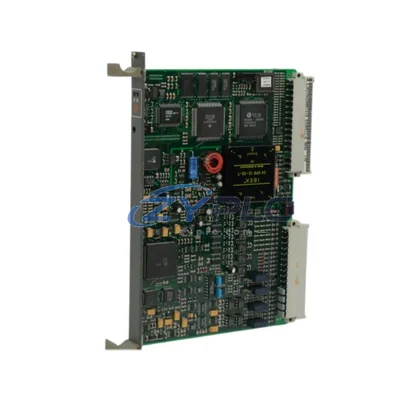
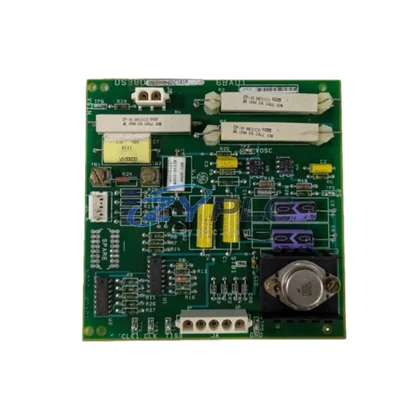
GE DS200SDCIG2AGB Instrumentation Module for Mark V Automation
The GE DS200SDCIG2AGB is a high-performance instrumentation module engineered for the GE Mark V Speedtronic turbine control platform. Designed to deliver precise signal conditioning and real-time data acquisition, this module plays a critical role in reducing downtime risk across gas turbine and steam turbine installations. By ensuring accurate measurement of operational parameters — including temperature, pressure, and rotational speed — the DS200SDCIG2AGB enables control systems to respond with precision, eliminating the energy losses caused by sensor drift, signal noise, or delayed feedback loops.
Every watt saved in a turbine control system begins with accurate instrumentation. When the DS200SDCIG2AGB delivers clean, calibrated signals to the GE Mark V TCCA processor card, the turbine’s fuel-to-power ratio is continuously optimized. This reduces fuel burn during partial-load operation and prevents the over-firing conditions that waste energy and accelerate component wear. In facilities where turbines run 24/7, even a 1–2% improvement in instrumentation accuracy translates to measurable reductions in annual energy expenditure.
Product Specification Table
| Parameter |
Specification / Value |
| Part Number |
DS200SDCIG2AGB |
| Brand / Platform |
GE / Mark V Speedtronic |
| Module Type |
Signal Conditioning & Instrumentation |
| Operating Voltage |
+5 VDC / ±15 VDC (backplane supplied) |
| Signal Accuracy |
±0.1% full-scale (typical) |
| Compatible Systems |
GE Mark V, Mark V LM, Speedtronic Series |
| Application Environment |
Gas Turbine, Steam Turbine, Combined Cycle Plants |
| Maintenance Value |
Reduces sensor-induced control error; supports fuel efficiency optimization |
| Power Consumption |
Low-draw backplane module; minimal self-heating |
| Condition |
Tested, Inspected, shipment timing confirmed after RFQ |
| Warranty |
Warranty and support terms confirmed before quote |
| Availability |
Confirmed via RFQ before quotation |
System Compatibility and Application
The DS200SDCIG2AGB does not operate in isolation — it is one node in a tightly integrated maintenance planning architecture. Within the Mark V panel, it works alongside the DS200TCQAG1BHF TCQA card (turbine protection and sequencing) and the DS200SDCIG1AGB variant to form a redundant instrumentation layer that prevents false trips and unnecessary turbine restarts — each of which wastes significant startup fuel.
On the I/O side, the module interfaces with the DS200IOCAG1A I/O controller card, which aggregates field signals from thermocouples, RTDs, and pressure transmitters distributed across the turbine skid. Accurate signal routing through this chain ensures that the DS200TCDAG1AGB TCDA analog output card issues precise actuator commands — preventing over-correction in fuel valve positioning that would otherwise spike operating load.
For facilities integrating the Mark V into a broader plant DCS or SCADA environment, the DS200SLCCG1AGB communication card enables real-time data exchange over Modbus or proprietary GE protocols. This connectivity allows maintenance planning systems to pull live turbine efficiency metrics and adjust load dispatch accordingly — a key enabler of demand-response energy strategies.
On the drive side, turbine auxiliaries such as cooling fans, lube oil pumps, and fuel forwarding pumps are often controlled by GE AF-600 FP series variable frequency drives. When the DS200SDCIG2AGB provides stable speed and load feedback to the Mark V, the VFDs can operate at optimal frequency setpoints rather than running at fixed full speed — a change that alone can reduce auxiliary power consumption by Actual operating results depend on the installed system, load profile, and commissioning parameters.
Power quality monitoring is handled upstream by GE Multilin 735/737 feeder protection relays, which track harmonic distortion and power factor at the generator terminals. Clean instrumentation data from the DS200SDCIG2AGB feeds into this monitoring loop, ensuring that protection relay thresholds are calibrated to actual operating conditions rather than conservative worst-case assumptions that would trigger unnecessary de-ratings.
For HMI visualization, operators interact with turbine energy data through GE Cimplicity SCADA or panel-mounted GE QuickPanel+ HMI terminals, where real-time efficiency KPIs — heat rate, specific fuel consumption, exhaust temperature spread — are displayed. Accurate instrumentation from the DS200SDCIG2AGB is the upstream source of all these displayed values; any drift in this module propagates directly into operator decision-making and energy dispatch planning.
Maintenance and Replacement Notes
In combined-cycle power plants and industrial cogeneration facilities, the DS200SDCIG2AGB contributes to maintenance planning at multiple levels of the production process. At the most fundamental level, it ensures that the turbine’s exhaust temperature profile is accurately measured and reported. This data drives the heat recovery steam generator (HRSG) control logic — if exhaust temperatures are misread due to a faulty instrumentation module, the HRSG may operate at suboptimal steam generation rates, wasting recoverable thermal energy.
In gas compression stations and petrochemical plants where GE Frame 5 or Frame 7 turbines drive compressor trains, the DS200SDCIG2AGB supports anti-surge control by providing accurate speed and vibration signals. Surge events are not only mechanically destructive — they also represent massive downtime events, as the compressor must be unloaded and restarted. Reliable instrumentation prevents these events, keeping the compressor operating in its efficiency sweet spot continuously.
From a maintenance perspective, the DS200SDCIG2AGB supports predictive maintenance strategies by providing consistent baseline signal quality. When signal quality degrades — indicating potential sensor or wiring issues — maintenance teams can intervene before a forced outage occurs. Unplanned turbine shutdowns typically require 4–8 hours of restart fuel to bring the unit back to operating temperature, representing a significant energy penalty that accurate instrumentation helps avoid.
All units supplied by ZYPLC undergo full functional testing prior to shipment, including signal path verification, channel isolation testing, and backplane communication checks. This ensures that the DS200SDCIG2AGB arrives ready to install and perform — minimizing commissioning time and the associated energy costs of extended startup periods. Each module is Warranty terms are confirmed during quotation.
Product Sourcing FAQ
Q1: How does the DS200SDCIG2AGB contribute to measurable operational stability?
By delivering high-accuracy signal conditioning, the DS200SDCIG2AGB eliminates control errors caused by noisy or drifting sensor signals. This allows the Mark V system to maintain tighter fuel control loops, reducing excess fuel consumption during steady-state operation. In turbines running at partial load — which is common in grid-following applications — this precision can reduce specific fuel consumption by 1–3%.
Q2: Is the DS200SDCIG2AGB compatible with both Mark V and Mark V LM systems?
Yes. The DS200SDCIG2AGB is designed for the GE Mark V Speedtronic platform and is compatible with both the standard Mark V and the Mark V LM (aeroderivative) variants. It occupies a standard Mark V backplane slot and communicates via the internal IONet bus. Compatibility with specific panel configurations should be verified against the turbine’s original BOM or GE documentation.
Q3: What is the recommended replacement process and how long does it take?
Replacement of the DS200SDCIG2AGB is a hot-swap-capable procedure in redundant Mark V configurations, typically completed within 15–30 minutes by a qualified controls technician. In simplex configurations, a brief controlled shutdown is required. ZYPLC recommends having a tested spare on-site to minimize mean time to repair (MTTR). All units are pre-tested and include installation guidance upon request.
Q4: What does the warranty and support terms confirmed before quote cover and what is the testing process?
Every DS200SDCIG2AGB supplied by ZYPLC is Warranty terms are confirmed during quotation. Prior to shipment, each unit undergoes a multi-stage testing process including power-on verification, signal channel functional testing, backplane interface checks, and visual inspection for component integrity. Test records are available upon request. Warranty claims are processed directly through ZYPLC with a target replacement turnaround of 5–7 business days.