GE DS200SLCCG3AFG: Industrial Data Link and Smart Factory Connectivity for Mark VI Control Systems
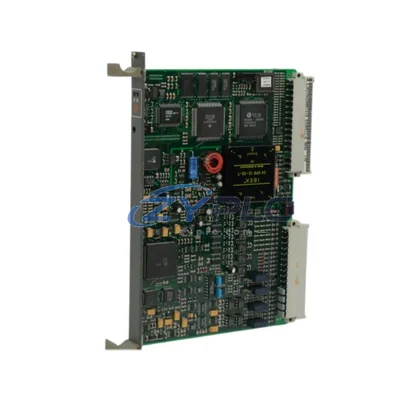
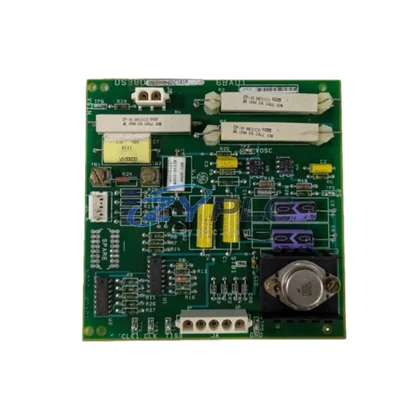
The GE DS200SLCCG3AFG is a high-performance top communication board engineered for the GE Mark VI turbine control platform. In modern industrial environments where data continuity, protocol interoperability, and real-time system visibility are non-negotiable, this board serves as the critical communication backbone between field-level devices and upper-layer supervisory systems. Whether deployed in gas turbine power generation, combined-cycle plants, or heavy industrial process facilities, the DS200SLCCG3AFG ensures that every layer of the automation hierarchy — from sensor to SCADA — operates with synchronized, low-latency data exchange.
Unlike generic communication modules, the DS200SLCCG3AFG is purpose-built for the Mark VI architecture, designed to interface seamlessly with the Mark VI controller’s internal backplane and external network infrastructure. It supports the transmission of critical turbine operating parameters — including speed, temperature, pressure, vibration, and fuel flow — across the plant communication network, enabling operators and engineers to monitor, diagnose, and respond to system conditions in real time.
In a complete Mark VI control system, the DS200SLCCG3AFG works in close coordination with components such as the DS200TCQCG1BHF (Turbine Control Quad Core Board), the DS200SDCCG1AFG (System Definition and Configuration Card), and the DS200TCPDG1BEC (Turbine Control Protection Board). Together, these modules form a tightly integrated control and communication architecture that governs turbine startup sequences, load management, protective tripping, and fault logging. The communication board’s role is to ensure that all data generated within this architecture is reliably transmitted to the plant’s DCS or SCADA layer without packet loss or latency spikes.
Compatibility & Integration Notes
| Parameter |
Specification |
| Product SKU |
DS200SLCCG3AFG |
| Brand / Manufacturer |
GE (General Electric) |
| Compatible Platform |
GE Mark VI Turbine Control System |
| Board Function |
Top Communication Board — System-Level Data Link |
| Protocol Support |
ARCNET, Ethernet (TCP/IP), Modbus RTU/TCP, proprietary GE IONet |
| Interface Types |
Backplane connector, RJ-45 Ethernet port, serial communication headers |
| Network Compatibility |
DCS, SCADA, HMI, historian systems, OPC server integration |
| Transmission Capability |
Real-time turbine data, alarm signals, diagnostic feedback, event logging |
| System Application |
Gas turbine, steam turbine, combined-cycle power plants, industrial process control |
| Operating Temperature |
0°C to 60°C (standard industrial range) |
| Form Factor |
PCB module for Mark VI control panel rack installation |
| Origin |
United States |
| Warranty |
Warranty and support terms confirmed before quote — Fully tested prior to shipment |
Connected Automation Data Flow
The DS200SLCCG3AFG sits at the intersection of the control layer and the network layer in a Mark VI-based automation architecture. Its primary function is to aggregate data from the turbine’s I/O subsystem and relay it upward to supervisory platforms, while simultaneously receiving setpoints, configuration commands, and diagnostic queries from the control room.
At the field level, process signals — including thermocouple inputs, 4–20 mA analog signals from pressure transmitters, and digital status signals from proximity sensors — are collected by I/O terminal boards such as the DS200IOCAG1B (I/O Controller Board) and the DS200TBCBG1AAA (Terminal Board). These boards feed structured data into the Mark VI controller core, where the DS200TCQCG1BHF processes control logic and generates output commands to actuators, fuel control valves, and inlet guide vane drives.
The DS200SLCCG3AFG then takes this processed data and transmits it across the plant network. In facilities running GE ToolboxST or third-party SCADA platforms such as Wonderware, iFIX, or Ignition, the communication board acts as the OPC-compatible gateway, ensuring that turbine operating data is available to historians, alarm management systems, and operator HMI displays in real time. Integration with GE Mark VIe controllers or hybrid architectures using DS200SDCCG1AFG configuration cards is also supported, allowing plants to maintain a unified data model across mixed-generation control hardware.
For facilities with redundant communication requirements, the DS200SLCCG3AFG supports dual-network configurations, ensuring that a single cable or switch failure does not interrupt data flow to the SCADA layer. Industrial Ethernet switches — such as those from the Hirschmann or Moxa product families — are commonly deployed alongside this board to provide managed, fault-tolerant network infrastructure. Variable frequency drives (VFDs) controlling auxiliary equipment such as cooling fans, lube oil pumps, and fuel gas compressors also feed status data through the network, with the DS200SLCCG3AFG serving as the upstream aggregation point for all device-level communication.
Power supply integrity for the communication board is maintained by the Mark VI power distribution system, typically supported by DS200PCCAG1A (Power Supply Board) modules, which provide regulated DC power to all boards within the control panel. This ensures that communication functions remain stable even during grid disturbances or plant load transients.
Solving Data Isolation in Industrial Sites
One of the most persistent challenges in aging industrial facilities is data isolation — the condition where field devices, PLCs, DCS controllers, and SCADA systems operate on incompatible protocols, creating information silos that impair operational visibility and slow maintenance response. The GE DS200SLCCG3AFG directly addresses this challenge within Mark VI-based installations.
In plants where legacy Modbus RTU devices coexist with modern Ethernet-based SCADA infrastructure, the DS200SLCCG3AFG provides the protocol bridging capability needed to unify these environments. Operators no longer need to rely on manual data entry or separate protocol converters to reconcile turbine data with plant-wide historian records. Instead, the communication board handles protocol translation transparently, delivering consistent, timestamped data to every connected system.
Remote diagnostics represent another critical capability enabled by this board. Maintenance engineers can query turbine fault logs, review alarm histories, and assess board-level health indicators from the control room or even from remote locations via secure VPN connections to the plant SCADA network. This reduces the need for physical panel access during routine diagnostics, improving both safety and maintenance efficiency.
For plants undergoing digital transformation initiatives — including the deployment of edge computing gateways, cloud-based analytics platforms, or IIoT sensor networks — the DS200SLCCG3AFG provides a stable, standards-compatible communication foundation. Its support for TCP/IP-based protocols ensures compatibility with modern edge gateways and data aggregation platforms, enabling plants to extract value from turbine operational data without replacing the underlying Mark VI control hardware.
Production line transparency is further enhanced by the board’s ability to support event-driven communication. Rather than relying solely on cyclic polling, the DS200SLCCG3AFG can transmit alarm and event data asynchronously, ensuring that critical conditions — such as over-temperature trips, vibration exceedances, or fuel pressure anomalies — are immediately visible to operators and automatically logged in the plant historian. This capability is essential for facilities operating under regulatory compliance frameworks that require complete audit trails of turbine operating events.
System expansion is straightforward with the DS200SLCCG3AFG in place. As plants add new turbine units, auxiliary systems, or remote monitoring stations, the communication board’s network architecture scales without requiring changes to the core control logic. Additional Mark VI panels, remote I/O racks, and HMI workstations can be integrated into the existing network topology, with the DS200SLCCG3AFG maintaining consistent data routing across the expanded system.
Industrial Connectivity FAQ
Q1: Does the DS200SLCCG3AFG support integration with third-party SCADA and DCS platforms?
Yes. The DS200SLCCG3AFG supports standard industrial communication protocols including Modbus TCP, Ethernet TCP/IP, and GE’s proprietary IONet protocol. This enables integration with a wide range of SCADA platforms — including Wonderware, iFIX, Ignition, and OSIsoft PI — as well as DCS systems from other vendors. OPC server compatibility further simplifies data exchange with historian and analytics platforms. For specific protocol mapping requirements, our engineering team can provide configuration guidance prior to shipment.
Q2: What is the network latency performance of this communication board, and is it suitable for real-time turbine control applications?
The DS200SLCCG3AFG is designed for deterministic, low-latency communication within the Mark VI control architecture. For supervisory data exchange with SCADA and HMI systems, typical cycle times are well within the requirements of real-time monitoring applications. It is important to note that the board handles supervisory communication rather than hard real-time control loop execution — the latter is managed by the Mark VI controller core. For applications requiring sub-millisecond control response, the board’s role is to ensure that supervisory data does not interfere with control loop timing.
Q3: How is the DS200SLCCG3AFG tested before shipment, and what does the Warranty and support terms confirmed before quote cover?
Every DS200SLCCG3AFG unit undergoes functional testing prior to shipment, including communication interface verification, backplane connectivity checks, and protocol handshake validation. The Warranty and support terms confirmed before quote covers manufacturing defects, component failures, and communication interface malfunctions under normal operating conditions. Warranty service includes technical support, board-level diagnostics, and replacement or repair as applicable. Units are shipped with full traceability documentation to support plant maintenance records.
Q4: Can the DS200SLCCG3AFG be used in redundant communication architectures?
Yes. The Mark VI platform supports redundant communication configurations, and the DS200SLCCG3AFG is compatible with dual-network topologies that provide failover capability in the event of a network path failure. When deployed with managed industrial Ethernet switches configured for rapid spanning tree protocol (RSTP) or ring redundancy, the communication board maintains uninterrupted data flow to SCADA and HMI systems. This is particularly important for power generation facilities where continuous turbine monitoring is a regulatory and operational requirement.